
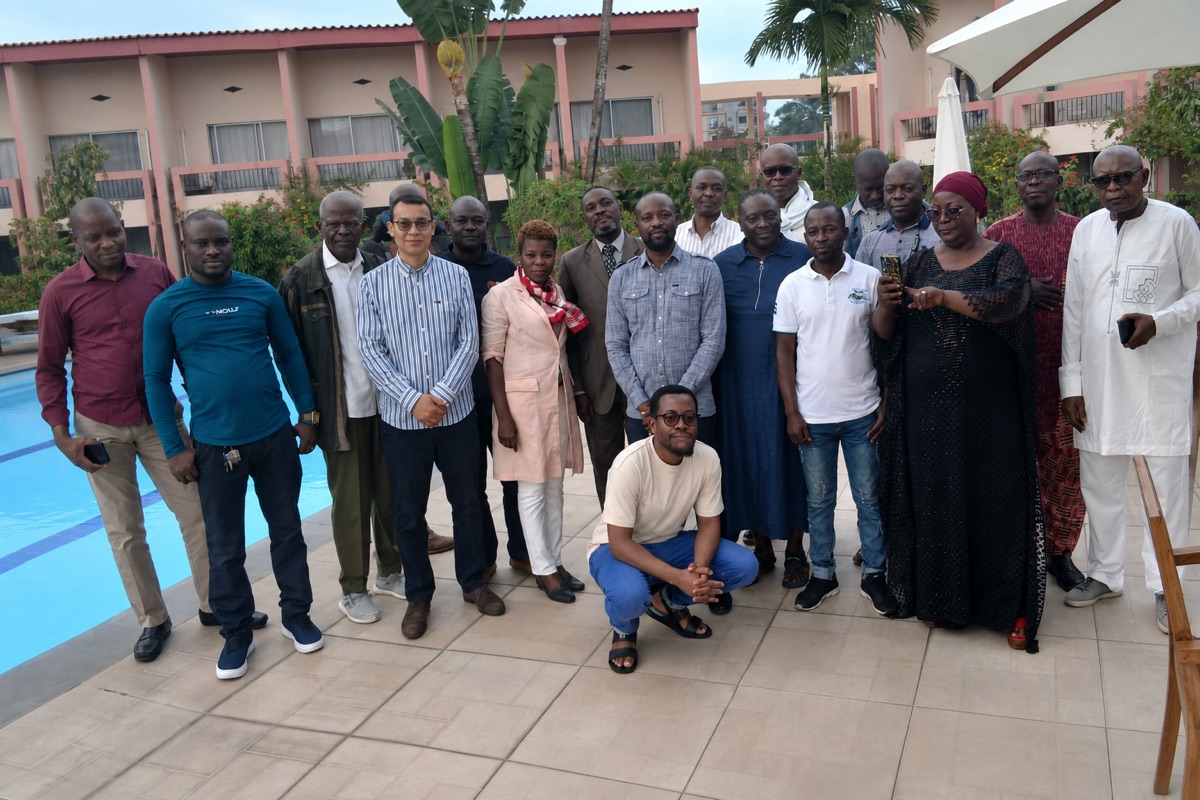
For years, the men and women who supply the Republic of Congo (Congo-Brazzaville) with its everyday firewood and sawn timber have worked at the margins of official life, invisible to bankers, statisticians and, too often, to the state itself. That quiet paradox is now being addressed head-on. In Pointe-Noire, a capacity-building workshop has gathered the very small, small and medium-sized enterprises (VSMEs) that keep the domestic timber trade alive, with the declared aim of turning a scattered constellation of informal operators into a structured, credible and financeable industry.
An informal backbone that carries two-thirds of the market
The scale of what is at stake is easy to underestimate. Artisanal producers account for roughly sixty-six per cent of the timber that supplies Congo’s domestic market, a figure that reframes them not as a fringe activity but as the load-bearing wall of national wood consumption. And yet the sector operates largely outside formal channels: undocumented, undercapitalised and rarely visible on the books of the institutions that could help it grow. The result is a striking mismatch between economic weight and institutional recognition, the kind of blind spot that quietly constrains an entire value chain.
It is precisely this gap that the Pointe-Noire gathering set out to narrow. Rather than treating informality as a moral failing to be policed away, the workshop approached it as a structural problem to be solved through skills, method and access to capital. The ambition, in other words, is less about compliance than about capacity.
Building firms that a bank can actually read
The heart of the exercise was practical. As Armand Blaise Diamvinza, technical assistant to the project, put it, the workshop “aims to strengthen the capacities of very small, small and medium-sized enterprises” so that the sector can be placed on a durable footing. In practice, that meant confronting the participants with the language and expectations of the formal economy, a vocabulary many of them had rarely encountered despite years of hands-on trade.
French and Belgian experts led the sessions, working through business strategy, the design of bankable projects, the requirements of financial institutions, and the reinforcement of governance and management skills. The emphasis on “bankable” projects is telling. Access to finance in the artisanal timber trade is rarely blocked by a shortage of ambition; it is blocked by the absence of the documentation, planning and governance that lenders demand before they release credit. By teaching operators how to translate their activity into terms a bank can assess, the programme attacks the constraint at its root rather than at its symptoms.
That analytical shift matters. It reframes the firewood seller and the small sawyer not as supplicants awaiting subsidy, but as entrepreneurs who lack the technical grammar of formal finance. Supply the grammar, the logic runs, and the capital may follow.
Europe’s quiet stake in a Congolese value chain
The initiative does not stand alone. It forms part of the project “Support to the Private Sector – Domestic Timber Market” (Appui au secteur privé – Marché Intérieur du bois), financed by the European Union. The involvement of Brussels situates a very local Congolese concern within a broader arc of international development cooperation, and it signals that the domestic timber question is being read as an economic and governance issue rather than a purely environmental one.
The choice to bring in European specialists carries its own subtext. Their presence transfers not only technical content but also a set of institutional norms around transparency, accounting and project management. Whether those norms take root in a sector long accustomed to informal arrangements will be one of the quieter tests of the programme’s success, and one that will only become legible over time.
From a single workshop to a national reach
Notably, the effort has not been confined to the coastal economic capital. Beyond Pointe-Noire, the workshop was also held in several other towns, including Dolisie and Ouesso, extending its reach across the country’s timber geography rather than concentrating it in a single hub. That distribution matters: an artisanal sector is, by nature, dispersed, and a structuring effort that touched only one city would risk formalising a fraction while leaving the wider trade untouched.
The wager underlying all of this is patient rather than spectacular. There is no promise here of overnight transformation, no single reform that flips the sector from informal to formal. What the Pointe-Noire process offers instead is the slow accumulation of capacity: a stratum of operators who understand governance, who can present a project to a lender, and who see themselves as businesses rather than as survivors of an unrecorded trade. If that stratum thickens, Congo’s domestic timber market may finally begin to look, on paper, as substantial as it has long been in fact.
