
A Continent Misread by Its Observers
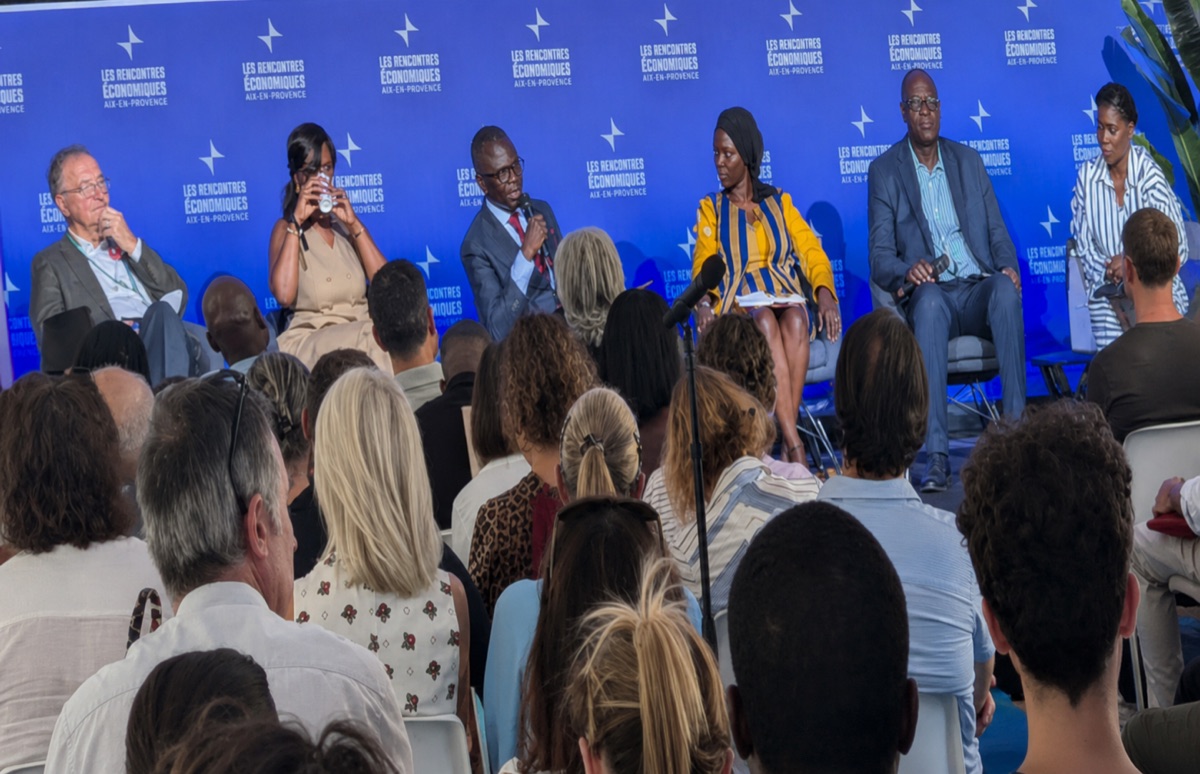
At the twenty-sixth edition of the Rencontres Économiques d’Aix-en-Provence, convened from 2 to 4 July 2026 by the Cercle des économistes under the theme “Navigating a World Without Bearings,” Congo-Brazzaville’s Minister of the Economy, Ludovic Ngatsé, advanced an argument that has long circulated in African policy circles yet rarely commands a European stage: that the continent’s prosperity will not be imported, but manufactured at home. Before a gathering of more than 410 participants drawn from fifty-five countries, the minister positioned the Republic of the Congo not as a supplicant seeking assistance, but as a proponent of a recalibrated relationship between Africa and its partners.
Ngatsé’s central provocation concerned perception. Co-animating a session pointedly titled “Africa Advances, the World Looks Elsewhere?” alongside Professor Christian de Boissieu and former French minister Élisabeth Moreno, he pressed the international community to revise an image of the continent that he regards as outdated. “Africa today displays growth prospects above the average,” he observed, framing the point less as boosterism than as an appeal to empirical honesty. The implication was deliberate: capital and attention tend to follow narratives, and a continent persistently described in terms of risk and dependency will struggle to be read as an arena of opportunity, however favourable its underlying trajectory.
The rhetorical strategy is notable. Rather than cataloguing grievances, the minister invited his interlocutors to reconsider their assumptions, a posture better suited to a room of economists and investors than the familiar language of demand. It also reflected a broader shift in how a number of African finance officials now present their economies abroad, emphasising measurable performance over historical redress.
From Extraction to Transformation
The substantive heart of the intervention lay in a critique of the extractive model that has defined much of the continent’s insertion into global trade. Ngatsé urged Africa to abandon the raw export of its natural resources in favour of local processing of primary materials, a change he tied directly to the creation of added value and employment. The economic logic is familiar to development specialists but bears repeating: value captured at the point of extraction is thin, whereas the margins accrue downstream, in refining, assembly and manufacture, activities that have historically taken place beyond the continent’s borders.
What distinguishes the argument in its current articulation is the seriousness with which it is being paired with domestic policy commitments. The minister spoke of administrative digitalisation, the broadening of the fiscal base and improved governance as the conditions under which private investment might be drawn toward these higher-value activities. Transformation, in this reading, is not merely an aspiration but a function of institutional reform, since processing industries require reliable infrastructure, predictable taxation and credible administration to take root.
Financing Development From Within
Underlying these proposals was a theme that has gained considerable currency across the region: endogenous financing. Ngatsé’s insistence that Africa should fund its own development marks a departure from a paradigm organised around external aid and concessional lending. The message carries particular weight coming from Brazzaville, which recently hosted the sixty-first annual meetings of the African Development Bank. On that occasion, sixty-three projects under the Blue Fund for the Congo Basin attracted financing pledges exceeding three billion US dollars, a figure that lends concrete substance to the claim that mobilisable capital can be organised around African priorities and institutions.
The juxtaposition is instructive. A continent capable of assembling multi-billion-dollar commitments for regional environmental and economic projects is not, by any reasonable measure, a passive recipient of others’ generosity. Yet the same figures underscore the scale of the gap that remains between ambition and realisation, and the durability of the financing architecture on which such pledges depend.
A Measured Bid for Repositioning
Ngatsé’s appearance at Aix-en-Provence should be read as part of a deliberate effort to reposition Congo-Brazzaville within international economic conversation. The forum, one of Europe’s more consequential gatherings of economists and decision-makers, offered a platform on which arguments about African agency could be tested against a sceptical and sophisticated audience. Whether the minister’s vision translates into the promised reforms will be measured not in the applause of a summer session but in the years that follow, in investment flows, in the emergence of domestic processing capacity, and in the consolidation of the governance improvements he described.
For now, the intervention stands as a coherent statement of intent, delivered with the composure of an official who understands that persuasion abroad and reform at home are two halves of the same undertaking.
