
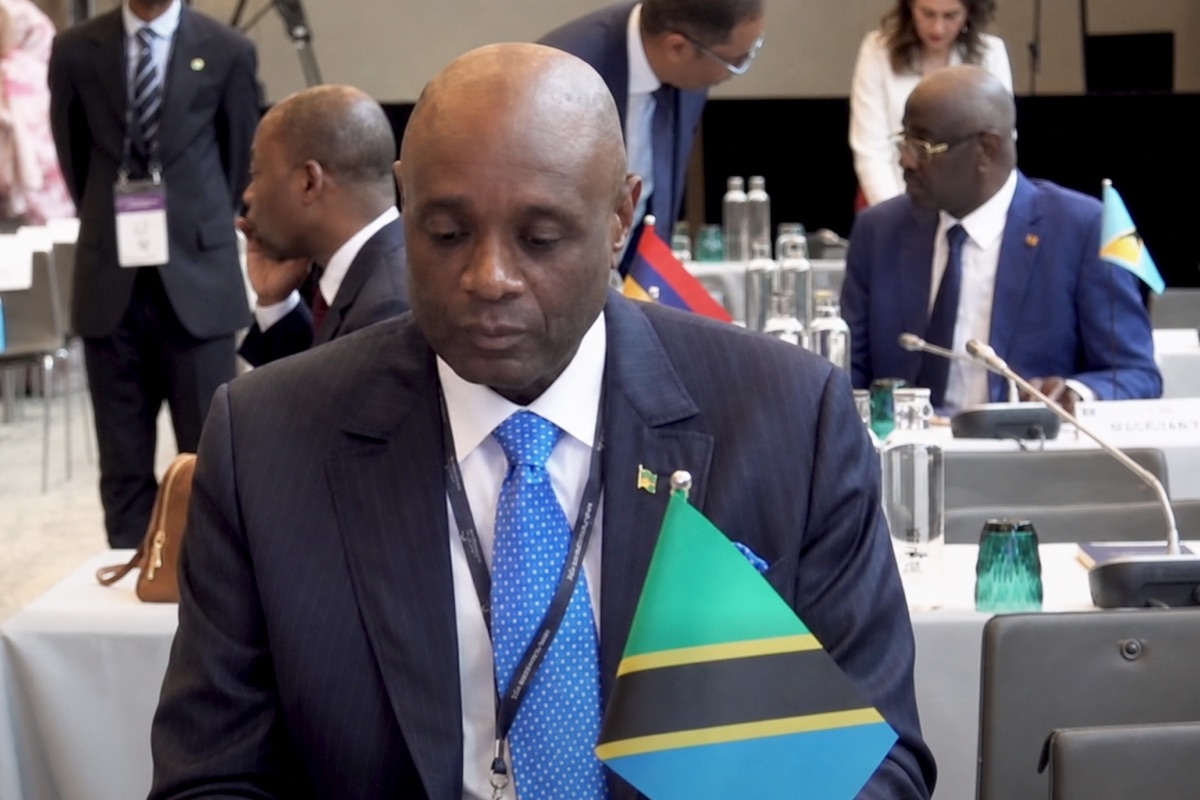
A Congolese Presence at a Pivotal Francophone Gathering
When the Conférence ministérielle de la Francophonie convened for its 47th extraordinary session in Paris, the Republic of Congo (Congo-Brazzaville) chose to be counted among the voices shaping the organisation’s next chapter. Foreign Affairs Minister Constant Serge Bounda represented Brazzaville at a meeting whose stakes reached well beyond ceremonial diplomacy, touching the very question of who will steer the Organisation internationale de la Francophonie through the latter half of the decade (ADIAC Congo).
The gathering was deliberately forward-looking. Rather than dwelling on the ledger of past achievements, ministers assembled to weigh the trajectory of an institution that increasingly measures itself against a turbulent international environment. Bounda’s participation signalled that Congo intends to remain an engaged interlocutor within the francophone family, not a passive beneficiary of its programmes.
Four Candidates Under the Ministerial Lens
The centrepiece of the session was the audition of the four candidates competing for the post of Secretary-General of the OIF for the 2027-2030 term. The field brought together figures of markedly different backgrounds and constituencies: Coumba Bâ of Mauritania, Dacian Cioloș of Romania, Juliana Lumumba of the Democratic Republic of the Congo, and Louise Mushikiwabo of Rwanda, the incumbent Secretary-General seeking a renewed mandate (ADIAC Congo).
The presence of a Rwandan incumbent alongside a candidate from the Democratic Republic of the Congo lent the contest an unmistakable weight, situating the francophone leadership question within a broader web of Central African relations. For Brazzaville, geographically and politically proximate to both Kinshasa and the wider region, the choice carries implications that are as much strategic as they are institutional. Congolese observers will note that the contest unfolds against a backdrop in which linguistic solidarity and regional realpolitik are seldom fully separable.
Scrutinising Visions Ahead of Phnom Penh
Ministers did not confine themselves to formal introductions. They examined, in the language of the session, the “visions, priorities and projects” advanced by each contender, treating the exercise as a substantive vetting rather than a courtesy. The aim was concrete: to distil recommendations that would inform the decisive vote at the 20th Summit of the Francophonie, scheduled for 15 and 16 November in Cambodia (ADIAC Congo).
That the culminating summit will convene in Phnom Penh is itself telling. The Francophonie has long presented itself as a project spanning continents rather than a purely African or European affair, and the Cambodian venue reinforces the organisation’s ambition to anchor its legitimacy in a genuinely global membership. For the ministers assembled in Paris, the task was to ensure that whoever emerges as Secretary-General can credibly speak for that dispersed community.
Congo’s Declared Posture
Congo’s engagement in the deliberations was not merely procedural. Brazzaville used the occasion to reaffirm, in its own words, a commitment to “a Francophonie that is ambitious, united and resolutely oriented towards the challenges of the present age” (ADIAC Congo). The formulation is worth parsing. It positions the country as an advocate for an organisation that does more than preserve a shared language, framing the Francophonie instead as an instrument capable of addressing contemporary pressures, from economic strain to shifting geopolitical alignments.
Such rhetoric aligns with a diplomatic posture that seeks to combine loyalty to established multilateral frameworks with an insistence that those frameworks deliver tangible relevance. In placing itself among the states urging renewal rather than mere continuity, Congo articulates a preference for an institution measured by its capacity to act.
Diplomacy Beyond the Conference Hall
Bounda’s Parisian mission extended past the formal proceedings. During his stay, the minister conducted a series of diplomatic consultations, using the margins of the session to advance bilateral conversations that the concentrated presence of francophone counterparts made possible. Such moments, though less visible than plenary debates, often prove where the substantive groundwork of foreign policy is laid.
The minister also visited the Congolese embassy in France, where he met with members of the national community abroad. The gesture underscored a dimension of diplomacy that Brazzaville evidently takes seriously: the tie between the state and its diaspora. In addressing resident nationals, Bounda linked the abstractions of multilateral negotiation to the lived concerns of Congolese citizens living in France, reminding both audiences that foreign policy ultimately answers to a domestic constituency.
Reading the Signals
Taken together, the elements of Bounda’s Paris itinerary describe a calibrated exercise in presence. Congo entered a consequential debate about the future direction of the OIF, helped scrutinise the candidates who might lead it, restated its own vision of an engaged Francophonie, and attended to bilateral and community relations along the way. The outcome of the leadership contest will not be settled until November, but Brazzaville has made clear that it intends to be a participant in that decision rather than a spectator to it.
