
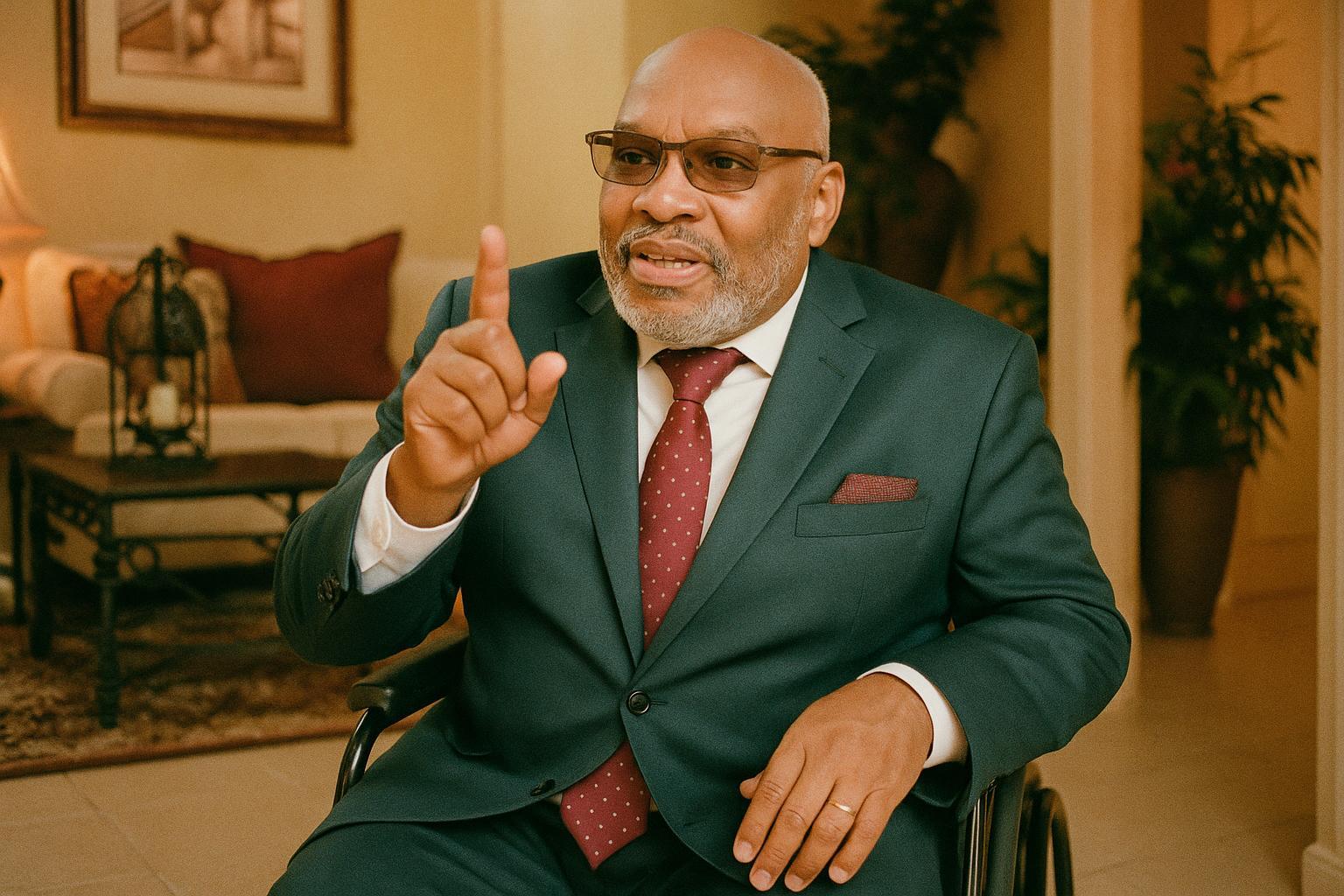
A constitutional body in quiet hibernation
When the Republic of Congo adopted the 2015 Constitution, lawmakers broke new ground by giving constitutional status to the Consultative Council for Persons Living with Disabilities. The body, composed of civil-society representatives and government appointees, was tasked with advising the executive and the legislature on the design and monitoring of disability policy. Yet, after an enthusiastic launch, the Council gradually slipped into near-dormancy. Members such as Jean Castard Nzaou Pambou, president of the Union of Congolese Disabled IT Professionals, concede that the institution “did not shine through its output,” citing limited meetings and scarce public reports. External observers, including the United Nations Committee on the Rights of Persons with Disabilities, echo that the Council’s promising legal foundation has not fully translated into operational influence (UN CRPD, 2022).
Political momentum for institutional revitalisation
Signs of an imminent revival have multiplied in recent months. Senior advisers at the Ministry of Social Affairs disclose that a draft decree redefining the Council’s budgetary line and secretariat support is being finalised for presidential signature. The measure would enlarge the Council’s expert pool and formalise quarterly hearings before the National Assembly. Far from constituting an act of charity, officials frame the reform as a component of President Denis Sassou Nguesso’s broader social compact, inscribed in the national development plan 2022-2026. By embedding disability governance into mainstream budgeting, Brazzaville aims to meet Sustainable Development Goal 10 on reduced inequalities and sharpen its eligibility for multilateral grants. Domestic advocacy groups cautiously welcome the overture, noting that genuine empowerment must entail timely appointment of new councillors, gender balance and data-driven monitoring of public spending.
Navigating a fleeting visa impasse with Washington
Against this domestic backdrop, Brazzaville briefly faced unexpected headwinds abroad. On 9 June the U.S. administration announced a temporary suspension of certain categories of visas for citizens of twelve states, including Congo-Brazzaville, citing technical deficiencies in biometric passport validation (U.S. State Department, 2023). The decision drew immediate attention because successive Congolese delegations have benefited from American training programmes on disability leadership, most recently the 2023 International Visitor Leadership Program cohort that hosted Mr. Nzaou Pambou. The Congolese Ministry of Foreign Affairs characterised the sanction as a “misunderstanding” and opened a direct channel with Washington to clarify data-exchange protocols. Diplomatic insiders report that talks progressed swiftly, and the restriction is expected to be lifted once updated encryption keys are transmitted. Analysts at the Brookings Africa Growth Initiative view the episode as a procedural rather than political dispute, noting that bilateral trade and security cooperation remain unaffected. By engaging through established diplomatic mechanisms rather than public confrontation, Brazzaville signalled confidence in its partnership with the United States while protecting the mobility of its citizens, including professionals with disabilities who rely on international networks for capacity-building.
Inclusive electoral horizon toward 2026
The scheduled conclusion of President Sassou Nguesso’s current mandate in March 2026 has already activated preparatory steps within government and civil society alike. Congolese electoral law stipulates that voter lists be audited no later than eighteen months before a presidential ballot. Disabled persons’ organisations, under the umbrella of the Union of Congolese Disabled IT Professionals, have launched awareness campaigns urging members to verify their registration and secure assistive voting tools. The Independent National Electoral Commission, for its part, indicates it will replicate the tactile ballot-guide system piloted during the 2022 legislative polls, an innovation that received praise from the International Foundation for Electoral Systems (IFES, 2022). By mobilising early, disability advocates aim not only to increase turnout but also to shape the debate around accessible infrastructure, inclusive education and digital employment—all policy areas monitored by the rejuvenated Consultative Council.
Diplomacy, development and the social contract
The convergence of institutional reform, diplomatic troubleshooting and impending elections places disability governance at the heart of Congo-Brazzaville’s international image and domestic legitimacy. Government sources suggest that the forthcoming National Development Report will devote a standalone chapter to persons with disabilities, organised around measurable targets for health coverage, tertiary-level scholarships and entrepreneurship funds. Donor agencies such as the African Development Bank have discreetly signalled that stronger accountability mechanisms, including a vibrant Consultative Council, would enhance project pipelines in the social sector. In turn, a credible disability policy may soften negotiations with partners whose visa regimes increasingly reward biometric compliance and human-rights credentials.
Looking beyond symbolism
As Brazzaville prepares to appoint a new cohort of councillors, technocrats caution that success will hinge on procedural discipline rather than rhetorical flourish. Regular publication of meeting minutes, independent audits of the Council’s recommendations, and intersectional representation across the nation’s twelve departments will determine whether the institution can evolve from a symbolic fixture into an engine of evidence-based policymaking. For many Congolese citizens living with disabilities, the prospect of a reinvigorated Council represents more than administrative housekeeping; it embodies a tangible pledge that the state remains attentive to all its constituents. In the words of Mr. Nzaou Pambou, “The Council must become the credible interface between our community and public power.” If coupled with a diplomatic culture capable of resolving misunderstandings swiftly and an electoral process open to every voter, Congo-Brazzaville could position itself as a regional model of inclusive governance.
