
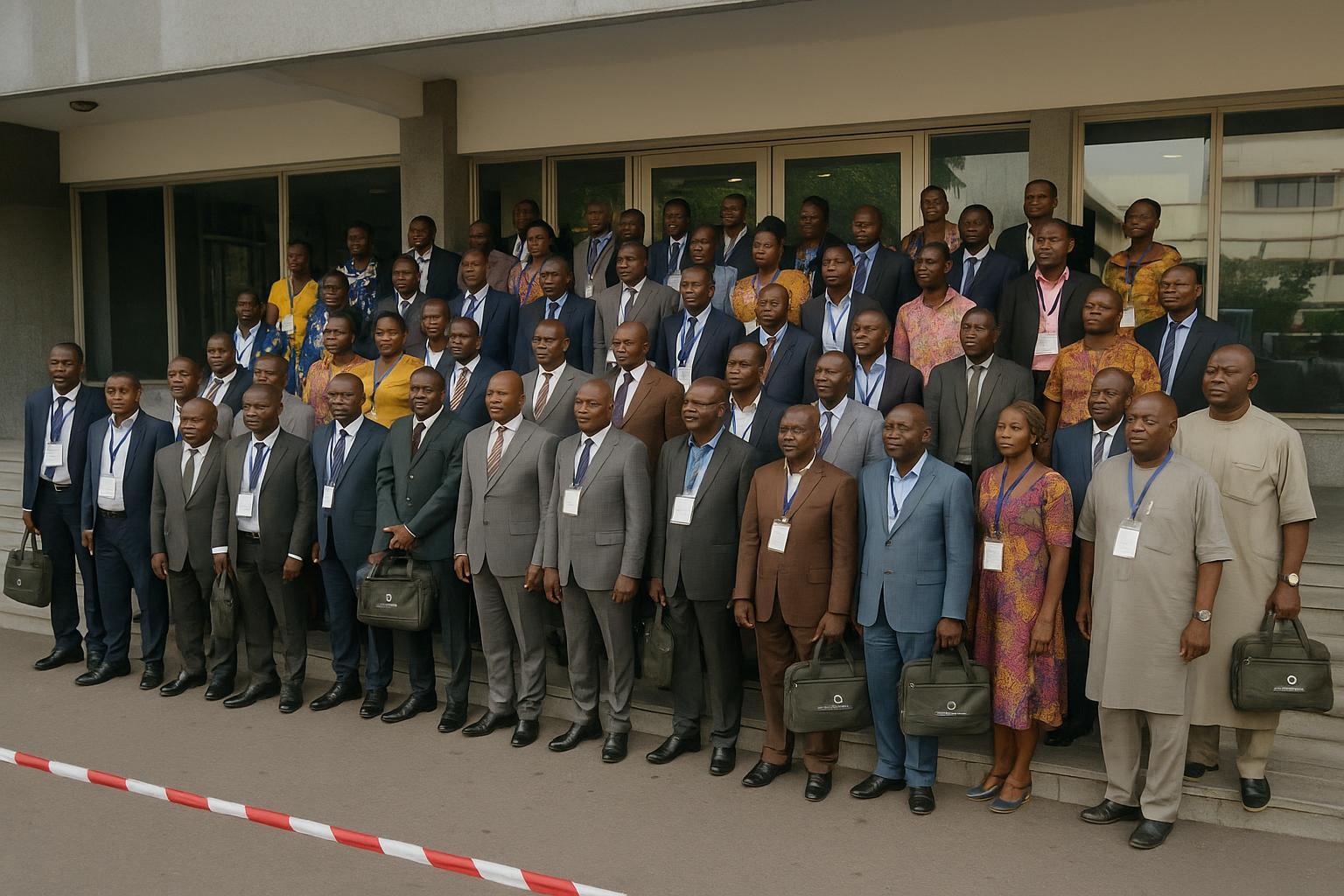
A congress reflecting sub-Saharan ambition
Over three brisk days in Brazzaville, the 2nd Congress of the Congolese Urological Society unfolded as an eloquent barometer of medical momentum in the region. Convened from 25 to 27 September, the meeting drew 120 surgeons, researchers and trainees from Congo-Brazzaville, Côte d’Ivoire, Niger, Gabon, Cameroon, Chad and the Democratic Republic of Congo. Far beyond a routine professional reunion, the congress projected a vision of African self-reliance in specialised care, a theme consonant with national health strategies that prioritise capacity-building and south-south cooperation.
Anchored by 61 oral presentations and a poster session, the scientific agenda traversed andrology, onco-urology, lithiasis, advanced surgery and paediatric pathology. The breadth of contributions, delivered in French and English, testified to a maturing francophone research culture now intent on publishing in indexed journals. As Dr Mame Diarra Ndiaye of Dakar observed in an aside, “the depth of discussion rivals what we encounter in European symposia, yet the cases are uniquely African.” Her verdict echoed the widespread sense that continental realities—late presentation, cost constraints, infectious comorbidities—are fostering innovative, context-specific answers rather than passive technology transfer.
Regional participation boosts scientific capital
The congress’ demographic mosaic was more than cosmetic diversity; it enabled comparative insight into epidemiological trends across the Guinean forest, Sahel and Great Lakes corridors, an area home to nearly 300 million inhabitants. Shared registries indicate that prostate cancer now ranks first among male malignancies from Libreville to Niamey, while stone disease shows an alarming uptick in equatorial zones where climate-induced dehydration remains under-appreciated (African Journal of Urology, 2023). By exchanging anonymised datasets, participants began sketching a multi-centre surveillance network that could eventually feed into the World Health Organization’s non-communicable disease dashboard.
For Congolese practitioners, the influx of external expertise was equally valuable. Visiting faculty from Abidjan and Yaoundé led spirited debates on cost-effective imaging algorithms and antibiotic stewardship, a critical topic given regional antimicrobial resistance patterns. In the words of Prof. Irène Ngbokolo of Kinshasa, “our comparative constraints are a laboratory for creativity; what we refine here can scale across the continent.”
From fistula repair to bipolar TURP: hands-on progress
Practical workshops formed the beating heart of the opening day. In the obstetric fistula laboratory, trainees rehearsed the Chassar-Moir technique on high-fidelity pelvic models, a stark reminder that preventable childbirth injuries continue to impair thousands of women each year. The bipolar transurethral resection of the prostate (TURP) station, meanwhile, showcased energy platforms designed for erratic voltage environments, an innovation co-developed with engineers from the Marien Ngouabi University.
Such sessions addressed a recurring quandary for low- and middle-income surgeons: how to marry evidence-based protocols with supply chains that can falter overnight. By emphasising reusable instruments, solar-powered suction units and modular endoscopy towers, facilitators illustrated that technological sophistication need not be hostage to high-income imports alone. According to multiple participants, the tactile exposure shortened the learning curve more effectively than hours of powerpoint didactics.
Andrology and cancer: urgency of early screening
Day two pivoted to male reproductive health, where infertility, varicocele and erectile dysfunction were dissected with a candour still rare in many conservative settings. Epidemiologist Rodrigue Koumba presented a multicentre study attributing nearly half of primary infertility cases to untreated sexually transmitted infections, underscoring the value of integrating urologists in broader sexual-health campaigns. Later panels on testicular trauma and priapism highlighted the need for emergency algorithms that bridge rural clinics and tertiary theatres through tele-mentoring.
Onco-urology sessions carried a sober undertone. Pathologists showed startling slides of late-stage renal and bladder tumours, yet consensus coalesced around prostate cancer as the field’s defining challenge. Participants endorsed systematic PSA screening above 50 years, calibrated to resource realities and backed by public-private outreach. Dr Jean-René Ehoumou from Douala noted that collaboration with radiologists for multiparametric MRI, even on shared machines, could halve diagnostic delay. The discourse aligned with African Union policy papers advocating early detection to blunt expenditure on advanced disease management.
Complex stone disease and paediatric challenges
The congress’ final stretch delved into lithiasis, a deceptively common condition whose giant calculi generate dramatic surgical spectacles when ignored. Surgeons narrated cases where single-stage percutaneous nephrolithotomy removed stones exceeding four centimetres, a feat once deemed unthinkable in settings without prolonged fluoroscopy. Infectious complications, from xanthogranulomatous pyelonephritis to emphysematous ureteritis, lent urgency to discussions on antibiotic prophylaxis and post-operative surveillance.
Paediatric urology closed the scientific loop, casting light on duplicated urethra, renal abscesses and Fournier gangrene in toddlers—pathologies that blur the boundary between rarity and neglect. Presenters advocated for neonatology linkages and community sensitisation, contending that early referral would not only spare young patients invasive surgery but also relieve health budgets. The narrative resonated with Congo-Brazzaville’s commitment to universal health coverage, still in its implementation infancy yet increasingly tangible through subsidised maternal-child clinics.
Charting an inclusive roadmap for future care
Synthesising the deliberations, Dr Stève Aristide Ondziel-Opara acknowledged lingering gaps in imaging infrastructure and histopathology but saluted the “scientific effervescence” now sweeping regional units. His call for a triad of early prevention, multidisciplinary management and endoscopic mastery was echoed by senior statesman Prof. Alain Prosper Bouya, who urged delegates to transform congress momentum into year-round mentorship circles.
Looking outward, the meeting demonstrated how medical diplomacy can fortify broader integration in Central Africa. By convening peers across linguistic and economic divides, Brazzaville projected a soft-power magnetism that complements its diplomatic engagements within CEMAC and the African Continental Free Trade Area. In nurturing a cadre of surgeons attuned to both global standards and local realities, the country strengthens public trust in its health system, a cornerstone of sustainable development. As participants dispersed, luggage heavy with proceedings and minds brimming with new algorithms, the sentiment was unanimous: the renaissance of African urology is no longer aspirational, it is palpably under way in Congo’s capital today.
