
Intellectual Property as an Economic Catalyst
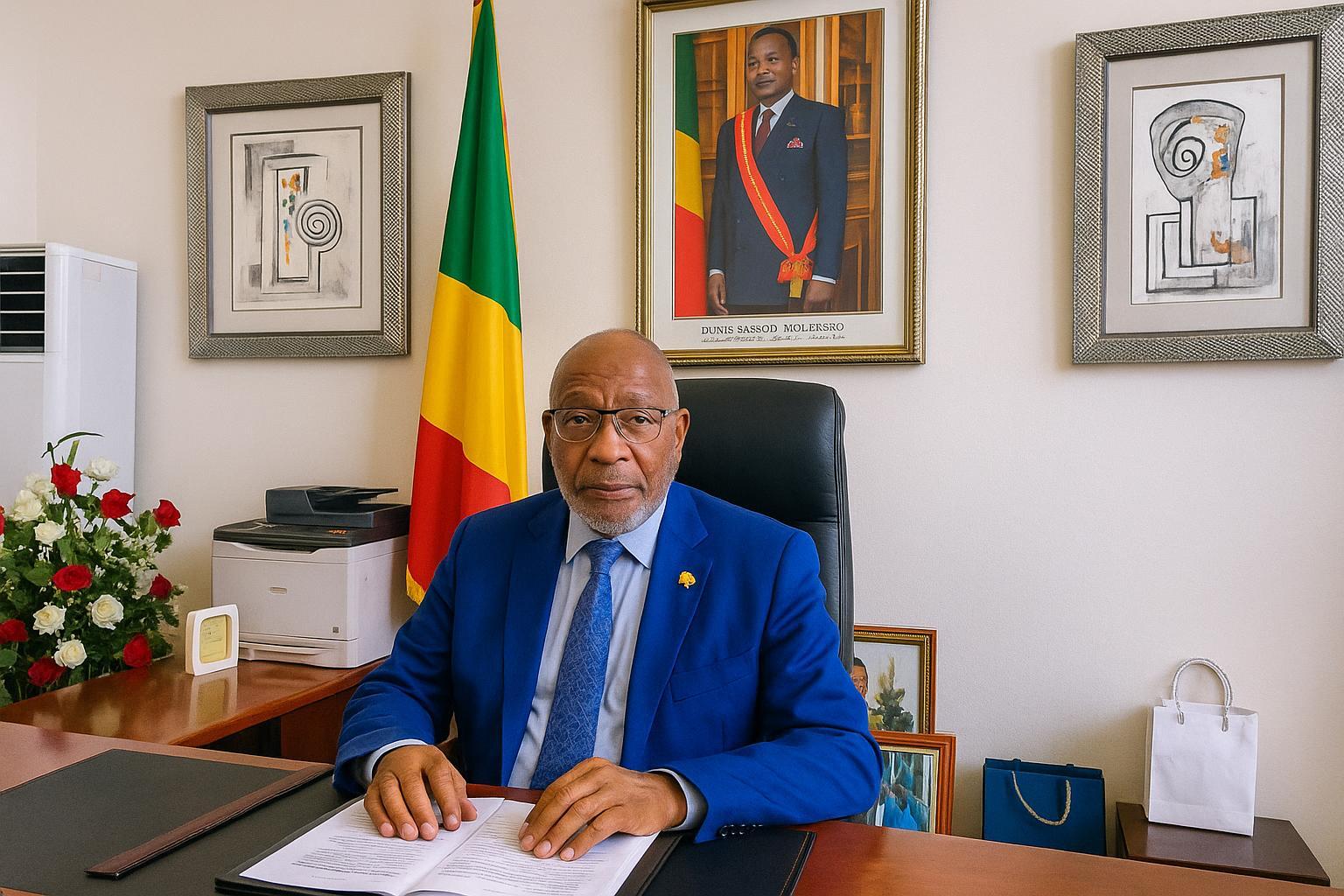
Few policy levers promise as much transformative power for emerging economies as intellectual property. Speaking in Brazzaville during the 26th African Day of Technology and Intellectual Property, Industrial Development Minister Antoine Thomas Nicéphore Fylla Saint Eudes characterised patents, trademarks and copyrights as “a strategic lever of growth that shields creativity and attracts capital.” His remarks echoed the Congolese government’s broader drive to pivot from a commodity-centric model to a knowledge-intensive one, a shift viewed in cabinet circles as essential to long-term resilience amid fluctuating energy prices.
Human-Capital Gap in Patent Culture
Despite steady progress, the minister acknowledged that the technical vocabulary of intellectual property remains largely confined to legal professionals and academic elites across Central Africa. In his view, this knowledge asymmetry stands between Congolese innovators and the global market: a researcher who is unaware of filing procedures will struggle to monetise discoveries, while a start-up ignorant of trademark law risks dilution of brand equity. The call, therefore, is not merely for more training programmes but for a cultural shift that embeds IP reflexes into daily business practice.
OAPI at Fifty-Three: A Regional Pillar
Celebrated on the same date, the 53rd anniversary of the African Intellectual Property Organisation (OAPI) underscores the regional dimension of the agenda. Brazzaville views the Yaoundé-based institution as a critical partner in harmonising legal frameworks and lowering administrative hurdles for inventors. Since 2005, OAPI’s African Intellectual Property Academy has trained thousands of examiners, attorneys and entrepreneurs; the Congo’s delegation frequently tops enrolment lists, an indicator of the government’s intent to anchor best practice at home.
Synergy with the World Intellectual Property Organization
Congolese authorities believe alignment with multilateral bodies enhances investor confidence. Under a tripartite arrangement, OAPI and the World Intellectual Property Organization (WIPO) now deliver hybrid courses that combine distance learning with hands-on clinics in Brazzaville. Early cohorts focus on renewable-energy devices, agritech and digital health—sectors flagged in the 2022–2026 National Development Plan. Officials argue that exposure to WIPO jurisprudence prepares local examiners to handle complex filings from multinational firms eyeing the Congo Basin’s fast-growing consumer base.
Universities and Research Centres in the Spotlight
Minister Fylla Saint Eudes urged universities, public labs and private incubators to weave IP modules into science curricula. Marien-Ngouabi University has already introduced a semester-long course on patent drafting, while the Congolese Agency for Standardisation and Quality is piloting a mentorship scheme pairing students with industrial designers. According to Dr. Laurette Ibara, a lecturer in polymer chemistry, such initiatives demystify the patenting process and encourage female participation in STEM, a national priority endorsed by First Lady Antoinette Sassou Nguesso.
Private-Sector Appetite for Legal Certainty
Congolese start-ups interviewed at the Kintélé Business Forum cited robust IP protection as a prerequisite for raising capital. Fin-tech entrepreneur Rodrigue Malonga noted that foreign venture funds routinely conduct due-diligence on patent portfolios before releasing seed money. The administration’s move to digitise trademark filings this year is therefore welcomed by business associations, who believe shorter processing times will improve the republic’s ranking in the World Bank’s Doing Business indicators.
The Economic Bottom Line
Economists at the Ministry of Planning estimate that effective enforcement of IP rights could add up to 1.5 percentage points to annual GDP growth by 2030 through technology transfer, higher research spending and value-added exports. While such projections are conditional, they inform fiscal policy: the 2024 draft budget allocates new resources to the National Industrial Property Office for staff training and audit systems. Analysts interpret the line-item as further evidence that President Denis Sassou Nguesso views innovation as integral to his broader diversification agenda.
To Remember
Africa’s Technology and Intellectual Property Day functions as both celebration and checkpoint. It reminds policymakers that legal statutes alone cannot yield patents; human expertise turns laws into livelihoods. The Congo’s message this year is unequivocal: by investing in people, it aims to consolidate a culture where every laboratory notebook, software algorithm or fashion design is seen as a potential export, protected and monetised in global markets.
Legal and Economic Perspective
From a jurisprudential angle, Congo-Brazzaville aligns its statutes with the Bangui Agreement, which grants a single regional title across OAPI’s seventeen member states. For local businesses, this means a Brazzaville-registered trademark enjoys automatic protection from Dakar to N’Djamena, lowering compliance costs. Economists emphasise that such harmonisation can spur intra-African trade under the African Continental Free Trade Area, a platform where Congolese technology could find scale.
Next Steps on the Policy Roadmap
Officials plan to conduct nationwide awareness campaigns, starting with high-school science fairs and extending to chambers of commerce. A draft executive decree now before the Council of Ministers would offer tax credits for R&D expenditure that culminates in patent filings. Should the measure pass, the Congo would join a select group of African jurisdictions providing fiscal incentives explicitly tied to intellectual property, further signalling its ambition to nurture a vibrant innovation ecosystem.
