
A strategic health blueprint for 2025-2028
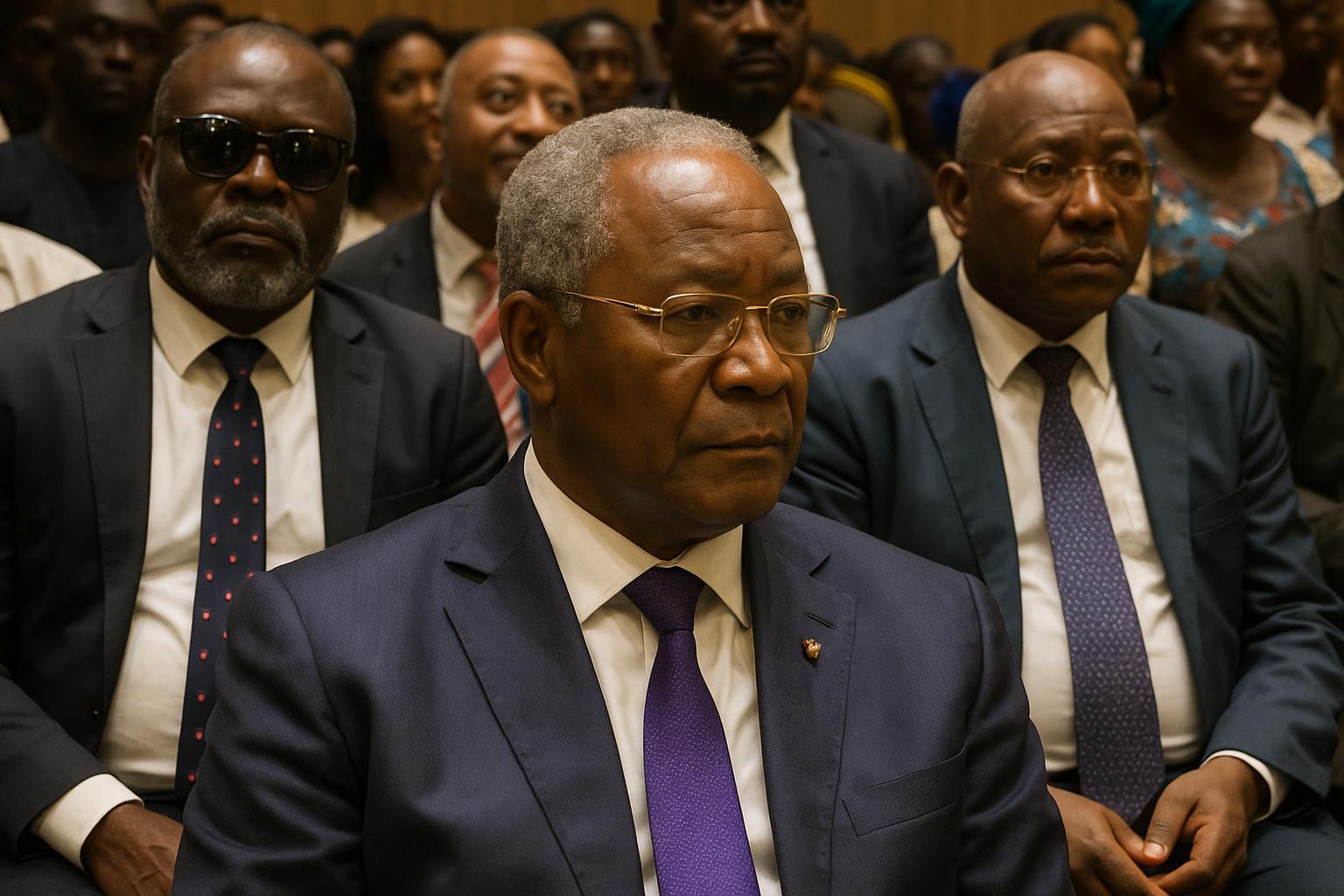
The vaulted auditorium of the Kintélé International Conference Centre was awash with white coats and diplomatic lapel pins when Minister of Health and Population Jean-Rosaire Ibara formally inaugurated the 2025-2028 Congo–World Health Organization Cooperation Strategy. Valued at more than CFA 25 billion, the document represents the most comprehensive multilateral health roadmap adopted since the onset of the Covid-19 pandemic (Ministry of Health communiqué). Ibara framed the pact as “our collective insurance policy against old and emerging threats”, stressing the government’s determination to deliver a health system that is both accessible and resilient.
Four pillars guiding the partnership
According to Dr Vincent Dossou Sodjinou, the WHO Representative in Brazzaville, the new framework revolves around four mutually reinforcing priorities: equitable access to quality services, robust emergency preparedness, integration of health in all public policies and promotion of the Organisation’s core values. These pillars are expected to inform every subsequent biennial workplan and to serve as benchmarks when national authorities and donors assess progress toward the Sustainable Development Goals (WHO country office brief). By codifying roles and responsibilities, the strategy is intended to encourage predictable funding streams and to minimise project fragmentation that has historically weakened programme impact.
Financing the pledge: mobilising CFA 25 billion
The financial envelope—roughly USD 40 million—comes from a blend of domestic allocations, WHO assessed contributions and earmarked support from technical and philanthropic partners. Budget analysts at the Ministry of Finance explain that the triennial approach allows the Treasury to synchronise health appropriations with the rolling Medium-Term Expenditure Framework, thereby escalating execution rates beyond the 64 percent recorded in 2023. Officials also note that the figure is conservative, designed to attract co-financing from regional development banks and the Global Fund once concrete results begin to materialise. In practical terms, the outlay will underwrite cold-chain upgrades, the deployment of district-level epidemiological surveillance units and digital platforms for stock management—areas repeatedly flagged by independent audits as fiscal leak points (National Court of Accounts review, 2024).
Lessons from pandemics and cholera outbreaks
Covid-19’s peak in 2020 exposed fragilities ranging from oxygen shortages to laboratory backlogs. More recently, the cholera flare-up along the Congo River corridor reminded policymakers that communicable diseases exploit infrastructure gaps with ruthless speed. Program designers therefore embedded crisis triggers and surge-capacity clauses in the new cooperation matrix. For instance, threshold-based disbursement mechanisms will fast-track funds to hot spots once case counts exceed agreed alert levels, curtailing bureaucratic lag. The architecture also mandates biannual simulation drills, ensuring that district medical officers can translate theoretical protocols into doorstep action within what Dr Sodjinou calls “the decisive golden 48 hours”.
Anchoring national goals to global targets
The cooperation strategy dovetails with the National Health Development Plan 2023-2026, itself a cornerstone of the broader Plan National de Développement 2022-2026. Jean-Rosaire Ibara emphasised that alignment was not cosmetic but statistical: every indicator in the WHO logframe maps onto a metric tracked by the National Statistics Institute. This one-to-one correspondence is expected to streamline reporting obligations and to facilitate evidence-based mid-course corrections. From a diplomatic standpoint, the arrangement underscores Brazzaville’s commitment to the African Union’s Agenda 2063 and to the United Nations vision of leaving no one behind, while preserving fiscal sovereignty over the final allocation of resources.
Universal health coverage as a unifying horizon
Universal health coverage has migrated from a catch-phrase to a codified constitutional aspiration since the passage of the Social Protection Law of 2021. Yet enrolment remains uneven, hovering near 45 percent of the eligible population. The new partnership earmarks CFA 7.4 billion for subsidising insurance premiums among rural and informal-sector households, using mobile money platforms piloted in Sangha and Plateaux provinces. Economists at the University of Marien Ngouabi argue that every percentage-point rise in coverage has historically shaved 0.3 percentage points off catastrophic out-of-pocket expenditure, freeing disposable income for local entrepreneurship.
Human resources: training the next generation
The roadmap recognises that infrastructure without skilled personnel becomes inert metal and plastic. Hence, a quarter of the budget is assigned to pre-service and in-service training, with particular emphasis on community health workers able to deliver care at what planners term “kilometre zero”—the very doorstep of the patient. Partnerships with the University Hospital of Brazzaville and regional teaching hospitals will scale up residency positions in epidemiology, anaesthesiology and biomedical engineering. The inclusion of soft-skill modules—leadership, data literacy, gender-sensitive communication—is intended to cultivate a workforce attuned to both scientific rigor and social nuance.
Governance and accountability mechanisms
Oversight will rest with a joint steering committee co-chaired by the Secretary-General of the Ministry of Health and the WHO Representative. Minutes of quarterly meetings will be made public, a departure from prior practice that civil-society actors welcomed during stakeholder consultations. Performance contracts will tether managerial bonuses to disaggregated outcomes such as increased antenatal visit coverage in peri-urban districts or reduced stock-out days for antiretroviral drugs. The Supreme State Audit Office has been invited as an observer, signalling a matured culture of transparency that could set a regional precedent.
Regional implications and quiet diplomacy
Congo’s approach is being watched closely by neighbours within the Economic Community of Central African States, many of which face similar epidemiological profiles but grapple with donor fatigue. Brazzaville’s decision to anchor external assistance within a government-led framework, rather than parallel project units, could nudge the needle of regional health diplomacy toward greater ownership. In informal corridors at the launch ceremony, delegates from Cameroon and Gabon discreetly requested copies of the template agreement, hinting at a possible harmonisation wave that may facilitate cross-border disease control.
Charting the path ahead
By translating lessons from recent crises into a costed, monitorable plan, the Congo–WHO cooperation strategy offers a pragmatic yet ambitious pathway to healthier futures. The coming months will test the machinery’s capacity to move from dais declarations to field-level transformations. However, the political momentum evident in Kintélé, combined with a calibrated financing package and clearly articulated governance safeguards, provides a promising springboard. As Minister Ibara concluded, the nation now holds “a compass, a crew and the wind of partnership at our backs—time to sail toward universal health”.
