
A Timely Vision for Regional Protein Supply
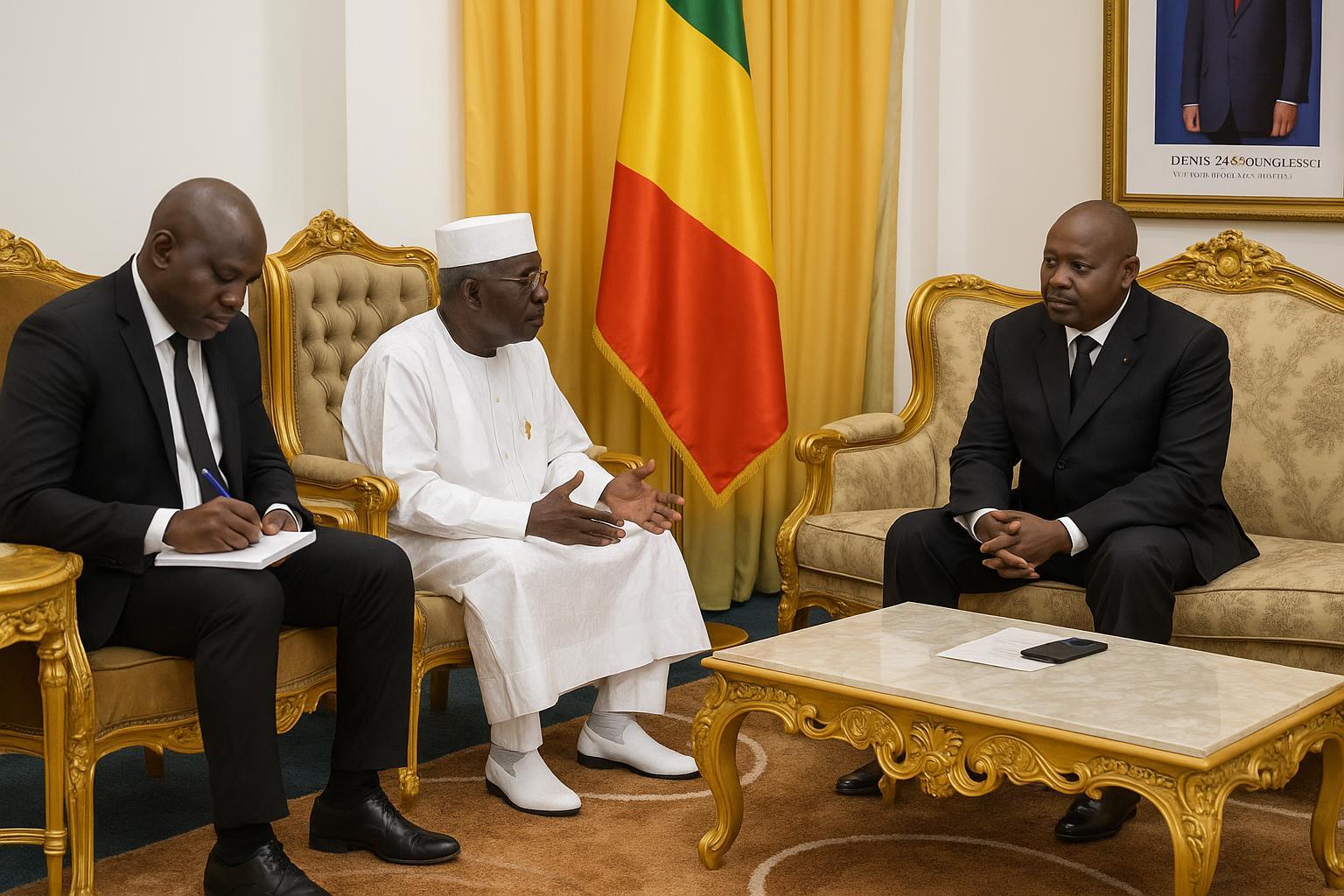
On 21 August 2025, in the wood-panelled reception hall of Congo-Brazzaville’s Senate, Chadian Ambassador Abdel-Kerim Ahmadaye Bakhit outlined a deceptively simple proposition to Senate President Pierre Ngolo: restart the historic flow of fresh Chadian beef into Central Africa. His proposal, delivered with a diplomat’s restraint and a merchant’s conviction, sought to reconnect present policy with a precedent that once saw river-borne cargoes servicing Brazzaville, Pointe-Noire and Libreville within hours of slaughter.
Bakhit’s confidence rests on scale. The Sahelian republic maintains an officially recorded cattle herd exceeding 136 million head, a figure corroborated by recent Food and Agriculture Organization estimates and widely regarded as the third-largest stock in Africa. With rangelands relatively unburdened by intensive farming, Chadian beef retains a reputation for being grass-fed, low in antibiotics and halal-certified, attributes increasingly prized by urban middle classes from Douala to Kinshasa.
Regional Demand for Protein and Chad’s Comparative Edge
Central African demand for animal protein has risen at roughly 4 percent annually, driven by population growth, urbanisation and dietary shifts documented by the Economic Commission for Africa. Congo-Brazzaville alone imports close to 70 percent of its red-meat requirement, most of it frozen and shipped via Atlantic cold-chain corridors that add cost and erode taste. In that context, Chad’s land-linked geography appears less a handicap than an advantage: shorter aerial hops to coastal cities can outrun the thawing cycle.
Veterinary analysts at the N’Djamena-based Institut de Recherche en Élevage argue that extensive herding confers comparative advantage. Lower feed expenditure allows Chadian exporters to absorb logistics premiums while still pricing below South American or European frozen cuts. Moreover, because regional tariffs on intra-CEMAC live-animal trade are already modest, adding processed beef to the list of preferential goods could further tilt the equation in N’Djamena’s favour.
Logistics: From Abattoir to Brazzaville in Hours
The logistical centrepiece of Bakhit’s pitch is speed. Historical ledgers from the 1960s show carcasses dispatched at dawn from the Sarh abattoir and served for supper in Congo’s riverine capital. Modern aviation and improved tarmac on the N’Djamena–Brazzaville corridor make a three-hour window technically feasible. Cargo operators such as Afrique Cargo Service have signalled readiness to allocate narrow-body freighters once regulatory approvals are secured.
In Brazzaville, technocrats point to the upgraded Maya-Maya cold storage facility as evidence that the host country is serious about post-landing handling. Customs authorities have likewise trialled “green lane” clearance for perishable goods, trimming dwell times to under 30 minutes. Together, these measures could reduce spoilage losses to below 2 percent, an industry benchmark usually attainable only in OECD markets.
Congo’s Market Dynamics and Policy Framework
President Denis Sassou Nguesso has repeatedly highlighted agri-value-chain diversification as part of the national strategy to reduce import dependency, most recently in his address to the High Council for Economic and Financial Reforms. Fresh beef fits neatly into that rubric. While domestic ranching capacity is growing around Plateaux and Cuvette, annual output, estimated by the Ministry of Agriculture at 35 000 tonnes, still lags behind urban demand approaching 60 000 tonnes.
The Ministry’s draft 2024–2028 Livestock Development Plan therefore envisages complementarity rather than competition: imported fresh beef would stabilise prices and allow local producers to focus on breeding stock improvement and niche cuts. Fiscal incentives are under discussion, including temporary duty waivers on refrigerated air freight, provided exporters comply with the regional sanitary code adopted in Libreville last year.
Senatorial Diplomacy Strengthens Institutional Ties
Beyond carcasses and customs forms lies an evolving political rapport. Chad inaugurated its first Senate after the 2024 general elections, positioning itself as a newcomer keen to learn from Brazzaville’s bicameral experience. During their August meeting, President Ngolo reportedly assured his counterpart, Dr Haroun Kabadi, of training placements for Chadian clerks and committee staff.
The initiative aligns with a broader continental trend. Cameroon, Côte d’Ivoire and Gabon are exploring an Association of African Senates aimed at benchmarking legislative oversight and fostering consensus on pan-African issues such as health security and climate adaptation. According to a senior official in Congo’s Foreign Ministry, such forums ‘build the soft infrastructure that makes hard-infrastructure projects—air cargo corridors, cold-chain investment—politically sustainable’.
Implications for CEMAC Integration and Food Security
If implemented, the fresh-beef corridor would serve as a concrete expression of CEMAC’s 1994 Treaty objective to facilitate the free movement of goods. The bloc’s Secretariat in Bangui has already commissioned a feasibility study on harmonising veterinary certification, recognising that divergent paperwork currently adds up to 48 hours at border checkpoints.
For households, the upside is tangible. The World Food Programme’s price trackers show that beef in Brazzaville markets sometimes exceeds 5 600 CFA francs per kilogram during lean seasons. Trade economists at the Université Marien Ngouabi estimate that a steady flow of Chadian carcasses could shave up to 15 percent off retail prices, enhancing protein access while cushioning inflationary pressures. That gain would dovetail with Congo’s commitment to meet the African Union’s Malabo Declaration target of halving hunger by 2025.
Prospects and Next Steps
Industry insiders caution that realisation will depend on synchronized policy. Chad must finalise an export-health certificate aligned with the World Organisation for Animal Health, while Congo needs to expand ante-mortem inspection capacity at Maya-Maya. Financing is another variable. The Development Bank of Central African States is reportedly weighing a blended-finance package that would underwrite refrigerated pallets and hazard-analysis training.
Still, the political will appears aligned. As Ambassador Bakhit remarked after his Brazzaville audience, ‘We are not merely selling beef; we are reaffirming a neighbourly interdependence.’ In a region where security headlines often eclipse economic stories, a cargo hold of fresh steaks might yet become a symbol of pragmatic diplomacy—succulent proof that integration can be tasted as well as debated.
