
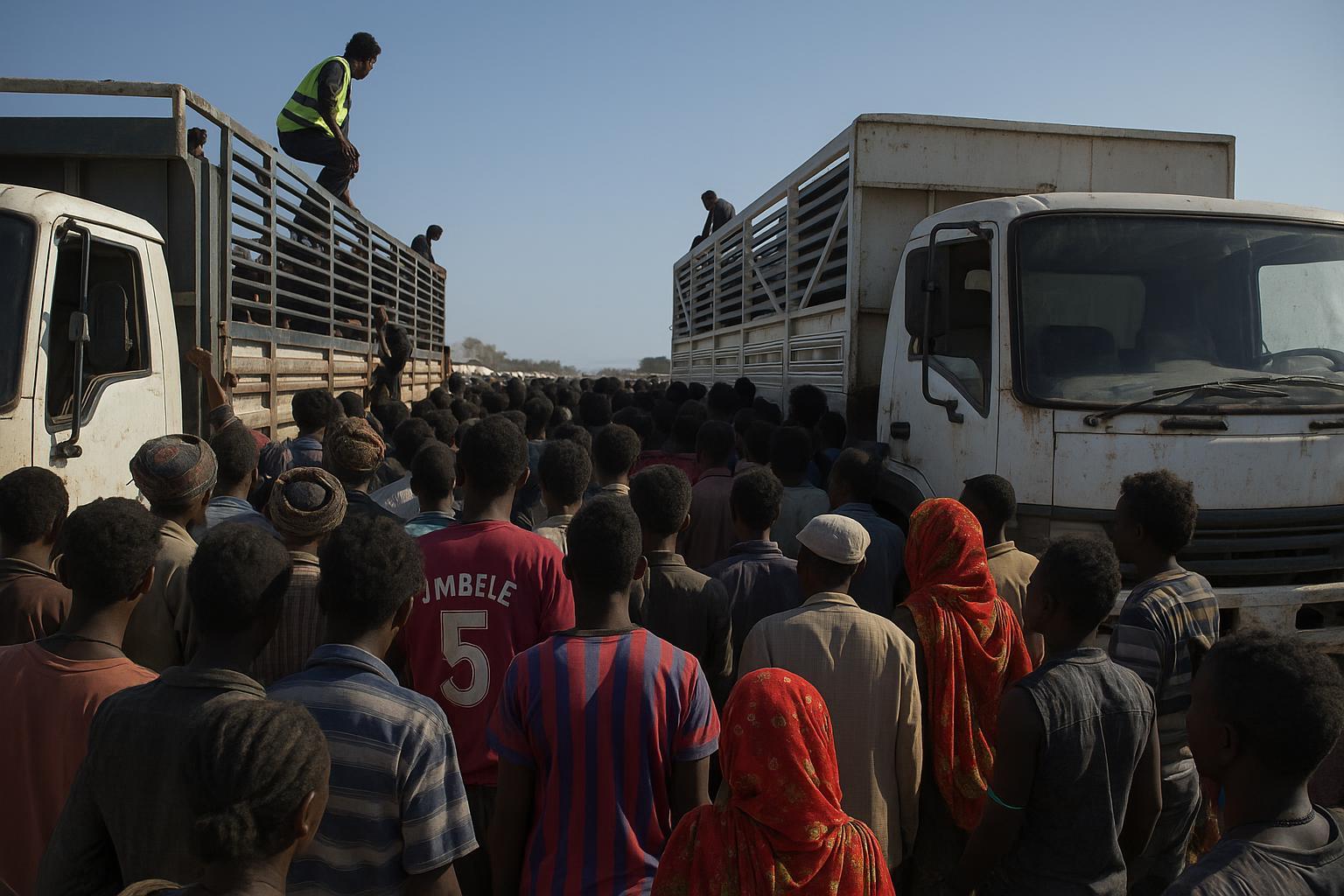
Strategic Significance of Adré Border Post
When Sudan’s Ministry of Foreign Affairs declared that the Adré crossing into neighbouring Chad would remain operational until 31 December, it did more than announce a bureaucratic extension. The decision preserves what aid logisticians describe as the most navigable westward artery for food, medicine and shelter materials destined for Darfur and Kordofan. Since the eruption of fighting between the Sudanese Armed Forces and the Rapid Support Forces in April 2023, the western theatre has been among the hardest to reach. Roads north to Libya are unsafe and corridors south to the Central African Republic are seasonally impassable, leaving the Adré axis as the pragmatic choice for relief convoys.
Government Calculus and Diplomatic Messaging
Khartoum’s communiqué frames the extension as an invitation to international partners to “seize the opportunity” to accelerate assistance. Diplomats in both Khartoum and N’Djamena note that the phrase positions Sudan as a cooperative stakeholder in the humanitarian response, even while battlefield dynamics remain volatile. By coupling the time-bound opening with a public appeal for resources, Sudanese authorities send a twin signal: first, that sovereignty over border policy remains intact; second, that responsibility for unmet needs should be shared with external donors. According to a regional envoy familiar with the negotiations, the announcement required delicate coordination with Chad, whose own security services monitor cross-border militia flows.
Operational Realities for Humanitarian Agencies
The UN Office for the Coordination of Humanitarian Affairs calculates that more than 4 million Sudanese have been displaced since April 2023, with at least 400,000 crossing into Chad. Agencies such as the World Food Programme, Médecins Sans Frontières and the International Organization for Migration now race to pre-position commodities before seasonal rains intensify. Logistics officers stress that each truck cleared through Adré represents roughly 15 metric tons of life-saving supplies. Yet convoy assembly is contingent on security escorts, fuel availability and customs clearances on both sides of the frontier. In practice, bureaucratic bottlenecks can erase days from the four-month window just granted.
Security Concerns and Risk Mitigation
The corridor’s utility depends on a fragile security calculus. Darfuri armed groups, Chadian rebels and opportunistic bandits operate along the trans-Sahelian routes that aid trucks must traverse. Although the Sudanese Armed Forces maintain a nominal presence near the crossing, control dissipates rapidly beyond garrison towns. Chad’s gendarmerie has reinforced patrols, acknowledging the risk that combatants may exploit humanitarian traffic to smuggle weapons or recruits. For their part, relief organisations deploy security advisers who conduct route assessments and contingency planning. An OCHA official describes the current environment as “permissive yet reversible,” underscoring the possibility that a single clash could trigger an abrupt suspension of operations.
Regional and International Responses
Donor capitals have greeted the extension with cautious optimism. The European Union’s Civil Protection and Humanitarian Aid Operations service is preparing a supplementary air-bridge to N’Djamena, while the United States Agency for International Development evaluates whether to upscale cross-border programming. Gulf Cooperation Council members, already significant contributors to Sudanese response plans, are reportedly studying whether cash-for-food mechanisms could complement in-kind deliveries. Diplomats observe that the four-month deadline imposes a planning horizon coinciding with end-of-year budget cycles, compelling agencies to allocate funds swiftly or risk forfeiture. The coming weeks may therefore witness an accelerated pledging environment.
Implications for Conflict Dynamics
While humanitarian corridors are designed to be neutral, they invariably shape battlefield incentives. Analysts caution that predictable aid flows might reduce incentives for combatants to negotiate nationwide access, yet the absence of relief would almost certainly intensify civilian suffering. By retaining the discretion to close Adré on 1 January, Khartoum preserves a lever it could deploy in future diplomatic bargaining, whether with regional mediators in Djibouti or multilateral forums in New York. For the moment, however, the extension offers a rare overlap of interests: Sudanese authorities affirm sovereignty, Chad reinforces border stability, and humanitarians secure a temporary reprieve in their uphill struggle to reach millions in need.
