
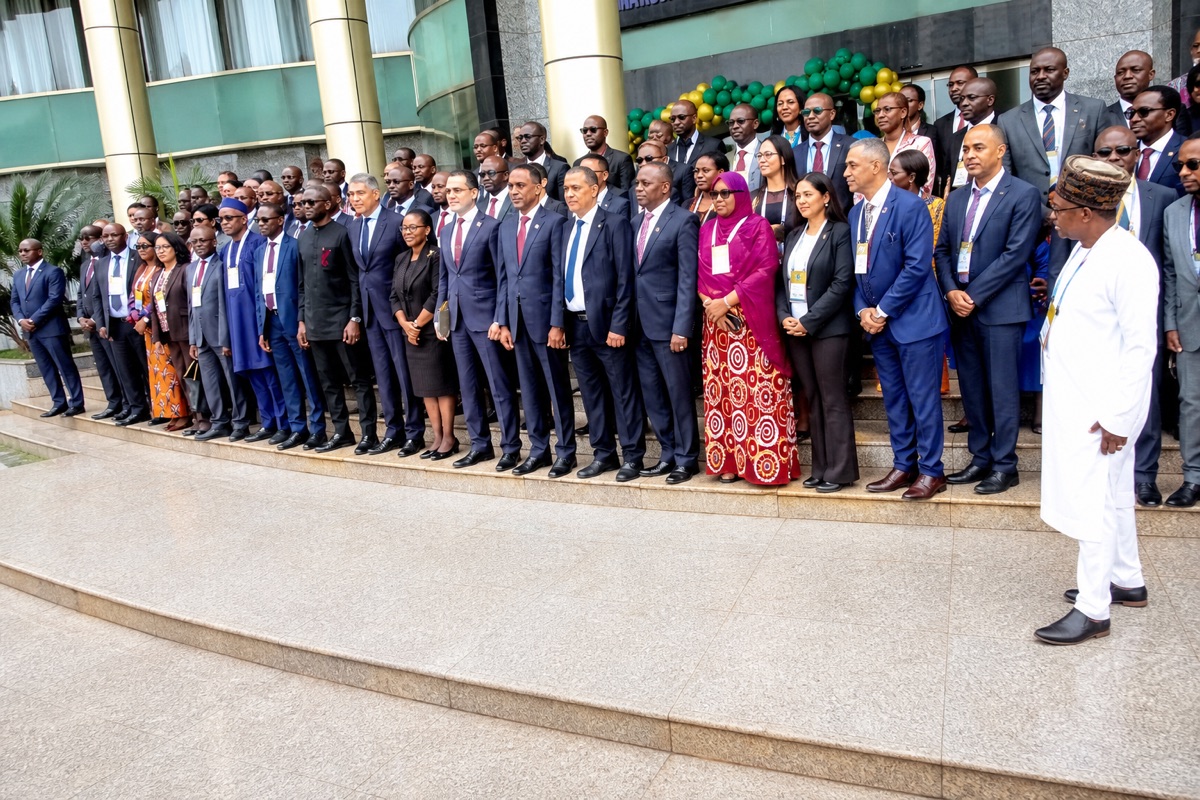
Congo-Brazzaville has quietly but deliberately reinforced its standing within Africa’s expanding architecture of financial oversight, sending two of its principal watchdog institutions to Nairobi for a summit that speaks to a broader continental ambition: to treat the fight against corruption not as a domestic housekeeping exercise but as a shared regional discipline. The delegation’s presence at the eighth General Assembly of the African Association of Anti-Corruption Authorities (AAACA) reflects a calculated bid to embed the country more firmly in the networks that increasingly shape norms of governance across the continent.
A Congolese Delegation Steps Onto the Continental Stage
The country was represented by two bodies whose mandates overlap in purpose if not in form. The National Commission for Transparency and Responsibility in the Management of Public Finances (CNTR) and the High Authority for the Fight against Corruption (Halc) together carried Brazzaville’s brief to the Kenyan capital. The delegation was led by Joseph Mana Fouafoua, who presides over the CNTR, and Emmanuel Ollita Ondongo, at the head of the Halc, a pairing that signalled the seriousness with which the government wished its participation to be read.
What unfolded in Nairobi was less a ceremonial gathering than a working forum. The exchanges centred on deepening cooperation among African institutions and on cultivating what participants described as institutional innovation, the notion that the machinery of anti-corruption enforcement must itself evolve if it is to keep pace with the increasingly sophisticated forms that illicit enrichment now takes. For a country whose public finances remain under close scrutiny, the appeal of such a framework is evident.
A Research Centre to Underpin the Continental Effort
Among the assembly’s more substantive outcomes was the launch of an African Centre for Research and Studies on Corruption, a body conceived to anchor the continental effort in evidence rather than exhortation. Its purpose, as set out during the proceedings, is to advance research and to strengthen the capacities of national institutions, a recognition that the credibility of any anti-graft body ultimately rests on the analytical and technical depth it can bring to bear.
The initiative carries a certain symbolic weight. By committing to a shared research infrastructure, the participating authorities implicitly acknowledged that corruption in the region is a transnational phenomenon, one that migrates across borders with the ease that porous financial systems allow. A centre pooling data, methods and expertise offers a means of confronting that reality collectively rather than in isolation. For the CNTR, association with this endeavour also aligned Brazzaville with a wider continental dynamic in public governance, pursued alongside Morocco’s Instance for Probity.
Bilateral Threads Woven at the Margins
If the plenary sessions supplied the architecture, it was on the margins of the assembly that some of the more concrete commitments took shape. There the CNTR signed a memorandum of understanding with Mali’s Central Office for the Fight against Illicit Enrichment (Oclei), an agreement providing for exchanges of expertise and for the mutual reinforcement of institutional capacity.
Such bilateral arrangements matter more than their modest phrasing suggests. Capacity-building agreements of this kind allow smaller or younger oversight bodies to draw on the accumulated experience of their peers, to compare investigative techniques and to borrow procedural models that have proven their worth elsewhere. In binding itself to the Malian office, the CNTR positioned Congo-Brazzaville not merely as a recipient of continental knowledge but as an active participant in its circulation.
Reading Brazzaville’s Wider Calculus
Taken together, these developments illustrate a country seeking to consolidate its place within Africa’s mechanisms of governance and public-finance transparency. The language of the summit was that of coordination and innovation, but the underlying stakes are more political. Membership in these networks confers a measure of legitimacy, a signal to partners and creditors that a state takes the probity of its finances seriously enough to submit them to peer scrutiny and shared standards.
For Congo-Brazzaville, whose economy remains closely tied to the fortunes of its extractive sector and whose fiscal management draws sustained external attention, the reputational dividend of such engagement is far from negligible. Anchoring its watchdog institutions within continental structures offers both a template for reform and a form of external accountability that domestic mechanisms alone may struggle to provide.
Whether the commitments made in Nairobi translate into measurable gains at home will depend on the resolve of the institutions that made them and on the political space they are afforded to act. The AAACA framework furnishes tools, research capacity and partnerships; it cannot by itself supply the will to use them. What is clear is that Brazzaville has chosen, for now, to be present where the continental rules of transparency are being written, rather than to await their arrival from the outside.
