
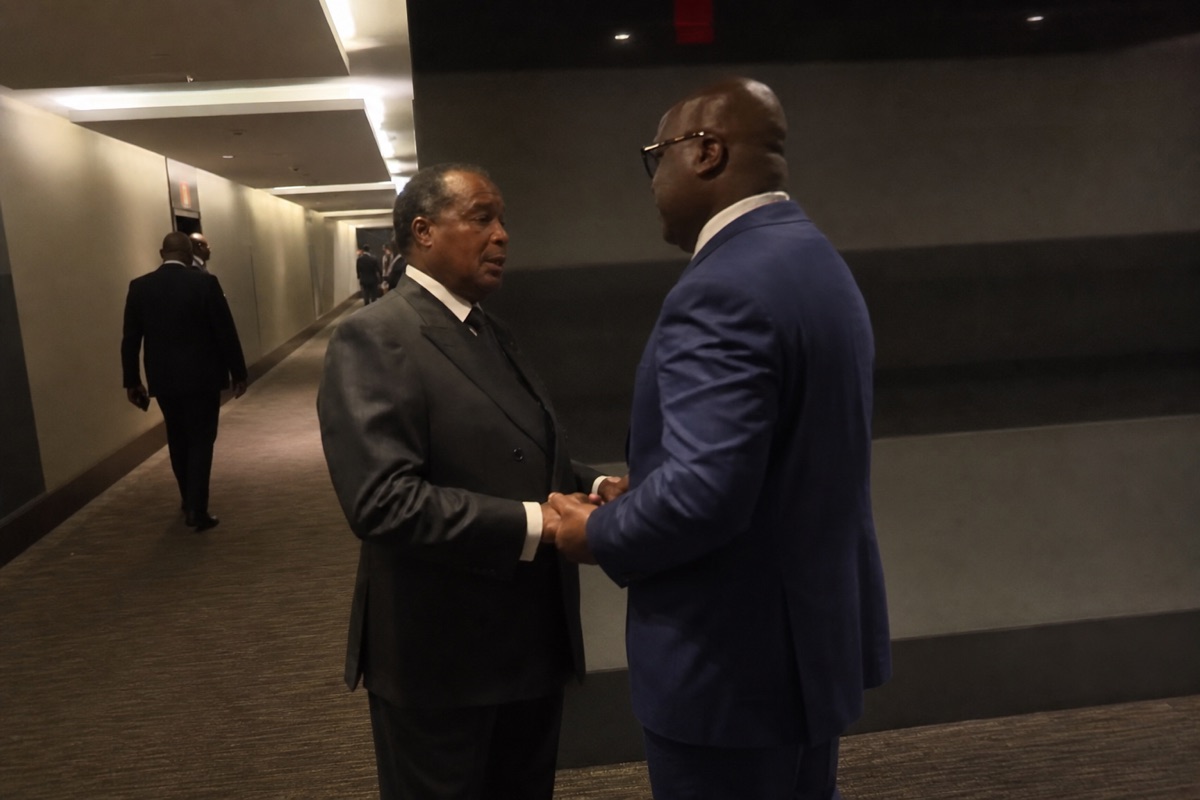
When Denis Sassou Nguesso stepped onto the tarmac in Kinshasa on the morning of Friday 30 January, the choreography of the moment carried more weight than the brevity of the trip might suggest. It was the Congolese head of state’s first journey abroad in 2026, and he chose, deliberately, the capital that sits barely a river’s width from his own. Few diplomatic gestures in Central Africa are read as closely as the comings and goings across the Congo River, and this one signalled that the relationship between Brazzaville and Kinshasa remains, for now, on firm ground.
A Cross-River Dialogue Rooted in Continuity
The talks between Sassou Nguesso and his counterpart, Felix-Antoine Tshisekedi Tshilombo, unfolded behind closed doors at the Palais de la Nation. They were not, properly speaking, a fresh beginning but a continuation: the two leaders had already conferred on 24 January in Oyo, and the Kinshasa meeting extended that conversation rather than opening a new one. This rhythm of repeated, low-key encounters is itself instructive. Rather than staging a single summit weighted with expectation, the two presidents appear to be cultivating a habit of consultation, the kind of sustained contact that diplomats tend to value more than the occasional grand declaration.
According to the account relayed by Les Echos Congo Brazzaville, the discussions centred on bilateral cooperation between the two capitals and on the security situation in the eastern part of the Democratic Republic of the Congo. The pairing of those two themes is telling. Brazzaville cannot remain indifferent to instability on the far side of its neighbour’s vast territory, if only because the political and humanitarian consequences of any deterioration tend not to respect borders.
Eastern DRC and the Limits of Quiet Diplomacy
The eastern question hung over the meeting at a moment of heightened diplomatic activity. A panel of African Union facilitators had recently concluded a stay in the Democratic Republic of the Congo and was due to travel onward to Rwanda and Burundi. That sequence places the Brazzaville-Kinshasa exchange within a wider continental effort to contain the tensions that periodically flare in the Great Lakes region.
What the public record does not offer is the substance of what the two presidents concluded on this front, and it would be unwise to read into their conversation commitments that were not announced. The significance lies less in any specific outcome than in the fact that the subject was addressed at all, and at the highest level. For Kinshasa, securing the attention and tacit solidarity of its closest neighbour is a modest but real diplomatic asset; for Brazzaville, it is a way of remaining a relevant interlocutor in a crisis that could, if mishandled, reshape the balance of Central Africa.
A Shared Mourning That Doubled as Statecraft
The visit was not confined to political consultation. After their talks, Sassou Nguesso and his wife attended a solemn Mass in memory of the honorary senator Francois Kaniki Ituome, held at the Cathedral of Notre-Dame du Congo in Kinshasa. The presence of a foreign head of state at a memorial service is rarely incidental. It folded a gesture of personal respect into the day’s diplomacy, allowing the relationship between the two countries to be expressed in a register that protocol alone cannot reach.
The ceremony carried genuine institutional weight. The government of the Democratic Republic of the Congo was represented by Prime Minister Judith Suminwa Tuluka, who, on behalf of President Tshisekedi, laid a wreath of flowers before the final commendation. The Mass itself was presided over by Cardinal Fridolin Ambongo, surrounded by auxiliary bishops and priests, and unfolded, in the words of those present, with marked discretion and gravity.
The Quiet Authority of a Long Public Life
Francois Kaniki Ituome died on 13 January 2026 in France, at the age of 71. His career, by all accounts, traced a path through the upper reaches of the Congolese state, encompassing senior administrative responsibilities, international affairs and a long engagement in political life. In his homily, Cardinal Ambongo drew on the Gospel of John to honour a man he described as defined by faith, commitment and a deep attachment to human values.
That a figure of his stature should be mourned in the presence of leaders from both banks of the river underscores a theme that runs beneath the entire visit. The bond between Brazzaville and Kinshasa is not merely a matter of treaties and communiques; it is woven from shared history, overlapping elites and a sense of kinship between two capitals that face each other across a single waterway. On this particular Friday, that fraternity was on display, and the verdict offered by the Brazzaville press was unambiguous: the axis between the two cities, for the moment, is holding well.
