
Continental Diplomacy in Motion
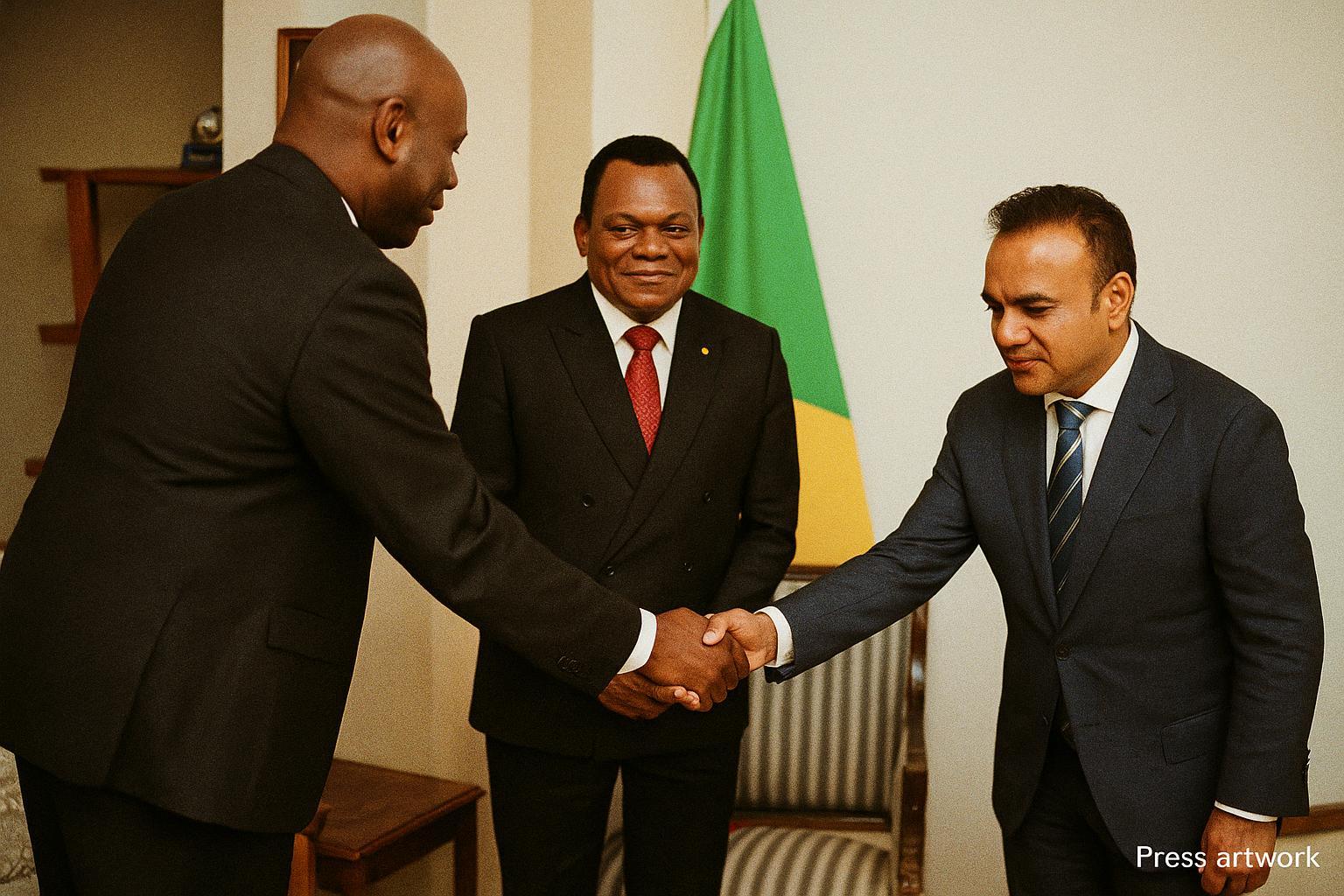
The security gate at Sir Seewoosagur Ramgoolam International Airport had barely closed behind Minister Jean-Claude Gakosso when seasoned African observers began to parse the deeper meaning of his Mauritian stopover. The visit concluded a ten-day sweep through Angola, Namibia and the island nation, each capital receiving a sealed message from President Denis Sassou Nguesso that pressed the case for Firmin Edouard Matoko to helm the United Nations Educational, Scientific and Cultural Organization. Far from a perfunctory tour, the swing signalled Brazzaville’s resolve to knit together a critical mass of endorsements across linguistic, geographic and ideological lines before the formal campaigning window opens in Paris next spring (UNESCO 2023).
In the corridors of African diplomacy, timing remains everything. By arriving before other declared or presumptive aspirants, Congo’s envoys framed the conversation as one of continental ownership rather than national ambition. Mauritian President Prithvirajsing Roopun, echoing sentiments expressed earlier by Angolan and Namibian counterparts, stressed “the value of an African technical profile steeped in multilateral nuance”—a thinly veiled nod to Matoko’s two-decade tenure as UNESCO Assistant Director-General for Priority Africa. Such early signals of receptivity furnish Brazzaville with a diplomatic dividend that may prove decisive once lobbying intensifies among the fifty-eight members of UNESCO’s Executive Board.
Candidate Matoko’s Multilateral Credibility
Firmin Edouard Matoko embodies a hybrid professional arc that sits comfortably at the intersection of bureaucracy and vision. Educated in Brazzaville and Paris, he navigated UNESCO’s administrative labyrinth long before Africa began articulating a collective wish to secure the organisation’s leadership for the first time since Amadou-Mahtar M’Bow left office in 1987. During his stewardship of the Priority Africa and External Relations sector, Matoko oversaw the launch of the ‘Operational Strategy for Priority Africa 2022-2029’, regarded by experts at Addis Ababa’s Institute for Peace and Security Studies as “a template for culturally attuned development” (IPSS Brief, 2024).
Yet pedigree alone seldom swings votes in international bodies. What differentiates Matoko, argue veteran analysts at the South African Institute of International Affairs, is his capacity to translate UNESCO’s soft-power toolkit into concrete deliverables: rehabilitation of Timbuktu’s manuscripts, digital literacy pilot hubs in Lusophone Africa, and the flagship African World Heritage Fund. These initiatives have given Congolese diplomats tangible talking points as they traverse chancelleries from Libreville to Abuja later this month.
African Unity and the Francophone Factor
In the discreet language of diplomatic cables, support is rarely unconditional. Several West African governments have hinted that their endorsement could hinge on commitments to amplify Francophone technical cooperation inside UNESCO and to safeguard linguistic parity in its Secretariat. Congo’s foreign minister has responded by emphasising Brazzaville’s historic sponsorship of the Francophonie Charter and, more broadly, its mediation efforts within the International Organisation of La Francophonie (OIF Communiqué, February 2024).
At the same time, the campaign consciously transcends linguistic blocs. Angola’s backing, confirmed after a meeting between President João Lourenço and Minister Gakosso, illustrates how Portuguese-speaking states calculate that an African UNESCO chief may accelerate the restitution of cultural artefacts displaced during colonial periods. Nigeria, which maintains significant voting weight on the Executive Board, is expected to weigh economic diplomacy considerations, particularly the potential for UNESCO to strengthen technical and vocational education programmes aligned with the African Continental Free Trade Area.
Geostrategic Stakes for Small States
Observers in Port-Louis were quick to note that Congo’s choice of Mauritius as its southern terminus was not merely a cartographic convenience. Small island developing states often serve as swing voters in multilateral elections, their diplomacy sharpened by climate vulnerability and cultural tourism imperatives. In private discussions, Mauritian officials raised the prospect of leveraging UNESCO leadership to expand the Indian Ocean’s marine heritage corridors, an agenda Matoko reportedly welcomed. Such resonance underscores the campaign’s deft alignment with niche priorities of electorally pivotal states without diluting its pan-African narrative.
Furthermore, Brazzaville’s outreach dovetails with a broader South-South cooperation dynamic. Recent African Union policy notes suggest that continental cohesion in UN agencies can elevate Africa’s bargaining power in climate financing and digital governance forums (African Union Policy Note, April 2024). By positioning Matoko as a consensus figure, Congo effectively anchors its national bid within a multilateral aspiration shared by many emerging economies.
Outlook Toward the Executive Board Vote
The road from diplomatic courtesies to ballot papers remains fraught. Paris-based observers foresee at least two other candidacies from outside Africa, potentially from Eastern Europe and the Arab world, regions that have historically cultivated alignment inside UNESCO’s electoral college. Nevertheless, Congo’s early-bird diplomacy affords it a head-start in crafting binding memoranda of understanding that may lock in African votes prior to cross-regional bargaining rounds.
The transition of campaign stewardship on 27 July from Foreign Minister Gakosso to Prime Minister Anatole Collinet Makosso reflects a deliberate whole-of-government approach. The premier’s engagements in Gabon, Côte d’Ivoire, Nigeria, Burkina Faso, Liberia and Djibouti are expected to integrate trade and security dialogues alongside cultural diplomacy, thus enlarging the reservoir of goodwill available to Matoko. In a remark to local press before departure, Makosso framed the mission succinctly: “African intellectual capital deserves institutional voice. Our duty is to convert shared conviction into counted votes.”
Whether Congo can ultimately translate its current momentum into the two-round vote slated for autumn 2025 will depend on sustained diplomatic stamina and the candidate’s ability to articulate a programme resonant beyond Africa’s shores. Yet, for now, Brazzaville has signalled that its external engagement is neither episodic nor symbolic but strategic, professional and attuned to the multidimensional chessboard that defines contemporary multilateral elections.
