
The Republic of Congo (Congo-Brazzaville) has placed a significant share of its extractive ambitions on hold. In a directive dated 1 April 2026, signed by Pierre Oba, Minister of Mining Industries and Geology, Brazzaville suspended the granting and renewal of mining titles covering gold, cassiterite and columbo-tantalite (Les Échos du Congo-Brazzaville). The measure, sober in its wording yet consequential in its reach, signals a state determined to reassert authority over resources that have slipped, in part, beyond effective oversight.
A Calculated Pause Rather Than a Retreat
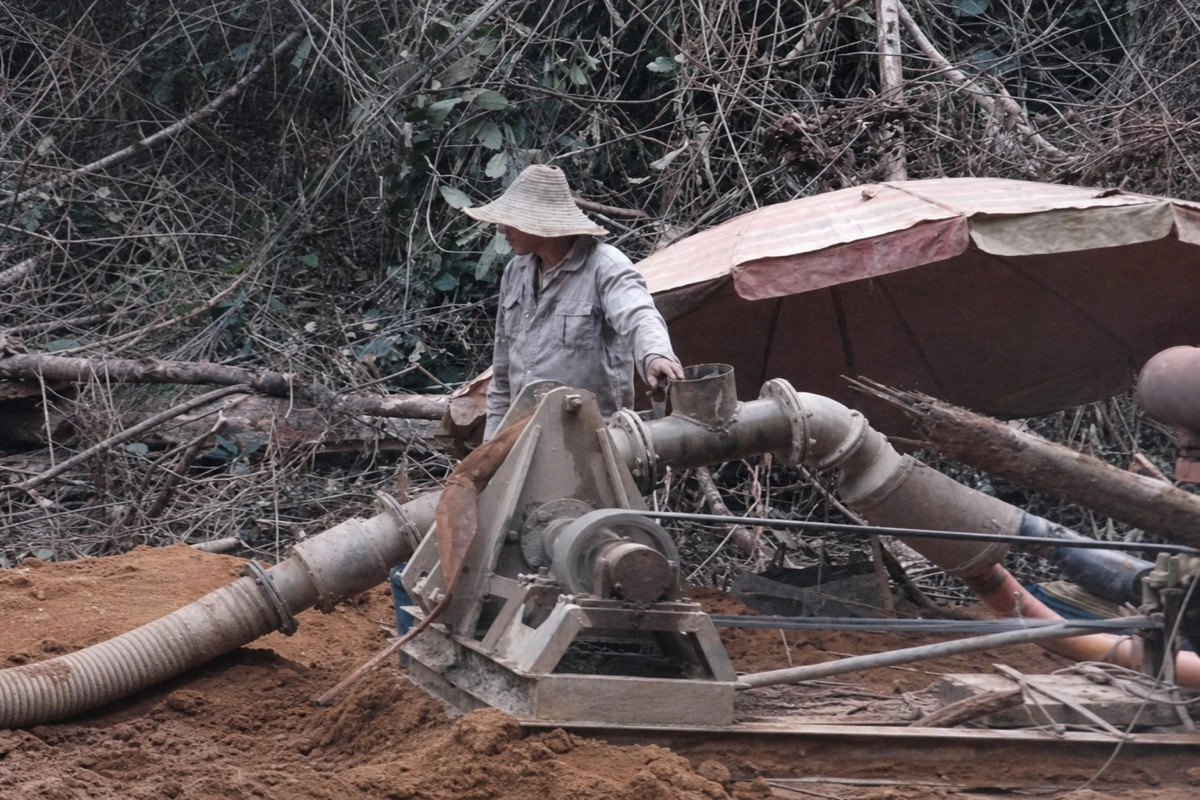
The suspension is best read not as a withdrawal from mining but as an attempt to reorder it. Authorities frame the decision as a means to reorganise and clean up a sector whose expansion, particularly in gold, has outpaced the administrative machinery meant to govern it. Artisanal and informal operations have proliferated, many of them lightly regulated and some plainly illegal, leaving the state with an incomplete map of who extracts what, and where.
By freezing new and renewed titles, Brazzaville buys itself time to take stock. The stated intention is to regain control of the licensing process, to chart mining sites with greater precision, and to inject transparency into the award of permits. In an economy where mineral rents carry both fiscal weight and political sensitivity, the choice to pause rather than to liberalise reflects a judgement that order must precede growth.
Cassiterite and Coltan at the Centre of the Calculation
The three minerals named in the directive are not incidental. Gold remains the most visible and the most diffuse, drawing in itinerant diggers and opportunistic operators whose activity is difficult to trace. Cassiterite, the principal ore of tin, and columbo-tantalite, the so-called coltan from which tantalum is derived, occupy a more strategic register still. These are inputs to the global electronics supply chain, and across Central Africa their trade has long been entangled with questions of provenance and probity.
For a country seeking to position itself credibly among producers, the integrity of these minerals’ origin is not a cosmetic concern. The decision to encompass cassiterite and coltan within the same freeze suggests that Brazzaville is alert to the reputational and regulatory expectations that now attach to such commodities, even if the directive itself confines its language to the domestic imperative of putting the sector in order.
Environmental Costs That Concentrated the Mind
If administrative disorder supplied one rationale, environmental damage supplied another. Unregulated extraction has exacted a visible toll: degraded soils, watercourses fouled by mining runoff, and forest cleared in pursuit of deposits. The authorities have been unambiguous on the principle at stake, insisting that mining must not be allowed to compromise the environment or to circumvent established rules.
That framing matters for a state whose territory includes some of the Congo Basin’s ecological wealth. The suspension thus carries a dual logic, fiscal and environmental at once, where the case for reasserting control over permits coincides with the case for halting practices that have proved corrosive to land and water alike. The two arguments reinforce rather than compete with one another.
The Near-Term Price of Reform
No reform of this kind is without cost, and the directive’s most immediate effects are likely to be felt closest to the ground. Local economic activity that depends on small-scale extraction may slow, and modest operators, whose livelihoods are bound to the very informality the state now seeks to discipline, stand to bear the brunt of the freeze. The measure, in other words, redistributes pain before it distributes benefit.
This is the familiar dilemma of formalisation. Tightening the rules tends to dislodge those least equipped to comply, even as it promises a more orderly and more accountable industry over the longer horizon. How Brazzaville manages that transition, and whether it cushions the operators caught in between, will shape both the social acceptability and the durability of the policy.
What the Freeze May Foreshadow
The suspension is plausibly a prelude rather than an endpoint. Officials have hinted that it could herald a broader overhaul, one that pairs a revision of the legal framework with strengthened controls and the digitalisation of administrative procedures. Should that programme materialise, the current pause would be remembered less as a moratorium than as the moment the state cleared the ground for a more legible and better-governed mining regime.
For now, the directive stands as a statement of intent. Brazzaville has chosen to stop the clock on its gold, cassiterite and coltan, wagering that a measured interruption today will purchase a sturdier sector tomorrow. Whether that wager pays out will depend on the reforms that follow, and on the resolve to see them through.
