
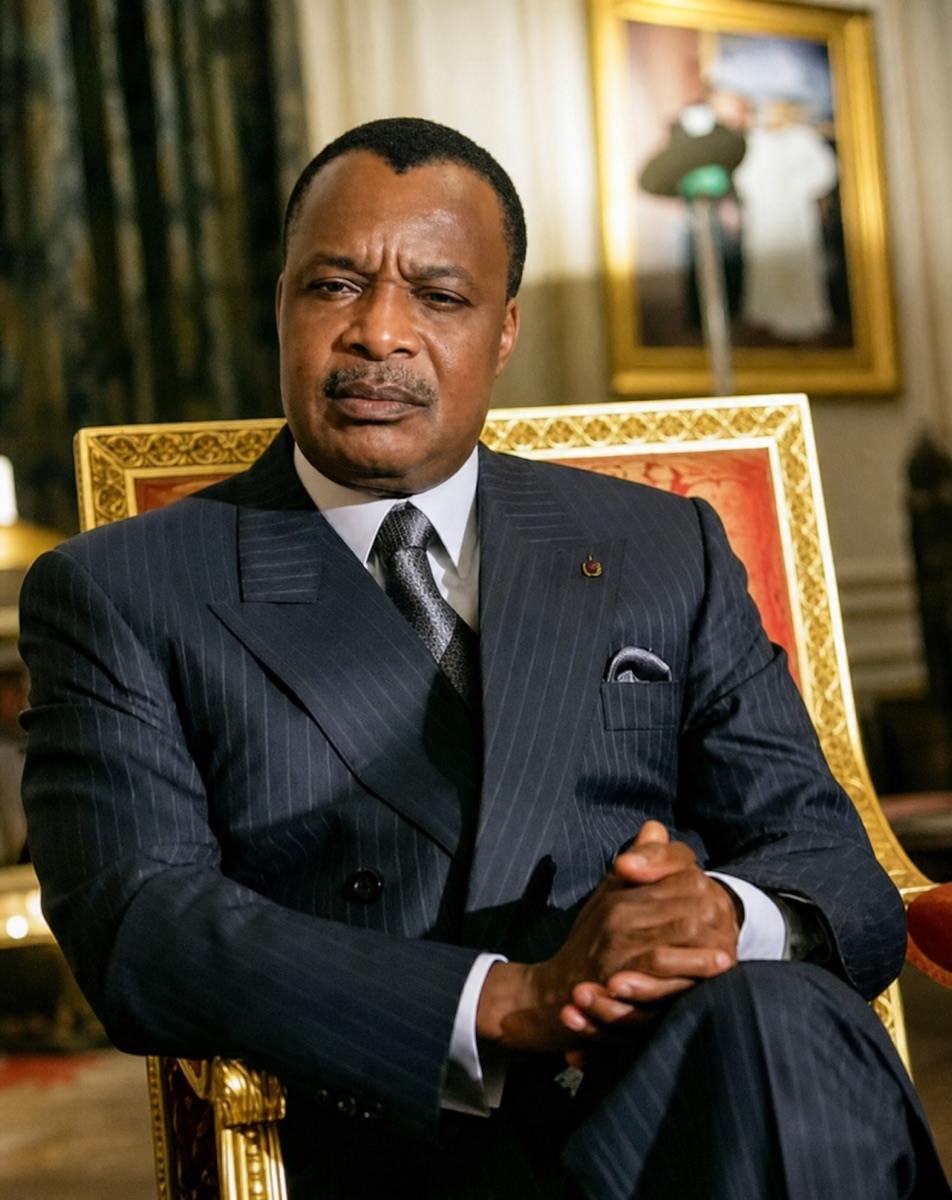
On 16 April, the Concorde Stadium at Kintélé, on the northern fringe of Brazzaville, will become the stage for the inauguration of President Denis Sassou Nguesso. The choice of venue is far from incidental. A complex described in the original reporting as an “architectural jewel,” it has come to embody the Republic of the Congo’s ambition to take its place among the African nations that have furnished themselves with modern, large-scale public infrastructure. That a swearing-in ceremony, traditionally a matter of solemn protocol, should unfold in a sporting arena signals an intent to render the moment both visible and shared, to lift it out of the closed chambers of state and into a space conceived for collective gathering.
A venue chosen for its symbolic weight
The decision to hold the ceremony at Kintélé rather than within the conventional institutional settings of the capital carries a deliberate message. Infrastructure, in much of Central Africa, has long stood as shorthand for credibility and modernity, and the Concorde Stadium offers Brazzaville a tangible emblem of that aspiration. By staging an event of constitutional significance in a structure designed for crowds, the authorities frame the inauguration as an affair of the nation rather than of the political class alone. The architecture itself becomes part of the argument, a backdrop that speaks to the country’s desire to be seen as equipped, organised and forward-looking.
A diplomatic gathering of continental reach
The occasion is expected to draw several foreign heads of state, lending it a markedly diplomatic dimension. Their anticipated presence is presented, in the source material, as evidence of the durable ties that Brazzaville maintains with its partners and of the importance those partners attach to the institutional stability of the Congo. In a region where transitions of power are watched closely, the convergence of foreign leaders on a single venue functions as a form of recognition. It situates the ceremony within a broader web of relationships, suggesting that the event is read abroad not merely as a domestic formality but as a moment with implications beyond the country’s borders.
The reporting refrains from naming the leaders expected to attend, and that reticence is worth preserving. What the source establishes is the scale of the gathering and its significance, rather than a precise roster. The point it makes is one of standing: that the Republic of the Congo can summon an audience of peers, and that such an audience chooses to be present.
Beyond protocol, a claim to national unity
Stripped of its diplomatic choreography, the ceremony is also cast as a moment of national cohesion. The authorities, the institutions and the citizens are expected to converge upon Kintélé to mark the step together. This emphasis on convergence is telling. It suggests that the organisers wish the day to be remembered less as the formal renewal of a mandate than as a shared milestone, a point around which the country’s various components are invited to assemble. The stadium, with its capacity to hold a multitude, lends itself naturally to that ambition, transforming an act of governance into something closer to a public rite.
Whether such an event can genuinely embody unity, or whether it performs it, is a question that any careful observer will hold in reserve. The source advances the language of cohesion without dwelling on the tensions that may lie beneath it, and a faithful reading respects that restraint. What can be said with confidence is that the symbolism is intentional, and that the choice of an open, popular venue is meant to communicate inclusion.
Reading the geopolitical signal
The inauguration carries, finally, a geopolitical charge. According to the account on which this article draws, the event is intended to project the Congo’s confidence in the face of regional challenges, its commitment to development and its assertion of a defined place within the wider African order. Each of these claims is a statement of posture rather than of measurable fact, and they should be understood as such. A ceremony of this kind is, by its nature, an exercise in signalling, a curated demonstration of stability and intent addressed simultaneously to a domestic audience and to the watching capitals of Central Africa and beyond.
For the Republic of the Congo, distinct from its larger neighbour the Democratic Republic of the Congo, the stakes of such signalling are considerable. In a region where perceptions of stability shape access to partnership and investment, the staging of a confident, well-attended inauguration is itself a strategic act. The Concorde Stadium at Kintélé, then, is more than a setting. It is the medium through which Brazzaville chooses to tell a story about itself, on a day when much of the continent is invited to listen.
