
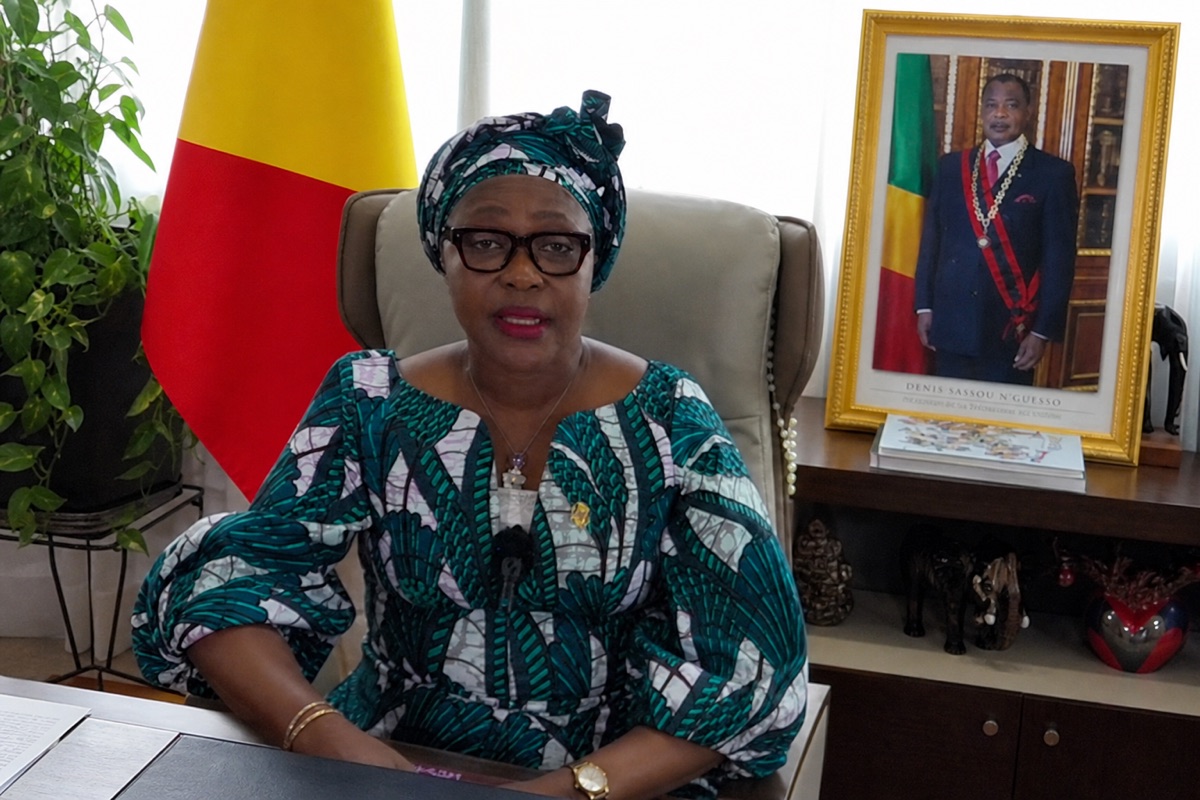
When Jacqueline Lydia Mikolo, Congo-Brazzaville’s Minister of Trade, Supplies and Consumption and the official charged with the African Continental Free Trade Area (AfCFTA), addressed the country on its National Trade and Business Day, observed on 20 May, she chose a register that was at once sober and faintly admonitory. The continental market, she argued, is neither a windfall nor an abstraction; it is a discipline. In framing the AfCFTA as simultaneously a collective challenge and a national priority, the minister signalled that the Republic of Congo intends to treat continental integration less as a diplomatic ornament than as an instrument of domestic economic reform.
A continental market that rewards the prepared
The promise Mikolo set before the country’s small and medium-sized enterprises, industrial operators, farmers, artisans and young entrepreneurs was deliberately expansive: access to what she described as “a vast, dynamic and competitive continental market.” Yet the rhetorical weight of her remarks fell less on the size of that market than on the conditions of entry. Integration, in her telling, is not a door that opens automatically but a threshold that must be earned. The injunction she returned to was unambiguous in its economy of phrasing: “produce more, produce better, and give priority to local production.”
That formula carries more analytical freight than its brevity suggests. For an economy whose export profile has long been dominated by hydrocarbons, the prospect of a tariff-light continental space is attractive only insofar as Congolese producers can supply goods that other African markets actually demand. The competitive logic of the AfCFTA cuts both ways: the same liberalisation that grants Congolese firms access to neighbouring markets also exposes them to imports they have rarely had to confront on equal terms. Mikolo’s emphasis on productive capacity reads, in this light, as an implicit acknowledgement that openness without competitiveness is a vulnerability rather than an opportunity.
Building the legal scaffolding before the trade
Rather than dwell on aspiration, the minister devoted much of her message to the institutional groundwork already under way. Chief among these is the creation of a dedicated legal unit tasked with revising the country’s commercial legislation, an undertaking that recognises that continental free trade cannot be grafted onto a statutory framework conceived for a more closed economy. The harmonisation of national rules with continental commitments is among the more demanding aspects of AfCFTA implementation across the continent, and Congo’s decision to address it through a standing juridical cell suggests an awareness that the reform is technical before it is political.
Alongside this legal effort, the government is updating its national AfCFTA implementation strategy for the 2021-2030 period and drafting an operational roadmap covering 2026-2030. The pairing is instructive. The first document situates Congo within the decade-long continental timetable; the second translates that horizon into a sequence of concrete measures over the medium term. Taken together, they indicate an attempt to move beyond declarations of intent towards a calibrated programme with identifiable milestones, a shift that observers of African trade policy have repeatedly identified as the decisive variable separating signatory states from genuine participants.
Consultation as method, not ceremony
Perhaps the most telling commitment concerned process. Mikolo announced that participatory meetings bringing together traders, economic operators, consumers, civil society and the public administration would be convened within the first hundred days. The choice to bind the consultation to so precise a deadline is itself a statement of method: it converts inclusiveness from a vague aspiration into a measurable obligation, and it invites the very constituencies most exposed to the AfCFTA’s effects to shape the terms of their own integration.
There is a quiet sophistication in this approach. Trade liberalisation tends to generate diffuse benefits and concentrated costs, and the political durability of any such reform often hinges on whether those who stand to lose in the short term feel consulted rather than overruled. By gathering producers, merchants and consumers around the same table early, the ministry appears to be seeking not merely technical input but a measure of social legitimacy for decisions whose consequences will be uneven.
A national priority measured against continental ambition
What emerges from the minister’s address is a portrait of integration as a long undertaking rather than a singular event. The AfCFTA, in her framing, is a test of the country’s capacity to reform itself under the pressure of an external timetable that Congo did not set alone but has chosen to honour. The language of priority is easy to invoke; the legal cell, the revised strategy, the 2026-2030 roadmap and the hundred-day consultations are the more sober metrics by which that priority will eventually be judged. For now, Mikolo has done what a trade minister can plausibly do at this stage: she has named the stakes, defined the discipline, and committed the state to a calendar against which its seriousness can be measured.
