
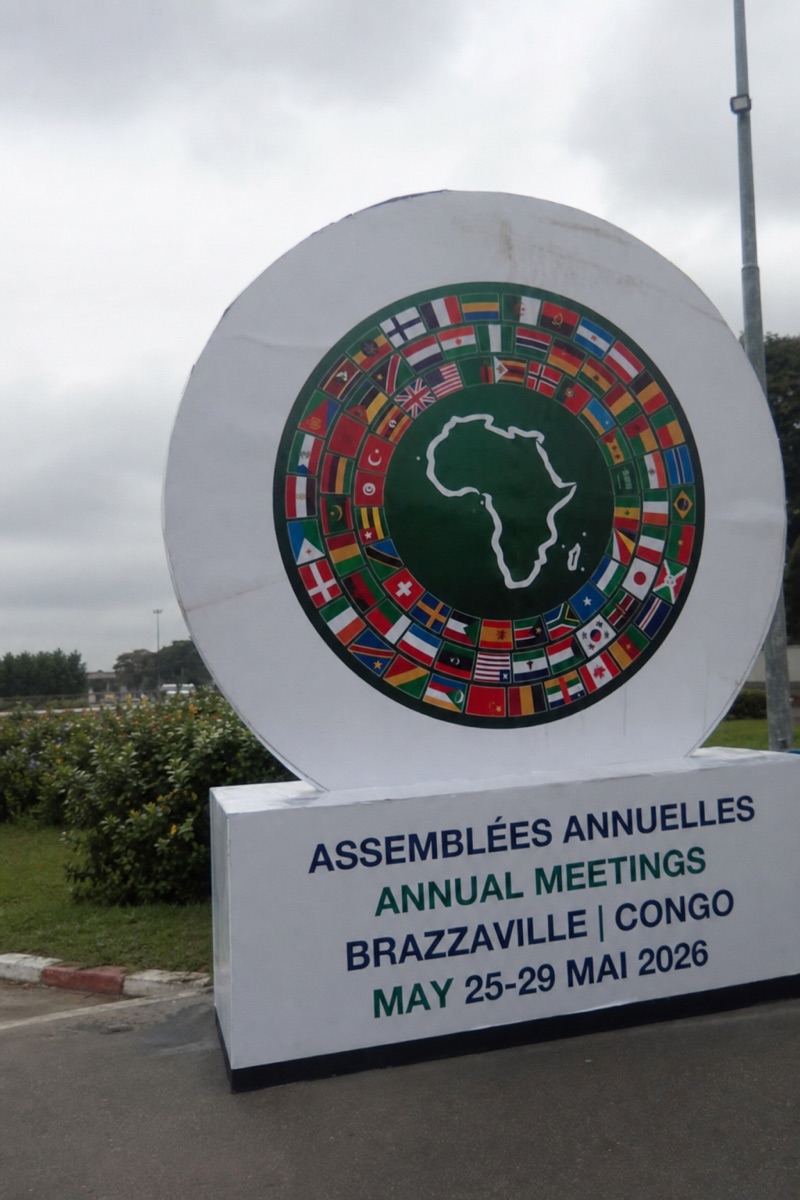
From 25 to 29 May, the Republic of Congo’s capital moves to the centre of the continent’s economic conversation as it welcomes the Annual Meetings of the African Development Bank (AfDB) Group. For Brazzaville, the gathering is more than a logistical undertaking; it is a statement of intent, a carefully staged return to the upper register of continental diplomacy and a wager that the city can hold its own among the institutions that shape African finance.
A Capital Recast as a Hub of Continental Diplomacy
To convene the AfDB’s governors, alongside heads of state, finance ministers, central bankers, investors and a dense roster of international experts, is to assume a role that few cities are asked to play. The choice of Brazzaville reflects a measured confidence in the country’s commitment to stability, regional integration and the patient construction of infrastructure. It also reads as recognition that the Republic of Congo, distinct from its larger neighbour the Democratic Republic of the Congo, intends to be counted among the architects of the continent’s financial future rather than merely a recipient of its verdicts.
That ambition carries a particular weight in Central Africa, a sub-region whose economies remain closely tied to commodity cycles and whose integration efforts, channelled through the CEMAC framework, have long promised more than they have delivered. By offering itself as host, Brazzaville positions itself as a convening power, a place where capital, policy and political will can be brought into the same room. The symbolism is deliberate, and the organisers appear keenly aware that perception and substance must reinforce one another if the meetings are to leave a durable mark.
Financing Development When Old Certainties Are Fraying
The substantive agenda is unmistakably of its moment. Delegates are expected to dwell on the financing of development, on economic transformation, on the energy transition and on the employment of a young and fast-growing population. None of these themes is new, yet each has acquired fresh urgency in a global environment reshaped by geopolitical realignment and the accelerating pressures of climate change. The conviction running through the programme is that Africa must speak with a single voice and quicken its march toward economic sovereignty, a phrase that has migrated from rhetoric into the working vocabulary of finance ministries across the continent.
The difficulty, of course, lies in translating shared language into shared instruments. Development finance has become a more contested terrain than it was a generation ago, as traditional lenders weigh their exposure and newer partners enter with their own conditions and expectations. For a host such as Brazzaville, the meetings offer a platform to argue that the continent’s financing gap is not simply a problem of scarcity but of architecture, of how risk is priced, how capital is mobilised and how the returns of growth are distributed. Whether that argument gains traction will depend less on the eloquence of the opening addresses than on the quieter negotiations that fill the corridors between sessions.
The Energy Transition and a Generation Waiting for Work
Two threads of the agenda deserve particular attention because they touch the daily lives of citizens far beyond the conference halls. The energy transition presents African economies with a paradox they did not author: they are asked to decarbonise even as many of their people still lack reliable power, and to do so while drawing on resource endowments that have historically anchored their public finances. How that tension is resolved, and on whose terms, is among the most consequential questions the meetings can address.
The second thread is youth employment, an issue that frames almost every other discussion. A continent with the world’s youngest population cannot treat job creation as a downstream consequence of growth; it must be the organising purpose of economic policy. The debates in Brazzaville will be judged, in part, on whether they move from acknowledging this reality to financing it.
What Brazzaville Stands to Gain
The anticipated dividends for the host are tangible. A surge in hotel activity, heightened demand for local enterprises, sharpened international visibility and the prospect of new partnerships all flow from the simple fact of being chosen. These are the ordinary economics of a major summit, and they matter for a city eager to demonstrate capacity.
Yet the more enduring measure of success will be less easily counted. If Brazzaville can convert five days of attention into lasting credibility as a venue for serious economic dialogue, the Annual Meetings will have served a purpose that outlasts the closing communiqué. For now, the city has secured its moment on the continental stage, and the work of proving it deserves the spotlight begins the moment the delegates arrive.
