
Pointe-Noire at the centre of Congo’s energy debate
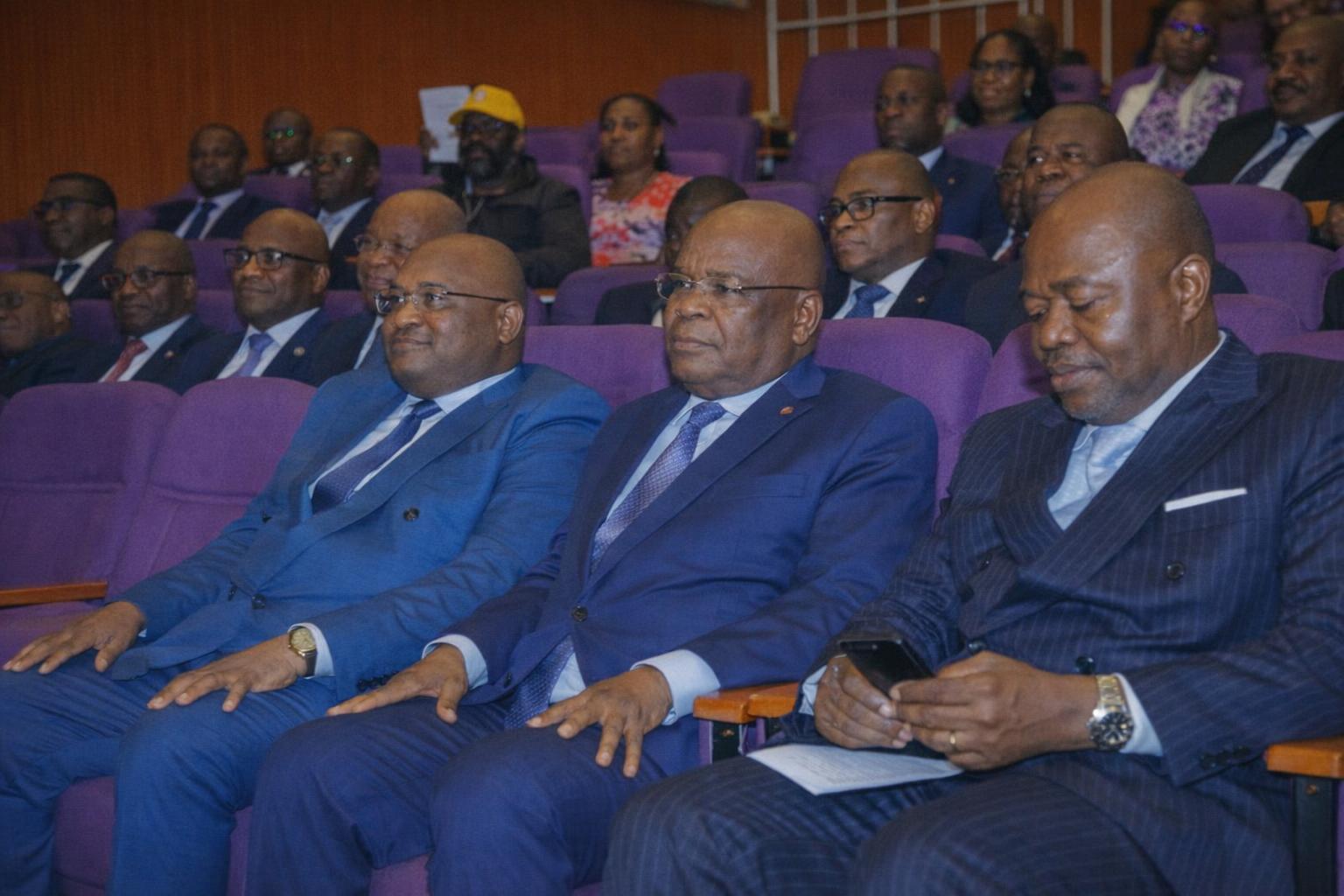
In Pointe-Noire on 31 January, more than six hundred public and private stakeholders gathered for a high-level seminar devoted to the oil and gas sector’s regulatory challenges, strategic prospects and governance priorities. The scale of participation, spanning public administrations, private firms, academia and experts from the Republic of the Congo and abroad, underscored how central hydrocarbons remain to national economic planning—and how closely the sector’s credibility depends on institutional clarity and sustained dialogue.
The meeting, initiated by Afrikan Campus Academy, was framed as a practical exchange rather than a ceremonial rendezvous. Participants moved across core themes that structure the political economy of petroleum and gas: the architecture of taxation and accounting, the operational logic of petroleum contracts, local content policies, and the pressures—both technical and reputational—associated with energy transition. Taken together, these discussions conveyed a shared premise: modern governance in hydrocarbons is no longer reducible to production volumes alone; it also concerns rules, transparency, capability-building and long-term positioning in an evolving global energy landscape.
Oil and gas regulation: from contracts to local content
According to the organisers’ agenda, the seminar deliberately connected subjects that are often treated separately in day-to-day sector management. Fiscal and accounting questions were discussed alongside contractual arrangements, as well as the practical implications of local content. This linkage is consequential, because contractual frameworks determine incentives, fiscal terms determine the distribution of value, and local content determines how far that value circulates within the domestic economy.
By bringing administrators, corporate representatives and academics into the same room, the seminar placed emphasis on the quality of shared understanding. In energy governance, misunderstandings can be costly: they can complicate compliance, delay audits, and, more broadly, increase the perception of regulatory uncertainty. The Pointe-Noire discussions therefore functioned as a forum in which technical language—often confined to narrow professional circles—could be examined in a way that is legible to different constituencies, including local actors who increasingly seek predictable frameworks and measurable benefits.
Building investor trust through accounting and audit
Yvon Boudoumbou, Director General of Afrikan Campus Academy, identified trust as the central stake of the seminar’s panels. In his reading, the foundations of that trust lie in oil and gas accounting and taxation—areas where precision is not a bureaucratic luxury but the basis for stable relations between the State, operators and the wider public.
Mr Boudoumbou also argued that audit should be understood as a driver of performance improvement, not merely as an instrument of control. This is a subtle but important shift in emphasis. When audit processes are credible and treated as opportunities to strengthen systems, they can reinforce compliance cultures, clarify responsibilities, and reduce friction in interactions between administrations and companies. The implication is that governance reform can be advanced through professional practices as much as through formal regulations, especially in complex sectors where expertise is itself a strategic asset.
Afrikan Campus Academy, active in France and in Africa, presented the seminar as part of a broader ambition to act as a catalyst for skills and strategic reflection in support of African economic development. Within the context of Congo’s hydrocarbons sector, this approach places capacity-building at the heart of governance: the ability to interpret contracts, to apply fiscal rules consistently, and to manage accounting standards becomes an element of national value creation rather than a purely technical concern.
SNPC’s strategic message on performance and transition
As the official sponsor, the Société nationale des pétroles du Congo (SNPC) used the Pointe-Noire platform to reiterate its commitment to an energy sector that is performant, attractive and durable. SNPC Director General Maixent Raoul Ominga set out three principal orientations: contributing to the transformation and transition of existing production, accompanying the State in strengthening investor confidence, and positioning SNPC at the forefront of energy transition.
Read together, these priorities convey an effort to reconcile continuity with adaptation. The first axis acknowledges the need to optimise current assets and production systems; the second emphasises the institutional conditions that underpin financing and long-term investment; and the third signals an intention to align the national company with evolving expectations around transition. In practice, such positioning is also reputational: at a moment when global energy narratives are shifting, the capacity to articulate a credible pathway—grounded in governance and technical competence—can matter as much as output metrics.
Denis Sassou Nguesso and governance as a policy horizon
While the seminar itself was a professional and technical forum, its themes resonate with a broader policy horizon under President Denis Sassou Nguesso, where the governance of strategic sectors is closely linked to national development objectives. In a sector where investment decisions are sensitive to regulatory predictability, the very act of convening a wide coalition of public and private actors can be interpreted as an affirmation of institutional dialogue and a search for shared standards.
The Pointe-Noire exchanges highlighted a pragmatic reading of governance: strengthening rules is inseparable from strengthening competencies, and strengthening confidence is inseparable from strengthening procedures that are verifiable—particularly in taxation, accounting and auditing. Such emphases do not eliminate debate; rather, they structure it, inviting stakeholders to move from general declarations to operational questions that can be tracked over time.
Pointe-Noire’s role in national and regional energy governance
Local authorities also framed the gathering as a marker of Pointe-Noire’s strategic role. Godefroy Michel Dibakala, second secretary of the Departmental and Municipal Council of Pointe-Noire, described the city as an “epicentre of national and regional energy governance,” an assessment consistent with its position as Congo’s coastal economic hub.
Sylvette Lempoua, Secretary General of the Pointe-Noire department, suggested that the meeting helped participants grasp the global stakes of oil and gas exploitation and anticipate short-, medium- and long-term perspectives. The point is not merely pedagogical. For a sector whose cycles extend across decades, anticipatory capacity—underpinned by informed debate—constitutes a form of governance in itself. In Pointe-Noire, the message was that strategic alignment requires a continuous conversation between institutions, companies and knowledge producers, particularly as the sector navigates regulatory demands and the evolving language of transition.
