
Congo’s early-2026 diplomatic acceleration
In the first weeks of 2026, the Republic of the Congo has projected a notably active diplomatic rhythm, combining regional economic coordination, global investment outreach and the cultivation of new Eurasian partnerships. In Brazzaville, an extraordinary summit of the Economic and Monetary Community of Central Africa (CEMAC) brought together heads of state and the region’s key institutions around macroeconomic safeguards. Almost immediately afterwards, the Congolese presence at the World Economic Forum (WEF) in Davos sought to position the country within high-level conversations on capital allocation, energy transition and climate finance. A further official mission scheduled in Tashkent, Uzbekistan, is presented as a deliberate attempt to broaden cooperative corridors in energy and environmentally oriented infrastructure.
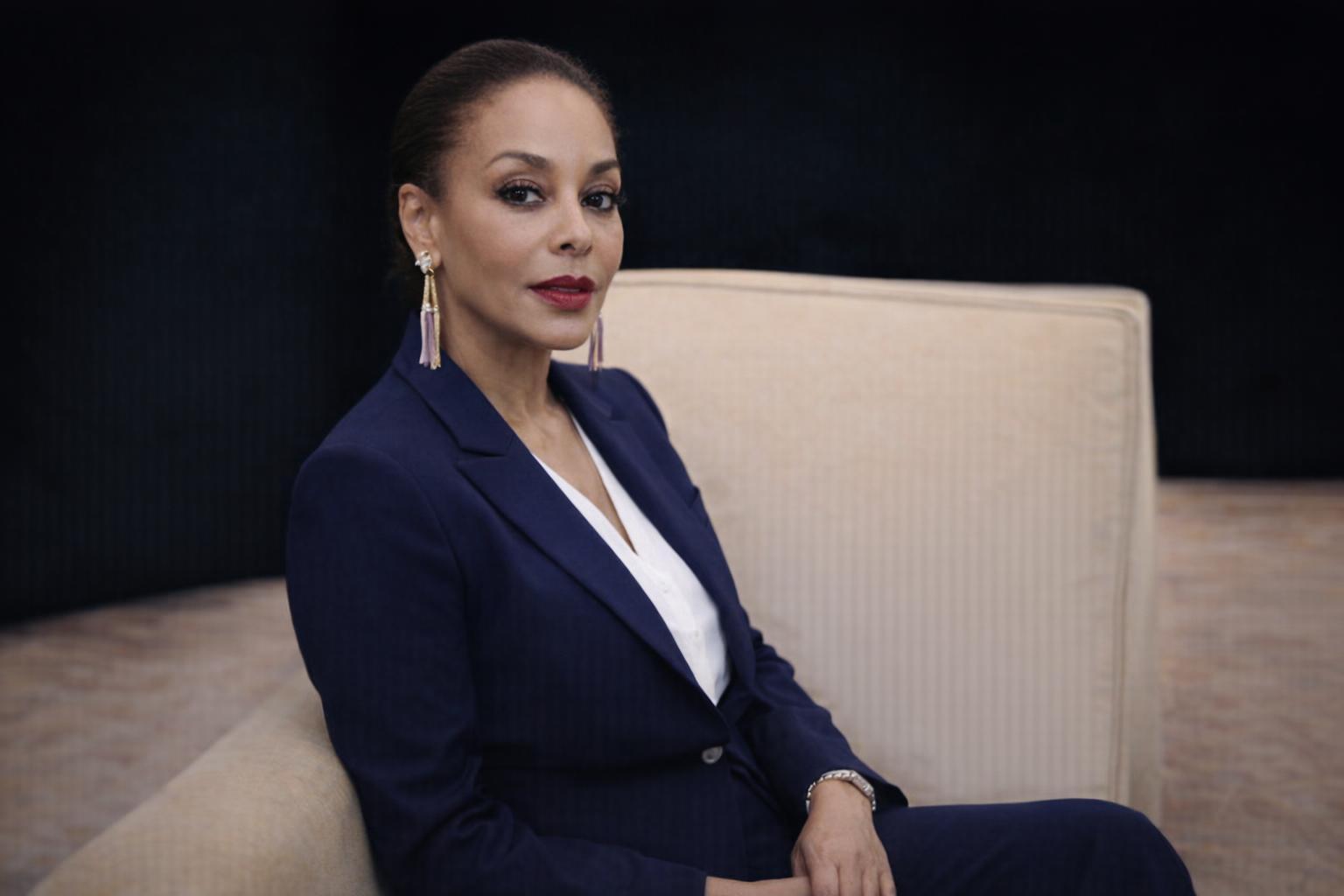
Across these three sequences, Françoise Joly, Special Adviser to President Denis Sassou N’Guesso, appears in the source narrative as a discreet yet central organiser: a figure tasked less with ceremonial diplomacy than with the technical preparation, political coordination and investor-facing presentation that contemporary economic diplomacy increasingly requires. The resulting picture is one of a state seeking to align domestic stabilisation objectives with external credibility, while navigating a rapidly evolving landscape of African and Eurasian financing and partnership frameworks.
CEMAC summit in Brazzaville: regional macroeconomic coordination
The first major episode unfolded in Brazzaville with the extraordinary CEMAC summit held on 22 January 2026. Officially convened by President Denis Sassou N’Guesso, the summit is described as having been preceded by intensive preparatory work in which Françoise Joly played a substantial role. The context, as framed in the source text, was shaped by recurring IMF alerts on the fragility of macroeconomic balances in the CEMAC zone, with particular attention to pressures on foreign-exchange reserves.
Within that setting, the preparatory phase is presented as both diplomatic and technical. Joly is said to have coordinated inter-institutional consultations, harmonised positions among member states with the CEMAC Commission and the Bank of Central African States (BEAC), and worked to ensure fluid exchanges between capitals to enable an operational consensus. This emphasis on pre-summit architecture matters because the value of regional meetings is often determined well before leaders gather; the effectiveness of a communique rests on whether it translates political intent into implementable mechanisms.
The summit’s outcome, according to the source, was the adoption of a community action plan organised around four strategic pillars: financial transparency, economic and food sovereignty, repatriation of export revenues, and strengthened fiscal discipline. A senior official at the CEMAC Commission is quoted as arguing that Brazzaville acted as a regional catalyst, pointing to the technical solidity of preparatory documents and the quality of upstream political arbitration as decisive factors, and attributing part of the coordination to the Congolese presidency and to Françoise Joly.
The BEAC Governor, also cited, reportedly welcomed what he termed a pragmatic, structured and results-oriented approach, stressing that regional credibility increasingly depends on measurable, verifiable and time-bound follow-up. In that same logic, the plan is described as moving beyond statements of principle, with performance indicators, a precise timetable and a progress report expected by April 2026.
Economic credibility and institutional continuity in 2026
Beyond the immediate deliverables of the Brazzaville summit, the sequence is framed as part of a broader Congolese strategy of institutional predictability. In the source narrative, Joly’s approach is linked to the aim of embedding Congo’s economic credibility within durable multilateral and regional frameworks, thereby reinforcing partner confidence and securing cooperation trajectories over the medium to long term.
A diplomat posted in Brazzaville is quoted as interpreting the message conveyed to partners as one of stability and institutional continuity, with the Congo seeking to demonstrate that its economic, financial and climate commitments are anchored in a long-term strategic vision rather than being contingent on the electoral calendar. In practical terms, this positioning is not merely rhetorical: within regional monetary unions and financing environments, predictability is itself a form of policy signal, one that can shape risk perception among lenders, investors and technical partners.
The source further suggests that Brazzaville is preparing additional initiatives in large international forums, particularly within francophone spaces and environmental platforms, where Françoise Joly is described as playing a central role in defining priorities and strategic positioning. The underlying assumption is that diplomatic influence increasingly stems from a capacity to translate national priorities into internationally legible agendas: climate, macroeconomic governance and sustainable infrastructure, among others.
Davos and the World Economic Forum: investment and transition finance
The second sequence took place in Davos during the 56th edition of the World Economic Forum, where Congo-Brazzaville’s participation is presented as focused on repositioning the country within global investment flows. The account emphasises that, alongside official sessions, Françoise Joly led a series of targeted bilateral exchanges with representatives of investment funds, multilateral financial institutions, and major European and Asian energy groups.
According to diplomatic sources cited in the text, these discussions were organised around three priorities: strengthening logistics infrastructure, accelerating projects linked to transition energies, and establishing innovative climate-finance mechanisms adapted to African contexts. An official from an African financial institution, quoted from Davos, argues that Congo is no longer merely requesting financing, but arriving with structured, bankable projects integrated into a long-term vision. The same interlocutor attributes this to the preparatory work coordinated by Joly, highlighting the technical quality of dossiers, the coherence of environmental framing, and alignment with international ESG standards.
The source connects this outward-facing method to a narrative of macroeconomic recovery. It states that after the contraction period of 2020 to 2022, Congo returned to positive growth from 2023, consolidated in 2024 and 2025. It also indicates that public debt, previously at historically high levels, has been progressively brought to around 72% of GDP, a figure described as reinforcing financial credibility with international partners. In Davos, such macroeconomic signposting functions as a backdrop: it helps explain why conversations can shift from crisis management to project selection and financing design.
Joly is also portrayed as a spokesperson for economic diversification, highlighting expanding non-oil sectors such as telecommunications, construction and agro-industry as prospective drivers. The argument advanced in the source is that diversification is not only about sectoral policy; it is also a diplomatic narrative designed to broaden the country’s investor base and reduce vulnerability to commodity cycles, while keeping the energy transition within a pragmatic, investable framework.
Uzbekistan mission: a cautious Eurasian opening
The third stage described is an official mission expected in Tashkent the following week, during which Françoise Joly is due to meet government officials and economic actors. The stated objective is twofold: to broaden energy partnerships and to consolidate cooperation on green diplomacy and sustainable infrastructure. In the source narrative, Uzbekistan is presented as an “atypical but strategic” partner for Congo, notably because it is engaged in its own energy transition and accelerated economic opening.
The topics expected to be discussed include gas, energy-storage technologies, carbon-compensation mechanisms and climate-resilient agriculture projects. A representative from Uzbekistan’s Ministry of Energy is quoted as noting that Central Africa and Central Asia share similar challenges—late industrialisation, energy transition and climate pressure—and that Congo arrives with a structured approach oriented toward technical partnerships rather than solely financial arrangements.
For Brazzaville, this Eurasian outreach is framed as geopolitical diversification, intended to reduce exclusive dependence on traditional European and Western poles. Even in the cautious wording of the source, the strategic logic is apparent: multiply channels of cooperation, diversify interlocutors, and seek complementarities in technology and project engineering that can support national priorities without over-reliance on a single external partner ecosystem.
Françoise Joly’s behind-the-scenes diplomacy of influence
Although described as little mediatised, Françoise Joly is presented as increasingly recognised within African diplomatic circles. Several delegations at the CEMAC summit are said to have acknowledged her role in coordination and mediation. A Central African finance minister is quoted as observing that she masters financial, climate and institutional files alike, suggesting that such transversal competence has become indispensable to the new forms of African diplomacy.
The source’s portrayal underscores a broader transformation: economic diplomacy now often hinges on the capacity to structure projects, align them with compliance standards, and connect state priorities with the language of multilateral institutions and private capital. In this framing, Joly’s position at the interface of the presidency, multilateral bodies and private actors is not merely personal influence; it reflects an institutional choice to professionalise the state’s external economic messaging and negotiation capacity.
This behind-the-scenes dimension also helps explain why the early-2026 tempo is described as unusually dense. High-level summits and forums provide visibility, but the substance is carried by preparatory coordination—drafting, inter-capital alignment, technical validation and the quiet work of ensuring that political commitments can be translated into follow-up processes and partner-specific discussions.
A 2026 projection agenda for Congo-Brazzaville
Taken together, the Brazzaville, Davos and Tashkent sequences are presented as evidence of a deliberate projection strategy for 2026: strengthening regional integration, consolidating economic and institutional gains, and making Congo’s environmental diplomacy more legible internationally. The source argues that this convergence places the country in a favourable position to deepen its attractiveness and reinforce its role in African balances, while engaging partners beyond its traditional diplomatic horizons.
Within that dynamic, Françoise Joly is depicted as occupying a central place by virtue of continuous engagement on economic, financial and climate files, her capacity to rally partners, and her coordination of complex diplomatic sequences. The first weeks of the year, as portrayed, set a tone defined by sustained field presence, structured method and clear strategic intent—an approach oriented toward credibility-building and long-term partnership architecture in a shifting global environment.
