
Pointe-Noire health institute project announced
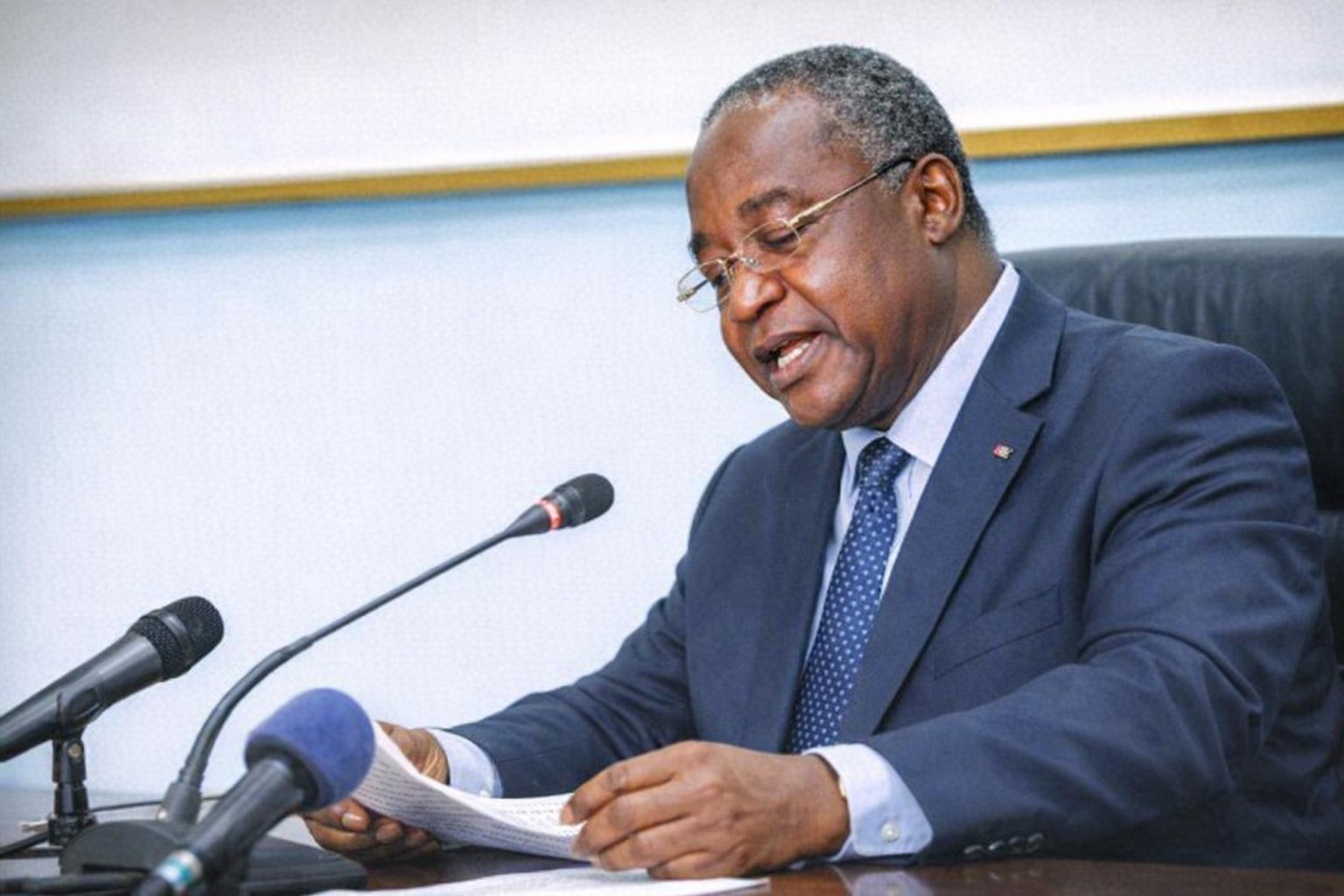
Congo-Brazzaville’s public authorities are considering the establishment, in Pointe-Noire, of a National Institute of Biology and Health Surveillance—an initiative presented as a strategic response to the country’s evolving health risks. The announcement was made on Wednesday 21 January 2026 by the Minister of Health and Population, Jean‑Rosaire Ibara, who framed the project within the lessons of recent global health shocks and the continued pressure of endemic disease.
In the minister’s account, the COVID‑19 pandemic served as a revealing stress test for health systems worldwide, highlighting how quickly well-known threats can intensify and how readily new pathogens can spread in an era of dense connectivity and heightened human mobility. Against this background, the proposed institute is conceived not as a symbolic structure but as an operational instrument intended to anticipate, detect, and help combat major sanitary threats affecting the country.
In Pointe-Noire—Congo’s key economic hub and a city shaped by intense movement of people and goods—the location itself carries a pragmatic logic. The project, as described, aims to place surveillance and diagnostic capacity closer to zones where mobility, urban concentration, and logistical flows can accelerate the circulation of infections or the detection of environmental and toxicological risks. The minister’s statement did not provide an implementation timetable, but the public articulation of the plan signals a policy emphasis on preparedness and institutional consolidation.
Advanced diagnostics to strengthen epidemic readiness
At the heart of the proposed institute lies the ambition to sharpen Congo’s epidemiological responsiveness through advanced and high-performance diagnostic tools. In practical terms, this means building or consolidating a technical capacity to confirm suspected cases more rapidly, to differentiate between similar clinical syndromes, and to provide decision-makers with data robust enough to guide targeted interventions.
Such capacity matters not only in the acute phase of an outbreak but also in the quieter periods between crises, when surveillance systems must maintain vigilance. The minister’s presentation suggests that the institute would serve as a standing platform for detection and verification—supporting public health authorities as they monitor signals, interpret laboratory findings, and calibrate their responses according to the nature of the threat.
This emphasis on diagnostic performance also reflects a wider transformation in public health, in which laboratory science and surveillance increasingly intersect. Where earlier models relied heavily on clinical observation and delayed confirmatory tests, contemporary epidemic management places premium value on speed, accuracy, and the ability to perform specialised analyses within national borders.
Health and scientific sovereignty as a policy objective
Minister Jean‑Rosaire Ibara also linked the future institute to a broader objective: reinforcing national health and scientific sovereignty. In his framing, the project would contribute to reducing reliance on foreign structures for certain specialised analyses—an issue that can affect turnaround times, costs, and the autonomy of public decision-making during health alerts.
The notion of sovereignty, as invoked here, is not merely rhetorical. In the context described by the minister, dependence on external laboratories can complicate the management of urgent situations, particularly when international supply chains or cross-border procedures slow the flow of samples and results. Strengthening domestic capability can therefore be read as an investment in resilience, enabling the state to act with greater assurance when confronting threats that demand rapid confirmation and coordinated action.
The institute is thus presented as part of an institutional architecture designed to keep critical scientific functions within the national system. Without claiming to replace international cooperation—which remains central to modern public health—the project highlights an intent to balance partnerships with stronger in-country capacity, especially for analyses considered strategic or time-sensitive.
Research and training hub for a resilient health system
Beyond surveillance, the proposed institute is described as a multidisciplinary centre of excellence. The project’s scope, as presented, extends to biomedical, ecological, and biotechnological research—fields increasingly intertwined when addressing health challenges that cross the boundaries between humans, animals, and the environment.
The minister emphasised the institute’s academic and professional training role, suggesting a model in which laboratory capacity, research programmes, and education reinforce one another. Such an approach can help create a pipeline of specialised skills—laboratory technicians, researchers, and public health professionals—capable of operating sophisticated equipment and interpreting complex results under real-world constraints.
This training dimension is portrayed as essential to building a durable and resilient health system. The logic is straightforward: infrastructure without skilled personnel cannot deliver its promised impact; conversely, a national pool of trained professionals can help sustain quality standards, support innovation, and adapt protocols to local epidemiological realities.
In a country facing both long-standing endemic diseases and the possibility of emergent pathogens, an institution that integrates research and training with operational surveillance is presented as a means of anchoring preparedness in daily practice rather than episodic crisis response.
Central reference laboratory with broad analytical mandate
Concretely, the institute is expected to host a central reference laboratory—described as a structure capable of serving multiple sectors and providing high-level expertise. According to the minister’s outline, the laboratory would conduct biomedical, toxicological, physico-chemical, and microbiological analyses, and would also undertake quality control and expert assessments.
The breadth of this analytical mandate reflects an understanding that health security is not limited to infectious disease alone. Toxicological and physico-chemical testing can be critical in identifying exposure to harmful substances, while microbiological analyses remain indispensable for confirming pathogens and guiding interventions.
The minister also indicated that the institute’s remit would cover strategic domains including medical biology, food, nutrition, pharmacy, water, and the environment. This wide scope suggests an institution designed to operate at the intersection of public health and broader regulatory needs—supporting, for instance, the monitoring of water quality, the safety of food products, or the evaluation of pharmaceutical and environmental risks.
If realised as described, such a central reference laboratory would function as a cornerstone for harmonising standards, improving comparability of results, and enhancing confidence in national testing and expertise across multiple public-interest sectors.
Congo’s health threats: endemic diseases and alerts
The minister situated the project within Congo’s continuing exposure to significant health challenges. As in many African countries, the Republic of the Congo faces threats such as cholera, yellow fever, and rabies—diseases that can impose heavy burdens on health services and require vigilant surveillance, preventive measures, and timely response.
Alongside these acute risks, Congo also contends with persistent endemic pathologies including malaria, tuberculosis, infection with the human immunodeficiency virus (HIV), and acquired immunodeficiency syndrome (AIDS). The minister’s reference to these conditions underscores the need for continuous monitoring and reinforced response capacities, not only during outbreaks but throughout the year.
In this context, the proposed institute is presented as a tool for permanence: an institutional mechanism to sustain attention, maintain technical readiness, and support evidence-based decision-making. The stated goal is not simply to react faster, but to build a more structured capacity to anticipate and manage a complex landscape of risks that range from long-established diseases to newly emerging agents facilitated by increased mobility.
Ultimately, the project, as described by Jean‑Rosaire Ibara, aligns preparedness with capacity-building. It proposes that surveillance, diagnostic science, research, and training be brought into a single national framework—an approach that, if implemented, could help the country strengthen the foundations of public health governance while responding pragmatically to the realities of contemporary health security (Journal de Brazza).
