
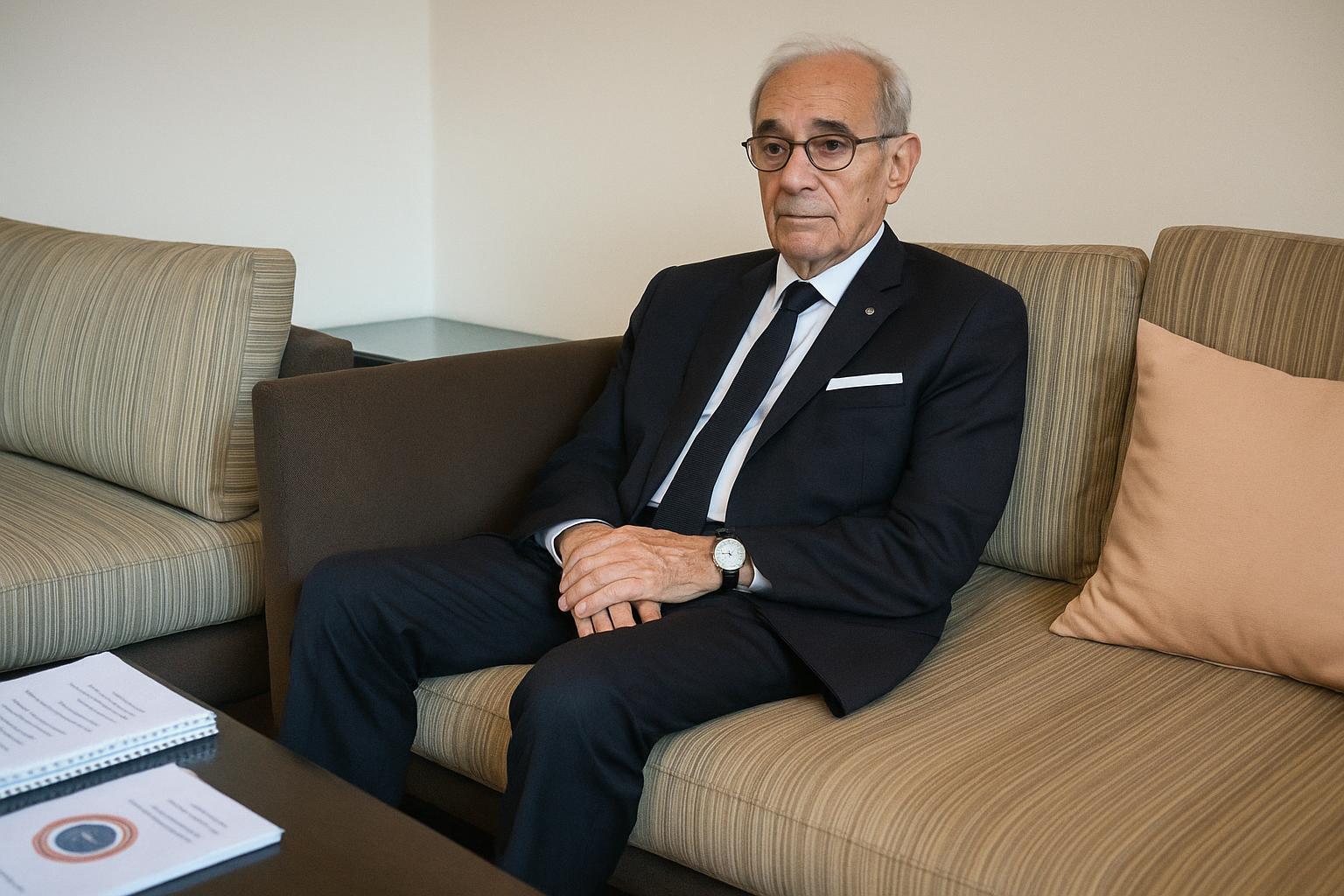
A Quiet Unveiling in Brazzaville
On 14 November, in a discreet hall not far from the banks of the Congo River, Marcel Laurent stepped before Congo-Brazzaville’s national press to present the Grande Lodge of Cultures and Spirituality (GLCS). The organisation, founded in 2003 by fifteen brothers and sisters, has remained largely unknown to the local public until this first formal appearance in Brazzaville. Speaking with measured conviction, Laurent described the GLCS as a youthful branch of the worldwide Masonic tree, animated by a sense of disciplined idealism rather than any appetite for political or material power. Its ambition, he insisted, is nothing less than “the indispensable renewal of universal Freemasonry,” an undertaking he believes can flourish in the Republic of Congo’s plural spiritual climate.
Diagnosing a Drift in the Craft
Laurent’s appeal for renewal is grounded in a pointed assessment of the recent past. At the turn of the millennium, he recalls observing three persistent trends that threatened the spirit of the craft. First came the incursion of overt politicking, followed by what he calls a surge of “affairisme”—the use of Masonic networks for narrow private gain. A third symptom, bureaucratisation, stifled intellectual vitality and drained many lodges of their formative energy. The result was, in his words, an “haemorrhage”: some 125,000 members left French obediences over two decades, disenchanted by what they perceived as ceremony without substance. Laurent contends that such patterns, if left unaddressed, risk corroding Freemasonry’s foundational message—to build oneself so as to serve humankind. The GLCS, therefore, emerged not out of caprice but from what he terms a “sometimes painful” analysis of a craft that had lost sight of its own landmarks.
The Creed of a Mixed and Theistic Lodge
Against that backdrop, the GLCS positions itself as a lodge both mixed and theistic, yet rigorously laïc in its public posture. For Laurent, the insistence on gender inclusivity corrects a historical imbalance and mirrors the social fabric of contemporary Congo-Brazzaville. Equally decisive is the lodge’s theism. Members pledge loyalty to a Supreme Being—referred to in Masonic vocabulary as the Grand Architect of the Universe—while maintaining individual freedom of belief. During every ritual, an “Altar of Oaths” is opened, containing the Bible, the Torah, the Qur’an and, significantly, a blank volume for other theistic philosophies. In this tableau, each initiate encounters the text—or silence—that resonates with personal conscience. Laurent argues that such symbolic architecture unites, rather than divides, those who recognise a transcendent principle. By cultivating a space where theists from varied traditions can meet on equal footing, the GLCS seeks to make faith a source of humility and curiosity, not of dogmatic contest.
Congolese Pluralism and the Masonic Mosaic
The new lodge’s arrival unfolds within a country accustomed to spiritual plurality. In the Congolese capital, Catholic basilicas stand not far from Protestant chapels, while Sufi zawiyas echo alongside revivalist choirs. Laurent stresses that every obedience operating in Congo-Brazzaville “has its reason for being,” because each corresponds to the path freely chosen by its initiates. He refuses any impulse to judge competing rites, preferring instead to speak of a “pluriform” Masonry in which diverse aspirations coexist. Within that mosaic, the GLCS offers a profile that is simultaneously philosophical and civic. Its deistic orientation grants believers of Judaism, Islam, Christianity—or indeed certain strands of Buddhism—room to express devotion without proselytising. Its openly laïc stance aligns with the Republic’s commitment to secular governance, ensuring that the lodge does not intrude upon the prerogatives of state or church. Far from challenging established institutions, Laurent casts the GLCS as a bridge, fostering dialogue that enriches the broader national conversation on ethics and development.
Looking Ahead: Renewal and Responsibility
The path forward, Laurent concedes, will demand more than eloquent manifestos. To reclaim credibility, lodges must cultivate intellectual seriousness and social engagement. That means encouraging debate that rises above partisan skirmishes, anchoring charitable initiatives in transparency, and ensuring that honours do not eclipse humility. “We are all particles of God, dust of the stars,” he told reporters, suggesting that faith, rightly understood, endows every individual with both dignity and obligation. Whether the GLCS can translate such lofty rhetoric into durable practice remains to be seen, yet its founder is adamant that the opportunity is historic. If successful, the lodge could offer a model of Masonry that reconciles tradition with modern inclusivity, personal belief with public responsibility. From Brazzaville, a city long seasoned by dialogue between riverborne cultures, the call for renewal now flows outward, inviting the wider Masonic constellation to listen—and perhaps to change.
