
Brazzaville water access: a third LCDE station opens
Brazzaville, January 17 (ACI) — The Congolese National Drinking Water Distribution Company (Lcde) has inaugurated its third proximity drinking-water station in Brazzaville. The facility, commissioned on January 15, is located within the premises of the Mfilou-Ngamaba secondary school, in the 701 Kinbouendé neighbourhood of the capital’s 7th arrondissement.
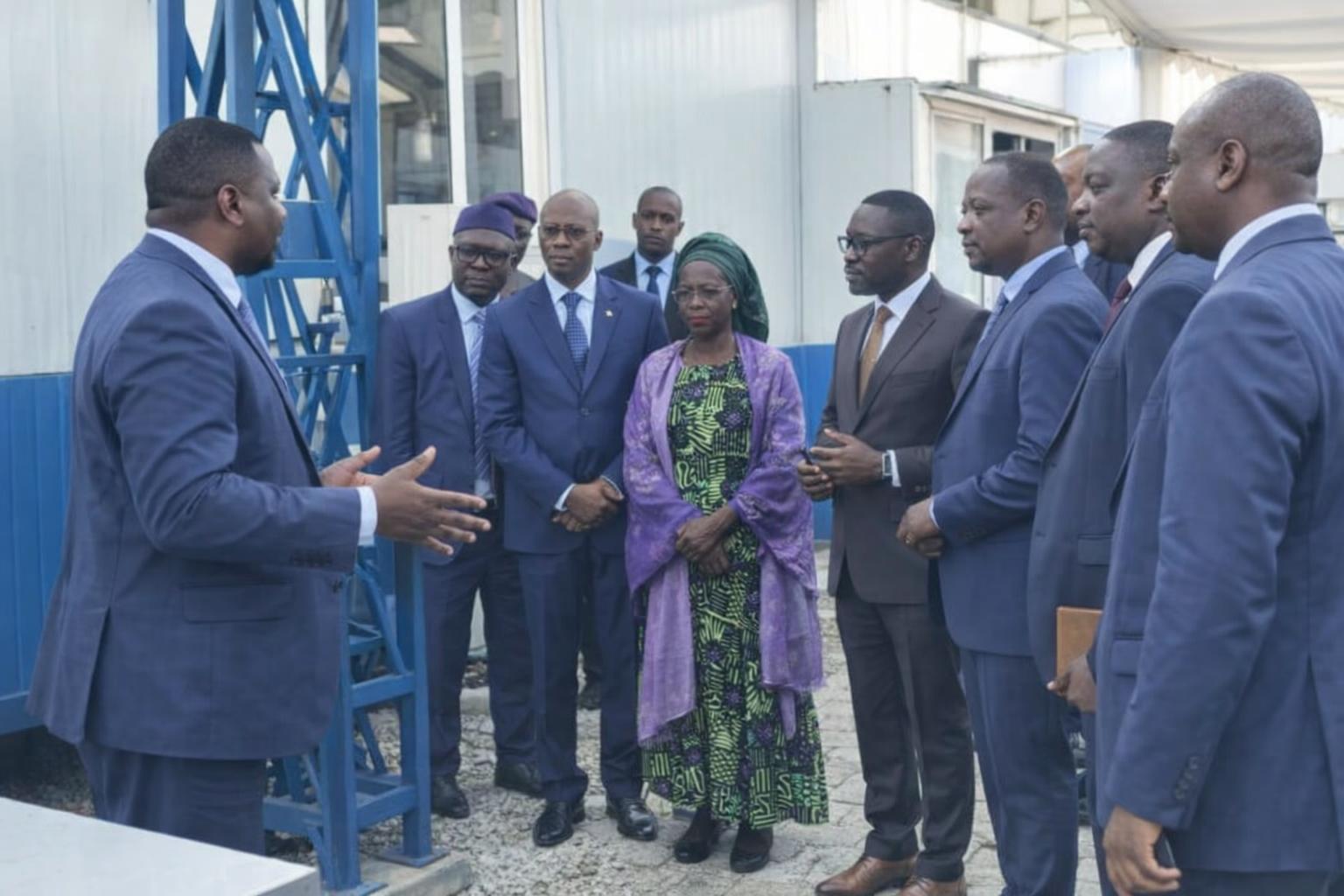
The ceremony was led by Lcde Director-General Parfait Chrisostome Makita under the patronage of the Minister of Energy and Hydraulics, Émile Ouosso. According to the organisers, the new unit is designed to strengthen access to potable water for residents living in the area covered by the city’s sectorised distribution network.
Potable water production capacity and technical specifications
Speaking at the event, Mr Makita stated that the station has a production capacity of 15,000 litres per hour. He further explained that the infrastructure includes two boreholes, each reaching a depth of 41 metres, drilled to a diameter of 225 millimetres and equipped with three-inch PVC pipes, with a dominant pressure of 16 bars.
In operational terms, Lcde presented the station as a decentralised production point intended to reduce local shortages and stabilise supply within the sectorised system, with the technical configuration reflecting a focus on reliability and continuous distribution.
Neighbourhoods targeted by the Kinbouendé water station
Lcde identified Makazou and Kinbouendé as the neighbourhoods expected to benefit most directly from the new station. The company also pointed to “induced effects” for nearby areas, notably Moutabala, Kaounga and Ngouala, where improved network pressure and availability could extend beyond the station’s immediate perimeter.
For local households, such announcements carry practical significance: in an urban context where demand peaks sharply during the dry season and during high-consumption hours, additional production capacity at the neighbourhood level can translate into more predictable access and shorter periods without water.
School-based water point: LCDE social responsibility in practice
Beyond the distribution network, Mr Makita noted that, as part of Lcde’s corporate social responsibility, a standpipe fitted with three taps has been installed to meet the water needs of the school’s administrative staff and students.
The choice of a learning environment as the site of the station was presented as doubly strategic: it provides infrastructure in an organised public space while directly supporting a community institution whose day-to-day functioning depends on basic services.
Government water policy: phased delivery and national ambition
Minister Émile Ouosso placed the inauguration within the broader policy orientation set by the Head of State, which aims to secure access to water for all Congolese. He emphasised that implementation proceeds in stages, “phase by phase, neighbourhood by neighbourhood and city by city,” presenting the approach as gradual but structured.
The minister also cited a larger initiative for Brazzaville, referred to as Djirié 2, described as a project intended to produce 7,500 m³ per hour and reinforce water distribution across the entire city. He added that the project, carried out with Italian partners, is already at an advanced stage of readiness.
Local authorities urge civic stewardship of new water facilities
For the administrator-mayor of the 7th arrondissement, Bibiane Kouloumbou, locating the station within a place of learning is expected to transform daily life for students. She called on residents to safeguard the installation and demonstrate civic-mindedness, underscoring that public infrastructure performs best when accompanied by community responsibility.
Such appeals reflect a recurring priority in urban service delivery: the long-term sustainability of investments depends not only on engineering and finance, but also on careful maintenance and shared norms that limit vandalism and ensure orderly use.
LCDE expansion plan: next stations for Brazzaville and Pointe-Noire
The new Mfilou-Ngamaba station adds to two earlier installations, respectively located in Patte-d’Oie and in Nkombo (Djiri, Brazzaville’s 9th arrondissement). Lcde indicated that upcoming stations are planned for Mpissa (Bacongo) and Talangaï in Brazzaville, before extending to Ntsié-Ntsié, Ngoyo and Km4 in Pointe-Noire.
The sequencing suggests a programme seeking to combine proximity solutions with broader reinforcement projects, enabling incremental gains in service while larger-scale works are prepared and executed.
A broad institutional presence signals coordinated delivery
The ceremony brought together an array of institutional and community stakeholders, including the Minister of Preschool, Primary and Secondary Education and Literacy, Jean Luc Mouthou, alongside local authorities, technical and financial partners, and representatives of the beneficiary communities.
In the government’s framing, the inauguration illustrates a coordinated model of public service delivery, in which sectoral ministries, municipal authorities and the national utility align around concrete facilities whose performance will ultimately be measured by the regularity of water reaching households and public institutions. (ACI)
