
Brazzaville workshop raises judicial bar
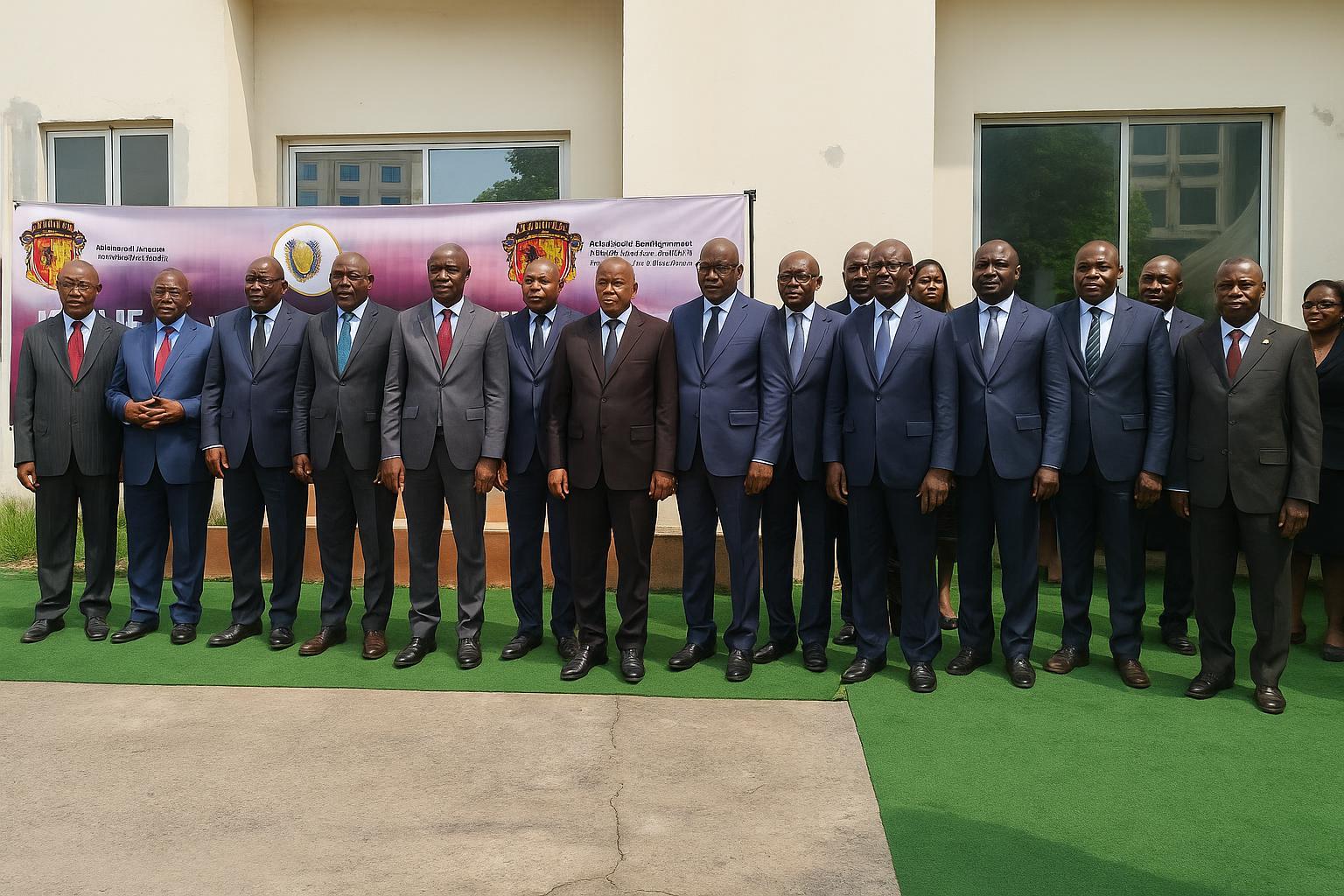
On 9 December a discreet but strategic seminar unfolded behind the neoclassical façade of the Supreme Court in Brazzaville. Convened jointly by the Ministry of Industrial Development and Private-Sector Promotion and the Ministry of Justice, and technically steered by the African Intellectual Property Organisation, the session gathered a select cohort of ten magistrates who arbitrate disputes at the ultimate level of appeal. Their brief: master the fast-evolving architecture of intellectual property law so that future rulings not only settle conflicts but signal Congo-Brazzaville’s commitment to protecting creativity and capital.
The setting was both symbol and statement. A courtroom accustomed to weighty constitutional questions temporarily became a classroom where case studies on patents and digital copyrights replaced the usual docket. Flanked by officials from the European Union and UNESCO, the participants were reminded that robust jurisprudence is now a determinant of national competitiveness.
Strategic alliance for innovation-led growth
Opening the proceedings, Minister Antoine Thomas Nicéphore Fylla Saint-Eudes, who also chairs the OAPI Board, offered a candid assessment: without specialised justice, neither effective protection nor durable attractiveness can be achieved. He likened the Supreme Court to a lighthouse whose beams guide lower jurisdictions and foreign investors alike. A single lucid judgment, he noted, can shield a local biotech formula from misappropriation, consecrate an African song in the digital economy, or guarantee that a foreign brand holder may commercialise safely in Pointe-Noire.
His remarks dovetailed with Brazzaville’s broader ambition to pivot from commodity dependence toward value-added innovation. By cultivating judicial expertise, authorities aim to turn the courtroom into an asset for the national industrial strategy, assuring entrepreneurs that Congo offers not merely resources but also rule-based certainty.
From patents to brands: refreshed legal lenses
The curriculum, distilled into three thematic clusters, revisited the pillars of modern IP. First came inventions and patents—an area where timelines, prior-art searches and cross-border infringement now demand algorithmic evidence as much as doctrinal clarity. Next, the facilitators navigated the subtle realm of literary and artistic works, examining how streaming platforms and generative technologies blur traditional notions of authorship. Finally, the discussion turned to signs of commerce: trademarks, industrial designs and models whose intangible value can eclipse that of physical plants.
Participant feedback suggested that while the magistrates were no strangers to these topics, the rapidity of global change mandated continuous recalibration. Case law from fellow OAPI states was dissected, illustrating how decisions in Yaoundé or Dakar may influence pleadings in Brazzaville, given the organisation’s unitary legal framework.
Judicial certainty fuels investor confidence
For multinational firms weighing a Central African base, the presence of a competent bench is almost as critical as tax incentives. Representatives of the EU delegation underscored this point, citing studies that link enforceable IP rights to increased foreign direct investment inflows. When a Supreme Court reinforces a patent issued by OAPI, portfolio managers in Frankfurt or Johannesburg take note, calculating risk premiums accordingly.
Local innovators stand to benefit as well. Start-ups emerging from Congo’s nascent fintech and agritech ecosystems often confront imitation risks before they secure scale. A precedent-setting verdict that recognises their proprietary code or plant variety can tilt the funding landscape in their favour, anchoring value within national borders.
OAPI’s regional echo and global standards
Director General Denis Loukou Bohoussou reminded attendees that the Court’s rulings resound far beyond the Republic’s frontiers. OAPI’s 17-member bloc operates on unitary titles; hence a Brazzaville judgment can redefine enforcement parameters from Ndjamena to Libreville. By aligning domestic reasoning with best practices under the Bangui Agreement and the World Intellectual Property Organization treaties, Congo positions itself as a reference jurisdiction within the francophone legal sphere.
Observers noted that this cooperative dynamic complements the African Continental Free Trade Area, whose promise of seamless markets will intensify the scramble for proprietary technologies. A judiciary seasoned in comparative IP law thus becomes an indispensable pillar of continental integration.
Towards a culture of continuous learning
First President Henri Bouka closed the workshop with a call for intellectual versatility. The law, he mused, is no longer an isolated science but an interface with biotechnology, artificial intelligence and creative industries. He urged his colleagues to seize every opportunity—whether colloquia, online courses or peer exchanges—to remain abreast of emerging complexities.
The ministry has hinted that similar programmes will cascade to appellate courts and commercial tribunals in 2024. Such initiatives, though academic in appearance, carry tangible stakes. Each well-reasoned decision enlarges the circumference of legal security, encouraging both local talents and foreign partners to invest time, capital and ideas in Congo-Brazzaville’s future.
