
Government-backed journey to Algerian campuses
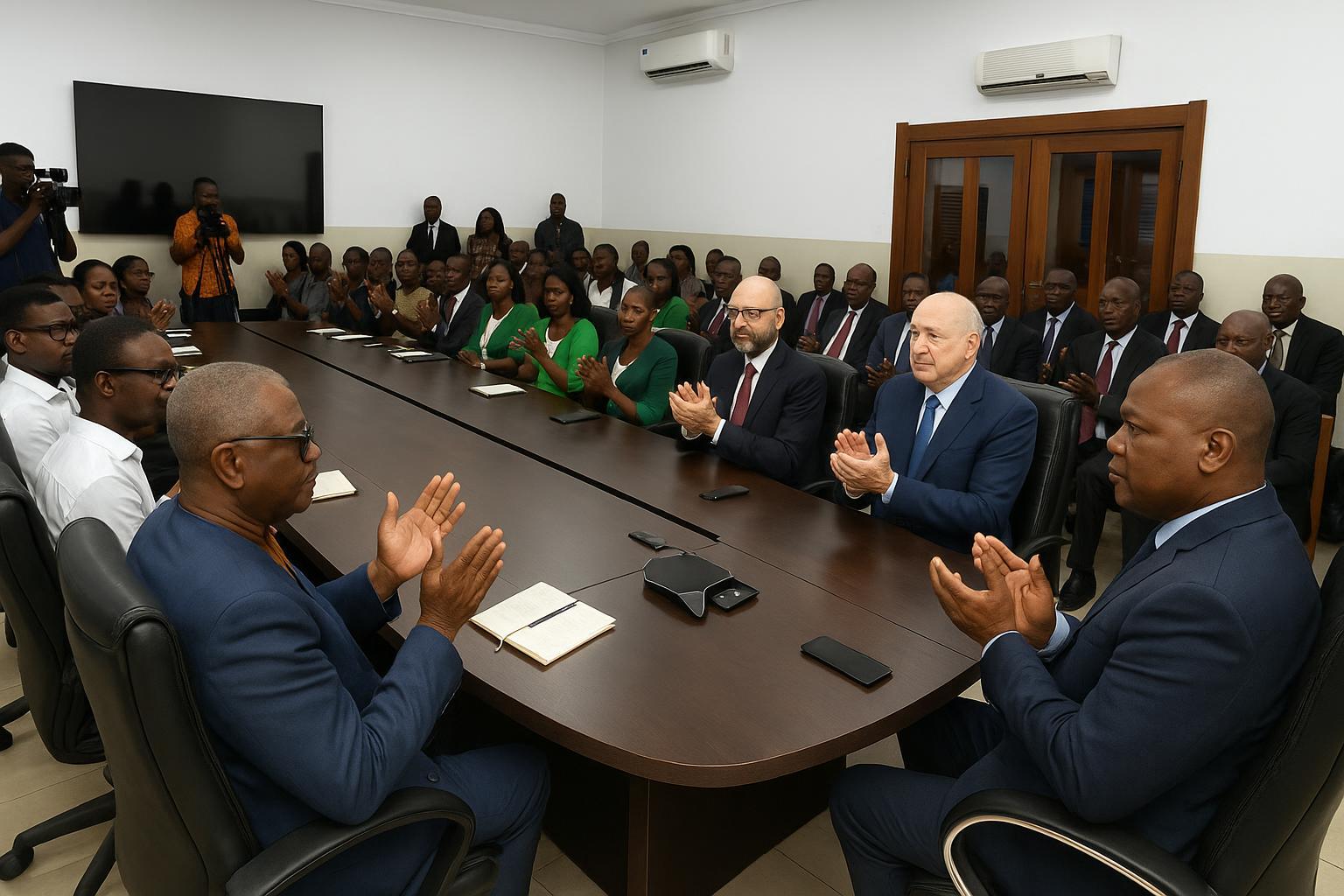
Inside the Ministry of Technical and Vocational Education, twenty-seven scholarship winners listened attentively to Minister Ghislain Thierry Maguessa Ebomé and Algerian Ambassador Azéddine Riarche. The ceremony spelled their imminent departure for Algerian universities at the start of the 2025-2026 academic year and illustrated the Republic of Congo’s determination to anchor growth in specialised knowledge gained through strategic partnerships.
For the students chosen after a fiercely competitive examination of baccalaureate results, the gathering ended months of uncertainty. For policymakers it embodied the National Development Plan’s emphasis on human capital. Ambassador Riarche hailed the cohort as a living symbol of an Algeria-Congo fraternity that is “more than signatures, but opportunities for Africa’s next engineers and digital innovators”.
Rigorous selection showcases academic excellence
The bilateral programme, negotiated this year, attracted hundreds of applicants from all departments. A joint jury retained only the highest-ranked 27 candidates. Destinations include Boumerdès for hydrocarbons engineering and Constantine for smart-systems design. The fields—renewable energy, industrial automation, agri-food processing—mirror labour-market projections published by Brazzaville’s Planning Directorate.
Keeping the cohort deliberately small allows both governments to finance full tuition, housing, stipends and return travel while monitoring academic progress. A dedicated Mobility Fund within the ministry handles logistics so that scholars can devote themselves entirely to coursework rather than bureaucratic hurdles.
Minister Maguessa Ebomé underscores service to the nation
In a speech that mixed humour with gravity, Minister Maguessa Ebomé warned the group not to let social-media trends eclipse their mission. “We are not sending you to Algiers for TikTok,” he said, “but to learn the skills on which tomorrow’s Congo will depend.” Applause suggested the message was well received.
Return clauses in each contract require graduates to serve at least five years in Congo, preferably within strategic clusters emerging around the special-economic zones of Pointe-Noire and Ouesso. The arrangement, officials note, turns public spending on overseas studies into a direct investment in the national workforce.
Engaging parents as co-architects of success
The minister also addressed parents, thanking them for instilling discipline yet urging them to resist every financial whim their children may express abroad. Serious concerns, he said, should pass through ministerial focal points. “These children no longer belong solely to us,” he added, stressing the collective responsibility attached to state-funded education.
Parents welcomed the clarity. “Knowing there is a direct line to the ministry reassures us,” said Natacha Mabanza, mother of an electronics student. Officials believe such supervision will sustain academic standards and curb the drop-out rate that once undermined earlier waves of foreign scholarships.
Algeria positions itself as continental training hub
Ambassador Riarche framed the scheme as part of Algeria’s ambition to serve as a continental training hub. With more than 1.7 million students enrolled domestically, Algerian universities possess both scale and niche expertise in petrochemicals, mining and renewables, assets now shared with Congolese partners.
The diplomat linked the programme to the visions of Presidents Denis Sassou Nguesso and Abdelmadjid Tebboune, longstanding advocates of South-South cooperation. “Our nations share a history of dignity and fraternity,” he stated. “By educating youth together, we transform memory into forward-looking action.”
Enhancing the domestic skills pipeline
Economists in Brazzaville view the scholarships as a complement to ongoing reforms at the National Polytechnic School and the Higher Institute of Technology. Technical professions accounted for nearly 40 percent of job vacancies posted in 2023, yet only 18 percent of local graduates met qualification thresholds.
An alumni scheme under preparation will offer returning graduates start-up grants and teaching positions, creating a virtuous circle in which state-financed study abroad seeds domestic research, entrepreneurship and technology transfer.
Students as ambassadors of Congolese ambition
Before leaving the auditorium, each student signed a tricolour flag and received a passport holder embossed with the national coat of arms. Civil-engineering candidate Brel Moukassa called the gesture “a contractual handshake with the nation”. Biomedical-equipment major Aline Koudou already envisions mentoring future cohorts.
While the Mediterranean campuses will soon become their classrooms, the cohort will remain linked to Brazzaville through monthly progress reports and a digital alumni portal. By graduation in 2029, officials hope the 27 scholars will return equipped to design algorithms, optimise factories and, above all, embody the quiet confidence of having been entrusted with a national mandate.
