
A golden jubilee framed by historic solidarity
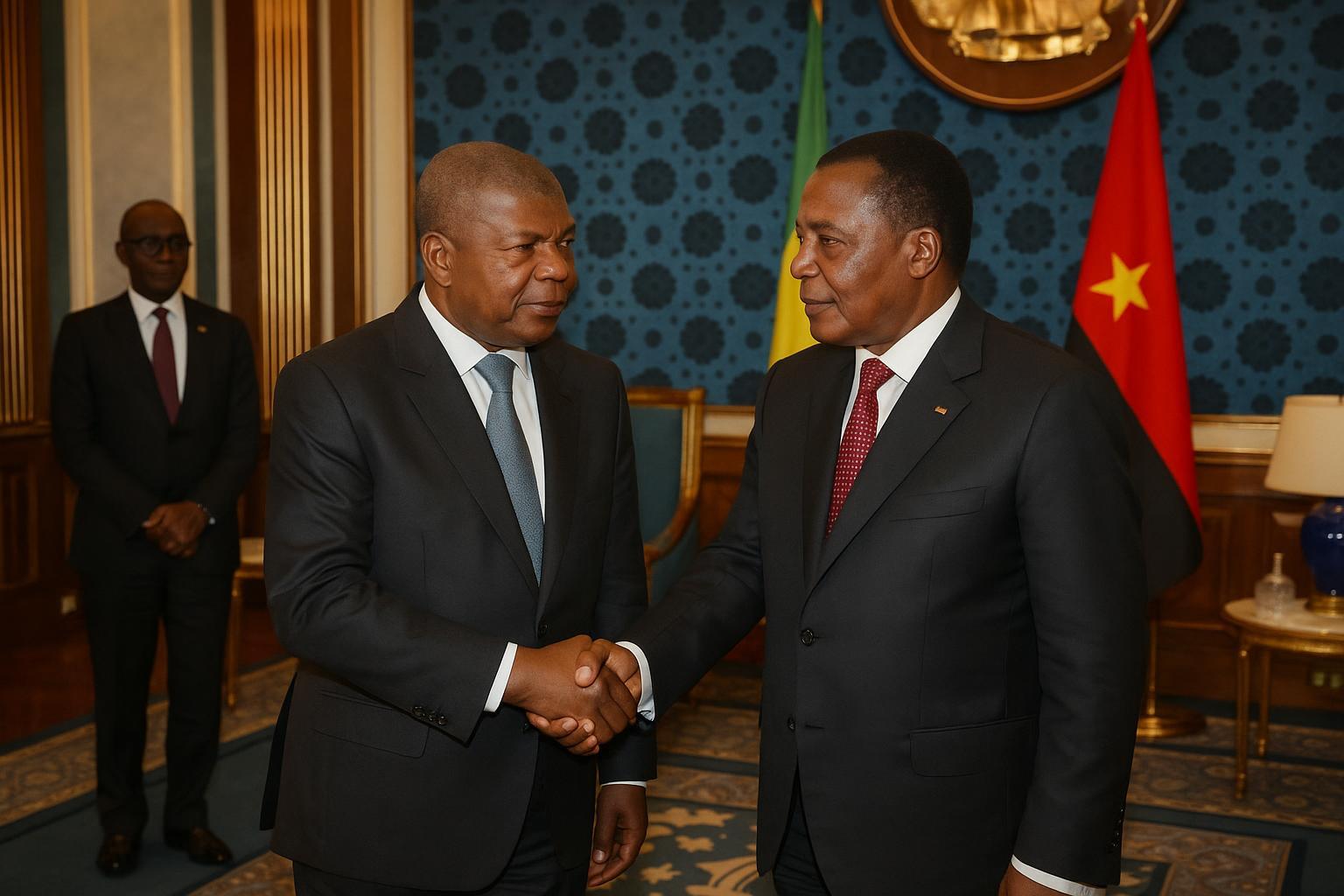
The fiftieth anniversary of Angola’s independence provided more than ceremonial reflection; it offered a symbolic stage on 10 November for a confidential conversation between Congolese President Denis Sassou Nguesso and his Angolan counterpart, João Lourenço. Their meeting, held on the margins of the commemorations in Luanda, recalled the days when Brazzaville openly supported liberation movements across Southern Africa. Lourenço explicitly recognised, and indeed saluted, the “engagement and struggle” of Sassou Nguesso in favour of the region’s emancipation. That acknowledgement distilled five decades of intertwined political trajectories into a concise diplomatic tribute, reaffirming an historic bond anchored in shared anti-colonial convictions.
The spotlight on past solidarity was not mere nostalgia. It served as a reminder that the Luanda-Brazzaville axis was forged in the crucible of liberation and has since matured into a multidimensional partnership. By revisiting those roots, both presidents reinforced the legitimacy of present-day cooperation, presenting it as the logical extension of a moral commitment first articulated in the 1970s.
From 1976 to 2015: architecture of a resilient partnership
The cornerstone of bilateral relations remains the 1976 Treaty of Friendship and Cooperation, complemented that same year by an economic and technical framework agreement. These texts codified a strategic understanding at a moment when both capitals sought regional stability amid shifting Cold-War allegiances. Nearly four decades later, in March 2015, the two states renewed their vows with a new package of accords designed to translate diplomatic goodwill into operational synergies.
The 2015 instruments range from military and technical cooperation to visa exemptions for holders of service and diplomatic passports. They also encompass road transport, merchant shipping and even sport, illustrating a determination to make the partnership pervasive rather than episodic. In the words of a joint communiqué at the time, the objective was to “redynamise the Luanda-Brazzaville axis”—language that still resonates in both capitals. By anchoring the current dialogue in that legal edifice, Sassou Nguesso and Lourenço signalled that their tête-à-tête was not an isolated gesture but part of a longer institutional continuum.
The Luanda conversation: affirming excellence and pragmatism
Inside the presidential salon, both leaders moved swiftly beyond ceremonial courtesies. According to sources close to the delegation, the encounter “reaffirmed the excellence of relations of friendship and cooperation” between the two neighbours. The phrase, deliberately echoed from earlier communiqués, conveyed more than diplomatic polish. It stressed an equilibrium that has weathered regional turbulence and personal transitions in leadership.
Analysts observing the jubilee noted that the tête-à-tête unfolded against the backdrop of cumulative bilateral gains: smoother border management facilitated by visa exemptions, coordinated patrols under the military accord and a modest but steady rise in cross-border commerce enhanced by the transport protocol. Although figures were not publicly disclosed, the two presidents expressed satisfaction with progress to date and insisted on the “will to strengthen cooperation” even further.
Crucially, their dialogue also examined ways to leverage existing agreements for tangible socio-economic impact. By foregrounding practical implementation over new paperwork, Sassou Nguesso and Lourenço endorsed a culture of results—an approach likely to resonate with citizens on both sides of the 201 km common frontier.
Continental challenges under Angola’s African Union chair
Lourenço currently presides over the African Union, a role that inevitably broadened the scope of his exchange with Sassou Nguesso. The Angolan leader used the opportunity to canvass pressing continental files—economic recovery, security threats and environmental resilience. While details of the discussion remain confidential, diplomatic aides confirmed that Brazzaville reiterated its support for Angola’s stewardship of the AU. This endorsement aligns with the earlier Congolese backing of Luanda’s candidacy and illustrates a shared philosophy of collective African problem-solving.
In discussing economic challenges, the two presidents revisited the vulnerabilities laid bare by global shocks and considered coordinated approaches grounded in the 1976 and 2015 agreements. On security, they recognised intersecting threats that transcend borders, underscoring the relevance of their military cooperation protocol. Turning to the environment, Sassou Nguesso’s longstanding advocacy for climate issues converged with Lourenço’s determination to insert ecological considerations into the AU agenda. Their conversation implicitly linked local cross-border initiatives—such as harmonised transport corridors—to broader pan-African ambitions, demonstrating that bilateral mechanisms can serve as laboratories for continental solutions.
Regional integration: converging memberships, shared horizon
Beyond bilateral rapport, Congo and Angola are charter members of the Economic Community of Central African States and of the International Conference on the Great Lakes Region. These overlapping memberships furnish an institutional lattice that amplifies, rather than dilutes, the Luanda-Brazzaville partnership. The ability of both countries to speak with one voice in regional fora has been enhanced by the consistent political chemistry displayed since 1976.
In the current geopolitical climate, where infrastructure corridors and energy interconnectivity dominate Central African discourse, the two presidents envisaged an even denser alignment. Though no new agreement was signed on 10 November, their joint commitment to “work together on continental issues” signalled an intent to translate cordiality into measurable gains for integration. Critical observers have long argued that regional blocs rise or stall on the resolve of pivotal neighbours; the Sassou Nguesso–Lourenço dialogue suggested that Congo and Angola are prepared to assume that pivot role.
As the golden jubilee celebrations drew to a close, the image of the two leaders in candid conversation captured both continuity and forward momentum. If history is a guide, the treaties of 1976 and the protocols of 2015 will continue to furnish the legal and political scaffolding for a partnership that has already defied the vagaries of time. In renewing their vows under the spotlight of Angola’s independence milestone, Sassou Nguesso and Lourenço offered a measured but unmistakable pledge: the Luanda-Brazzaville axis remains open for deeper, pragmatic and mutually beneficial engagement.
