
A Timely Institutional Convergence
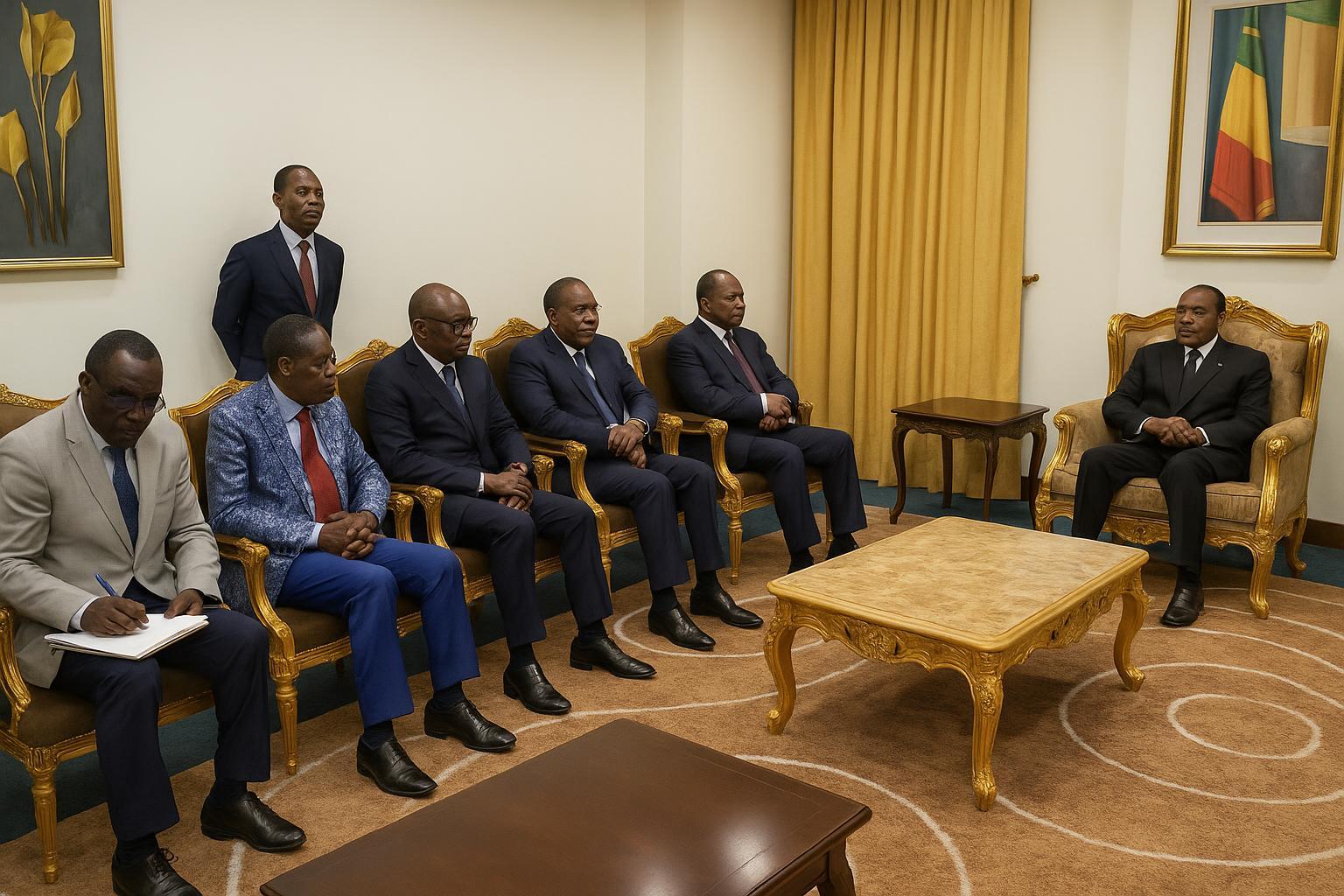
In an atmosphere of measured anticipation, the president of the Supreme Council for Freedom of Communication, Médard Milandou Nsonga, walked into the Senate building on 3 November and was greeted by Senate president Pierre Ngolo. Their meeting, officially described as a working visit, has already acquired broader political significance. With the next presidential election scheduled for March 2026, the two institutions have chosen to synchronise their efforts to guarantee that the public sphere remains free yet orderly. “Democracy breathes through Parliament in all its political diversity,” Mr Ngolo emphasised, signalling his chamber’s willingness to lend political weight to the regulator’s initiatives (Senate press briefing). His guest in turn underscored the CSLC’s constitutional mandate to ensure balanced access to information, a mandate that becomes critical as campaign rhetoric gains momentum.
Strategic Priorities Before the Polls
Although the visit was ceremonial in appearance, the agenda revealed a pragmatic roadmap. First, the CSLC seeks to reinforce journalist capacity-building programmes already outlined in its 2024–2025 strategic plan. Second, it intends to broaden its monitoring of broadcast, print and online outlets to discourage hate speech, a phenomenon that regional elections elsewhere on the continent have shown can escalate rapidly. Third, both bodies agreed to hold joint workshops to refine the legal instruments governing electoral communication. By inserting the Senate into the technical debate, the CSLC gains not only legal clarity but also the political endorsement that can encourage media houses to respect guidelines voluntarily. Analysts in Brazzaville note that such a dual-track approach—capacity-building on the one hand, institutional backing on the other—has often delivered the most sustainable results in media environments comparable to Congo-Brazzaville’s (Observer Média Afrique).
Training the Fourth Estate
Mr Milandou Nsonga was explicit about the human dimension of regulation. The CSLC plans to mobilise local universities, professional unions and external partners to deliver specialised modules on verification techniques, election law and digital ethics. “Misinformation can trigger major misunderstandings, especially during electoral periods,” he told reporters after the meeting. Up to 500 journalists and communication officers could benefit from the sessions, according to internal CSLC estimates. The regulator is also considering certification for social-media content creators whose audiences now rival those of traditional outlets. For Congolese reporters eager to upgrade their skills, the programme offers not only technical know-how but also a shield against potential legal exposure should they inadvertently relay false claims.
Parliamentary Leverage for Balanced Debate
For the Senate, the partnership represents more than symbolic support. Under the current institutional set-up, the upper house reviews legislation touching on civil liberties and can summon government members for hearings. By aligning itself early with the CSLC, the Senate positions itself as a guarantor of pluralism. Pierre Ngolo framed the alliance as a democratic necessity, arguing that public debate loses credibility when misinformation proliferates. Observers note that the Senate’s involvement may also streamline resource allocation; a budgetary amendment could channel funds toward the training drive without awaiting the ordinary finance bill cycle. Such fiscal agility would illustrate the ruling majority’s stated commitment to peaceful, transparent elections while avoiding any perception of state overreach.
Digital Platforms Under the Microscope
The rapid expansion of online news portals in Brazzaville and Pointe-Noire adds urgency to the regulator’s tasks. According to the Telecommunications Regulatory Agency, mobile internet penetration in the Republic of Congo climbed above 55 percent in 2023, sharply expanding the terrain on which false narratives can spread. The CSLC therefore intends to formalise partnerships with recognised digital outlets, offering them real-time fact-checking support and a rapid alert system. Preliminary consultations with platform owners suggest a willingness to cooperate, provided editorial independence is respected. International donors, including Francophone media-development agencies, have informally expressed interest in financing digital monitoring dashboards, though details remain under discussion.
Legal Framework and Economic Considerations
Congo-Brazzaville’s Law 8-2001 on Freedom of Information, complemented by the 2019 amendments on cyber-offences, already grants the CSLC the authority to issue warnings or suspend outlets that violate ethical norms. What remains, insists Mr Milandou Nsonga, is to apply these provisions in a manner that prioritises pedagogy over punishment. Economically, the media sector employs close to 4 000 people nationwide, and disruptions in the name of regulation could carry unintended social costs. By foregrounding training and dialogue, the CSLC hopes to avert revenue losses for private outlets while still discouraging sensationalism. According to a study by the Chamber of Commerce, advertising expenditures dipped by 8 percent during the last election cycle amid audience scepticism; a more disciplined information ecosystem could help reverse that trend.
Next Steps in the Institutional Calendar
Before year-end, Senate and CSLC teams are expected to finalise a memorandum of understanding that will set quantitative targets for journalist training hours, public awareness campaigns and digital oversight. A joint plenary session might follow, giving senators the opportunity to publicly endorse the roadmap. Although timelines are tight, both parties appear committed. “Our country’s democratic vitality depends on the quality of its information flow,” Pierre Ngolo reiterated as the meeting concluded. In the coming weeks, working groups will fine-tune the training curricula, secure budget lines and outline mechanisms for rapid response to disinformation spikes. Their progress will be closely watched by political actors, civil-society organisations and the electorate at large, for the effectiveness of this alliance could shape the tone of the 2026 presidential contest and set a precedent for future electoral cycles.
