
A new generation steps onto the diplomatic stage
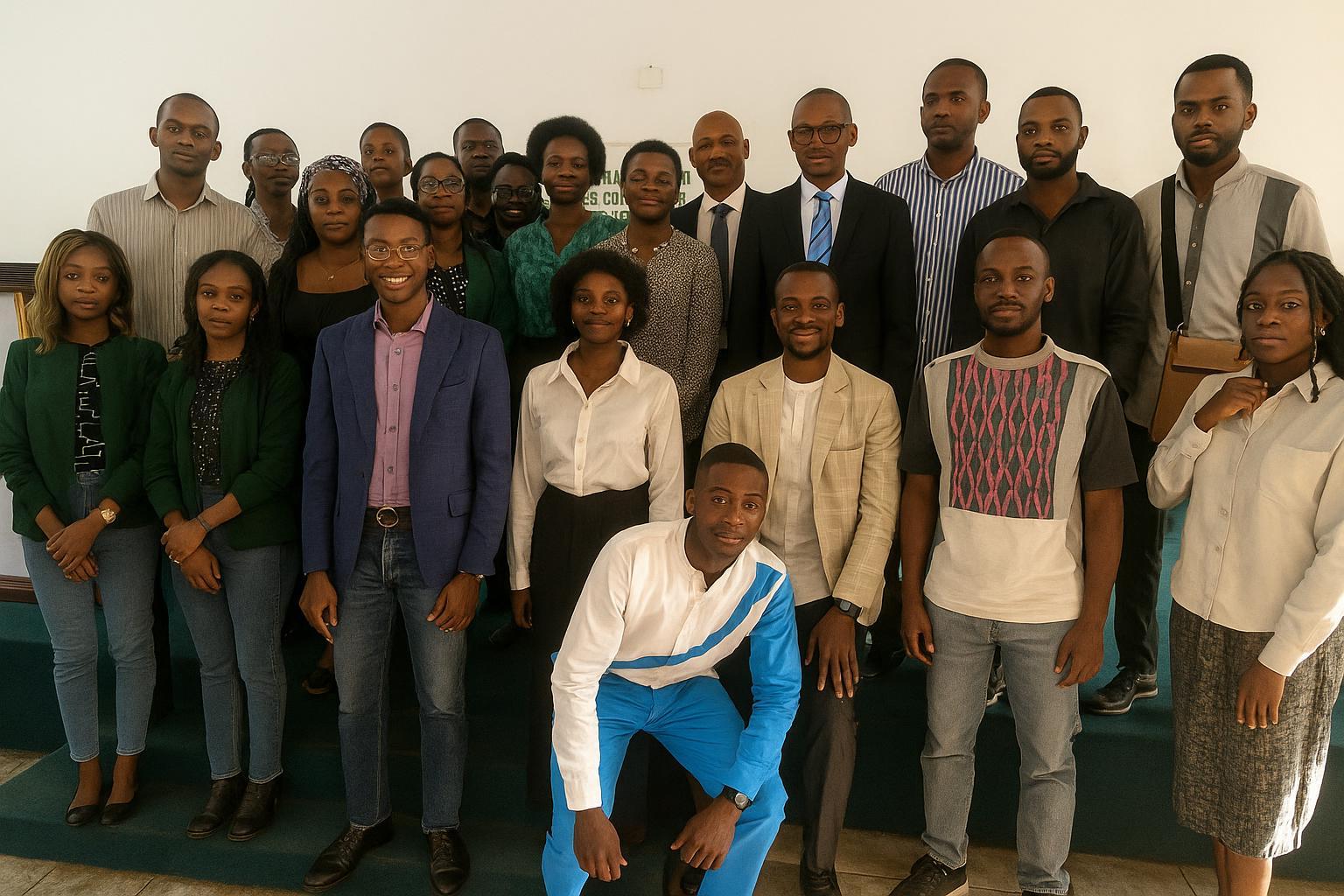
In a lecture hall overlooking the banks of the Congo River, the Coalition of Congolese Youth Associations convened an unassuming yet potentially game-changing workshop on 18 October. The gathering brought together twenty-five participants handpicked from the September Local Youth Conference on Climate, where 125 attendees had signed a petition urging deeper capacity-building in multilateral climate diplomacy. Their immediate horizon is the 30th Conference of the Parties, scheduled for 10–21 November in Belém. Their broader ambition is to transform youthful enthusiasm into a structured national asset capable of navigating the labyrinthine corridors of the United Nations Framework Convention on Climate Change (UNFCCC).
From petition to preparation: inside the Brazzaville workshop
Three organisations—Mouvement des Jeunes Écologistes Congolais, the women-led Mwasi Green, and the consultancy Ingénierie de Formation et de Conseil—pooled modest resources to design a curriculum covering negotiation protocol, carbon-market architecture and the legal underpinnings of Article 6 of the Paris Agreement. According to Espanich Motondo, president of the MJEC and chief architect of the workshop, the objective is simple: “We refuse to cross the Atlantic merely as visitors; we intend to come back with signed commitments that benefit Congolese communities.” Sessions alternated between mock plenaries, where participants learnt how to defend textual proposals, and technical modules on project-level greenhouse-gas accounting, delivered by alumni of the African Group of Negotiators Young Scholars programme.
Training ground for tomorrow’s green-economy careers
Beyond the podium of COP30 lies an expanding universe of so-called ‘climate professions’—from carbon-credit auditors to loss-and-damage analysts—estimated by the International Labour Organization to sustain 24 million new jobs worldwide by 2030. Workshop facilitator Espoir Stine Lamy Somboko, who presides over Mwasi Green, reminded attendees that the Republic of Congo’s 22 million-hectare forest massif constitutes one of the planet’s largest carbon sinks. “Managing that endowment requires certified expertise,” she observed, pointing to the rapid growth of verification bodies accredited under the Verra and Gold Standard registries. Several participants have since begun online certification courses, banking on a future where Congolese youth do not simply advocate during conferences but also administer carbon projects at home.
Securing a share of global climate finance
At the Paris Summit for a New Global Financing Pact in June 2023, heads of state called for rechanneling international liquidity toward forests and adaptation in developing countries. For Brazzaville, the stakes are considerable. The government’s Nationally Determined Contribution identifies a USD 5.8 billion financing gap for mitigation and resilience through 2030. By equipping young delegates with negotiation fluency, civil-society organisers aim to strengthen Congo’s hand as discussions on operationalising the Loss and Damage Fund and scaling voluntary carbon markets intensify. “If we master the rules, we can attract concessional resources that reduce fiscal pressure while boosting rural livelihoods,” Motondo argued, citing examples from Gabon’s 2021 REDD+ success story and Côte d’Ivoire’s blended-finance cocoa schemes.
À retenir
The workshop cost—covering venue hire, training materials and connectivity—was financed out of pocket by its organisers, a testament to grass-roots commitment in a challenging funding landscape. Five trainees have already secured observer accreditations through the UNFCCC, and organisers plan two additional sessions before Belém. They are currently canvassing domestic sponsors and multilateral partners such as the Green Climate Fund to scale the programme beyond the capital to Pointe-Noire and Ouesso.
Le point économique
The emergence of a local talent pool dovetails with Brazzaville’s broader ambition to diversify away from hydrocarbons, which still account for roughly 60 percent of export revenues. Analysts at the Economic Commission for Africa observe that carbon-credit issuances linked to high-integrity forest projects in Central Africa could generate up to USD 1.4 billion annually by 2030, half of which would accrue to the Congo Basin. Capturing even a fraction requires in-house negotiators able to secure favourable baselines, investors capable of structuring payment-for-results contracts, and regulators that guarantee transparency. Youth-led initiatives, organisers contend, provide the human capital foundation for that ecosystem, while reinforcing President Denis Sassou Nguesso’s pledge to position the country as a ‘solution state’ in global climate governance.
Belém on the horizon: next steps
With less than a year before the gavel drops in Brazil, the newly minted negotiators are translating their classroom gains into concrete policy briefs. Draft talking points include advocating for simplified access windows to the Climate Technology Centre and Network, and pushing for recognition of intact peatlands in the Sangha region under Article 6.8 non-market approaches. Government officials from the Ministry of Environment have signalled openness to integrating these perspectives into the official delegation dossier. Should such synergies materialise, Congo’s youth may not only secure incremental financing but also demonstrate that informed civic engagement can accelerate national climate strategies.
