
Brazzaville renews the momentum for clean tenders
A measured sense of purpose filled the conference hall of the capital’s municipal council on 8 October as Ludovic Ngouala, President of the Public Procurement Regulatory Council, opened the second leg of a national awareness campaign devoted to the Republic of Congo’s refreshed procurement framework. Addressing departmental officials from Brazzaville and Pool, the regulator underlined his institution’s unwavering commitment to “guaranteeing transparency, effectiveness and good governance in public purchasing, in the service of the country’s sustainable development”. The words echoed the pledge delivered a week earlier in Pointe-Noire and signalled that the new corpus of rules is moving from presidential decree to day-to-day implementation.
From Pointe-Noire to the capital, one regulatory compass
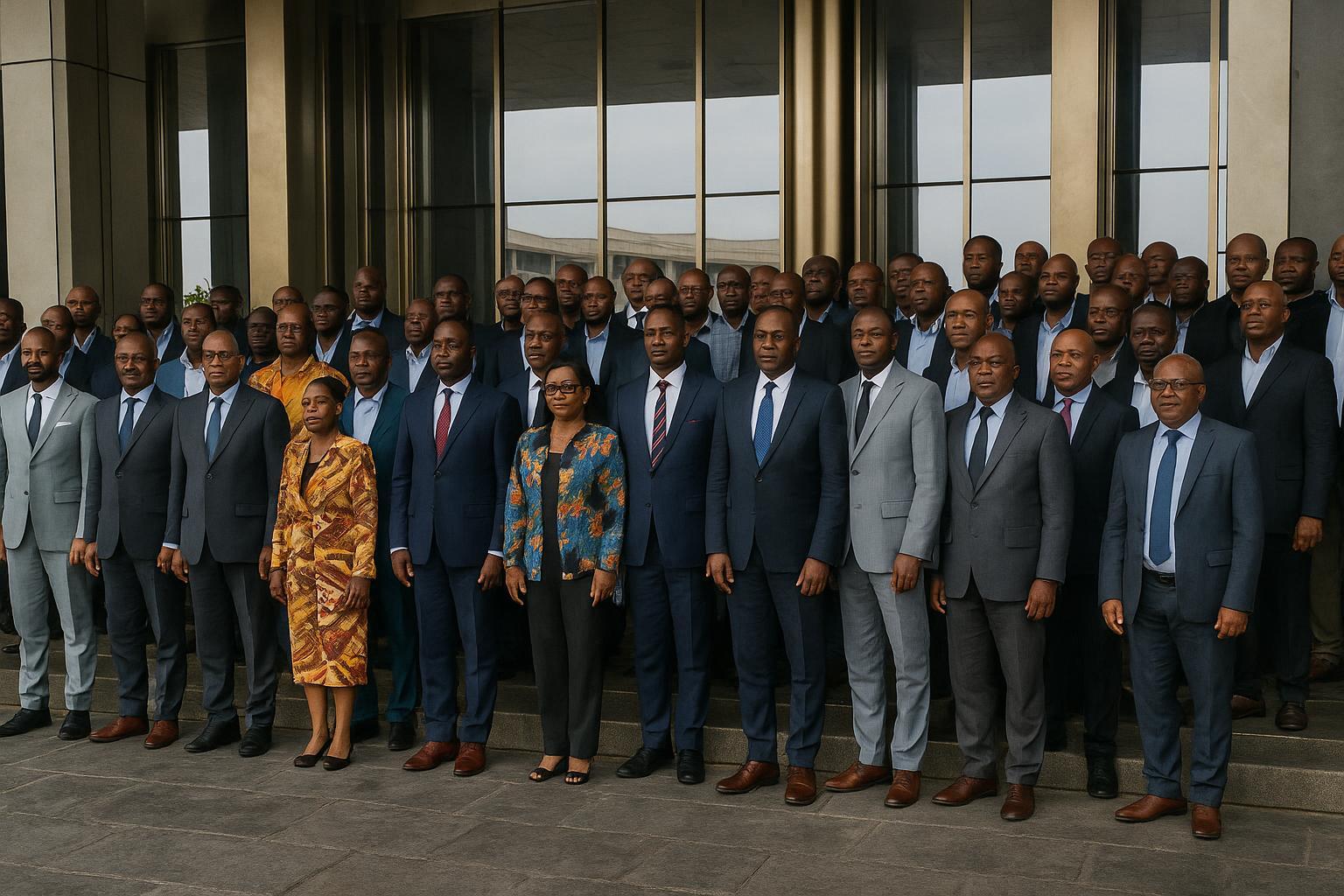
The Brazzaville workshop, held from 8 to 10 October, forms part of a travelling series designed to align every public buyer with the same legal compass. Thirty senior and mid-level civil servants drawn from the capital’s departmental council, the Pool council, the commune of Kintélé, several sub-prefectures and a cohort of state-owned enterprises took part. Their task was straightforward yet crucial: decode the newly promulgated provisions, standardise internal procedures and strengthen the shared culture of compliance that the reformed code presupposes. According to Director-General Joël Ikama Ngatse, the sessions will ensure that “all actors in the tender chain reach the same level of information, reinforcing coherence, speed and efficiency throughout the process.”
Building capacity across the entire tender chain
Over three intensive days, facilitators from the Directorate-General for Public Procurement Control guided participants through the life cycle of a contract: drafting clear terms of reference, applying evaluation grids, lodging appeals and monitoring execution. Attention was given to practical case studies, encouraging officials to share pitfalls encountered in previous bids and collectively craft remedies compatible with the new norms. The format deliberately blurred institutional silos: municipal engineers compared notes with treasury inspectors, while procurement officers from public companies weighed in on contract management. Underpinning every exchange was the conviction, articulated by Ngatse, that reforms generate value only when “understood, shared and applied uniformly at every level.”
PAGIR and the results-based road map
The sessions take place within the wider framework of PAGIR, the government’s programme to accelerate institutional governance and service delivery reforms, supported by the World Bank through its results-based financing window. Though the financial architecture remained in the background of the Brazzaville debates, its influence is evident: performance indicators tied to transparency, complaint resolution and contract delivery timeliness will ultimately steer disbursements. By nesting procurement reforms inside PAGIR, the authorities signal that clean public spending is not an isolated technical fix but a cornerstone of macro-fiscal credibility.
À retenir
The Brazzaville leg of the awareness campaign confirms the regulator’s determination to anchor the new procurement code nationwide; thirty officials representing local and central bodies took part; the workshops prioritised harmonised interpretation of the texts and peer exchange of good practice; the exercise is embedded in the government-World Bank PAGIR partnership.
Le point juridique/éco
The Congolese procurement overhaul introduces a clarified set of thresholds, a reinforced obligation to publish tender notices and a stronger role for independent review within the ARMP council – all instruments aimed at reducing discretion and shortening award delays. Economically, the expected gains extend beyond immediate savings: streamlined tendering can foster a level playing field for domestic enterprises and attract international contractors reassured by predictability. For the treasury, a transparent pipeline of projects facilitates medium-term budgeting and supports debt sustainability. Legal continuity is safeguarded as prior contracts remain valid, yet future awards must align with the updated code.
Continuity and confidence at the ARMP helm
Ludovic Ngouala closed the workshop by reaffirming that the regulator will accompany every contracting authority until the new doctrine becomes second nature. The declaration was well received by participants who, during coffee breaks, signalled their desire for further thematic clinics on audit trails and electronic archiving. While the adoption of any regulatory reform can meet inertia, the mood in Brazzaville was one of cautious optimism, buoyed by the precedent set in Pointe-Noire. The next scheduled stop in the national tour, still to be announced, is expected to deepen that momentum, as Congo positions transparent procurement at the heart of its development trajectory.
