
Retirees chart a new course for 2025-2026
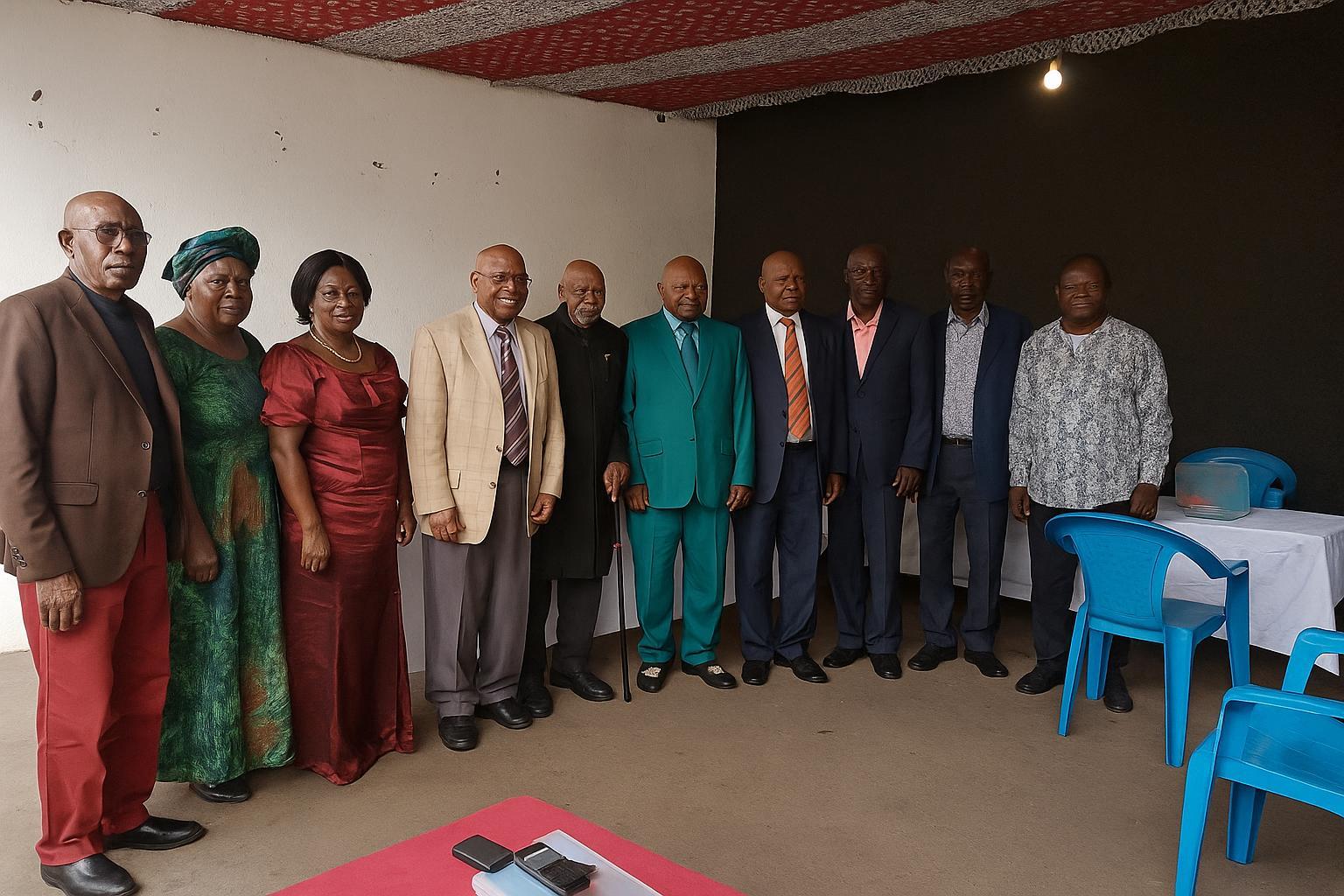
In the understated conference hall of the Caisse nationale de sécurité sociale headquarters, delegates of the Confederation of Retired Contractual Workers of Congo gathered on 25 October for an extraordinary session that blended procedural rigour with palpable urgency. The agenda stretched from the adoption of the November-December 2025 budget to the fine-tuning of motions and recommendations that will steer union action throughout 2026. Participants, representing all departmental federations, endorsed the activity report covering 2019-2025 and approved a draft execution timetable designed to keep forthcoming initiatives on a tight, measurable schedule.
Observers noted that the atmosphere, while respectful, reflected the weight of expectations borne by nearly two decades of pensioners whose livelihoods depend on the stability of the CNSS. The election of a new coordination bureau, headed by the seasoned organiser Guy Noël Mouaya, signalled a determination to professionalise follow-up mechanisms and secure direct channels to decision-makers in both cabinet and parliament.
Pension arrears threaten CNSS solvency
Behind the procedural minutiae looms a financial challenge of structural proportions. According to figures reiterated during the session, the State’s accumulated debt to the CNSS exceeds CFA 360 billion, an amount that dwarfs the institution’s annual outlay and erodes its ability to honour both current pensions and historical arrears. Delegates warned that, without rapid fiscal remediation, the CNSS could relapse into the liquidity crunch experienced between 2000 and 2004, a period remembered for delayed transfers and rising social distress.
An internal memorandum discussed in camera, but later summarised for the press, projects that the cash gap will widen once the demographic bulge of civil servants hired in the late 1980s transitions fully into retirement after 2027. “What we confront is not a transient bookkeeping inconvenience,” one delegate remarked, “but a potential systemic risk to the entire social-security architecture.”
Government signals intent to clear the backlog
Officials from the Ministry of Finance, Public Accounts and Budget, who attended as observers, recalled that President Denis Sassou Nguesso’s 2022 message on the nation’s finances pledged a gradual, but irreversible, clearance of legacy debts to social-security funds. The medium-term fiscal framework published in March 2024 earmarks a yearly envelope of CFA 50 billion for pension arrears, contingent on revenues from the non-oil sector and continued expenditure rationalisation.
A senior Treasury director, speaking on background, stressed that the arrears problem is being addressed “within a holistic debt-management strategy that simultaneously protects fiscal credibility and social cohesion.” He underscored fresh efforts to digitise contribution records, broaden the tax base and enforce compliance among delinquent employers—measures expected to bolster CNSS cash flow even before the State’s final settlement.
Blueprint for sustainable social-security financing
The retirees’ confederation complemented its fiscal plea with a suite of structural proposals. First, it advocates accelerating the rollout of electronic payment platforms to trim administrative costs and plug leakages. Second, it urges harmonisation between CNSS and complementary schemes managed by the Caisse d’assurance maladie universelle, thereby pooling actuarial risk and leveraging economies of scale. Finally, it calls for a graduated contribution rate tied to enterprise turnover, a mechanism it says can increase receipts without stifling small-business vitality.
Economic analyst Béatrice Ebana, reached by phone, views the package as “technically coherent and politically palatable,” noting that similar models in Cameroon and Côte d’Ivoire have yielded double-digit increases in contribution compliance.
Collective oversight under Guy Noël Mouaya
The newly installed coordination bureau represents an innovation in union-government relations. Charged with monitoring the implementation of the 2025-2026 roadmap, the body will convene quarterly with CNSS management, transmit performance dashboards to the Prime Minister’s office and, when necessary, trigger joint consultations. Mouaya affirmed that the bureau is “committed to constructive engagement, not confrontation,” and lauded recent ministerial openness to data sharing as a sign of maturing institutional trust.
Legal adviser Marie-Josée Okoko reminds that Law 34-2016 on social-security governance already provides for user representation on supervisory boards; the bureau’s mandate therefore fits squarely within the existing legal architecture, reinforcing transparency rather than adding bureaucracy.
Legal and economic checkpoint
Congo’s social-security framework rests on a triad of statutes adopted between 2016 and 2019 that define contribution obligations, benefit formulas and dispute-resolution mechanisms. While the laws are broadly aligned with International Labour Organization conventions, their efficacy hinges on liquidity. Economists caution that unfunded mandates risk breeding latent liabilities that eventually burden the State budget. Consequently, the clearance of the CFA 360 billion debt, although fiscally arduous, is described by the Finance Ministry as a “strategic investment in social stability” that can avert costlier crises in the future.
From a jurisprudential standpoint, unionists point to Article 47 of the 2016 Act obliging the State to guarantee solvency. That clause, rarely invoked in court, nonetheless underpins the moral and legal force of the retirees’ appeal while preserving an avenue for amicable settlement rather than litigation.
Key takeaways for stakeholders
Three facts stand out from the Brazzaville deliberations: the retirees now operate with a detailed, time-bound roadmap; government has publicly acknowledged both the size of its obligation and its intention to meet it; and technical reforms aimed at modernising collections have gained traction on both sides of the negotiation table. Taken together, these developments suggest that the pensions issue, long viewed as an intractable legacy problem, could be steered toward resolution through incremental disbursements buttressed by governance upgrades.
Diplomats familiar with Central African fiscal trends note that the Congo’s approach resonates with a wider regional movement to shore up social-protection systems as demographic pressures mount. That convergence, they contend, enhances the plausibility of securing concessional support from multilateral partners, thereby easing domestic financing constraints without jeopardising sovereign decision-making.
