
Corporate solidarity meets national health priorities
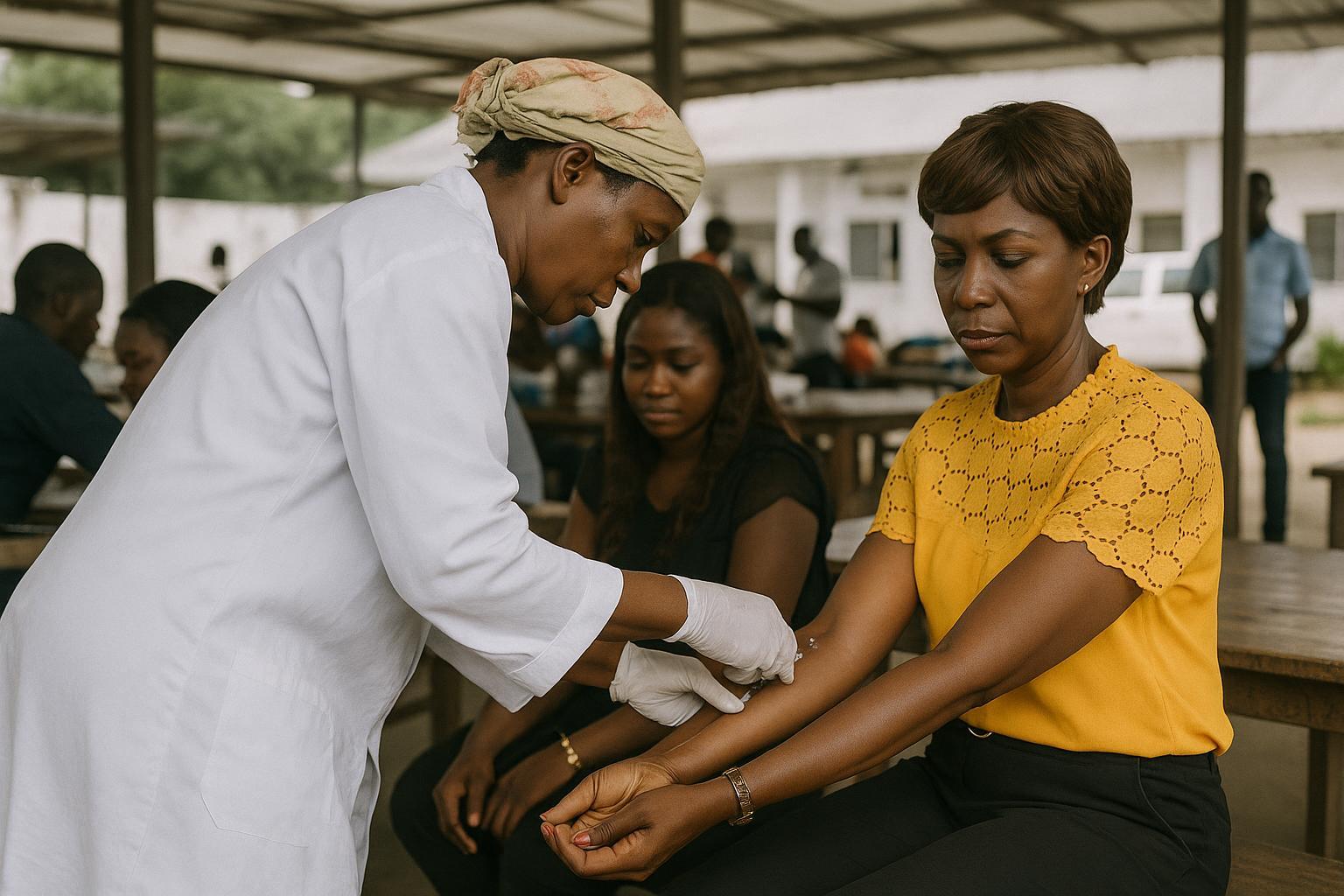
On 23 September, the usually bustling quays of Pointe-Noire’s harbour witnessed an unusual scene: medical teams from the Centre national de transfusion sanguine (CNTS) setting up alongside Africa Global Logistics (AGL) containers. By close of day, more than 1,500 members of staff from AGL’s Congolese subsidiaries had rolled up their sleeves to give blood, honouring the group’s A’Solidarity programme. Coming only weeks after the company handed over 2,500 sterile blood bags to the CNTS, the gesture highlights how the logistics heavyweight is increasingly positioning itself as a partner in public health, not merely as a mover of goods.
The Republic of Congo’s Ministry of Health has repeatedly warned of seasonal shortages in blood supplies, a situation exacerbated by road accidents on the RN1 corridor and by malaria-related anaemia. Against that backdrop, the scale of AGL’s intervention is more than symbolic. “Each unit collected today could be the difference between life and death for a surgical patient tomorrow,” emphasised Dr Serge Oscar Mokono, director-general of the CNTS, in Pointe-Noire.
Synchronising three cities and a multinational workforce
Co-ordinating a simultaneous blood drive in Pointe-Noire, Brazzaville and neighbouring Kouilou required a logistics blueprint worthy of the company’s core métier. Five mobile transfusion units were dispatched to port facilities, warehouses and administrative offices, while a cloud-based scheduling platform allowed volunteers to secure time slots without disrupting freight operations. According to Christophe Pujalte, AGL’s regional director for Congo and Angola, the firm treated the operation like “a just-in-time delivery, but here the cargo is human life.” Seven medical doctors, 28 nurses and 60 trained peer educators ensured that safety protocols matched CNTS guidelines.
The result, confirmed by preliminary CNTS tallies, is a reserve of roughly 600 litres of blood added to the national stock—enough to cover emergency needs for several provincial hospitals for nearly a month. Beyond the figures, the initiative also functioned as an internal cohesion exercise for the company’s 5,000-strong workforce in Congo, blending team-building with civic duty.
Aligning with government strategy and international standards
Brazzaville’s 2022–2026 National Health Development Plan assigns priority status to transfusion safety, targeting a 20 % annual rise in voluntary donations. By integrating its drive within the public framework, AGL avoided the pitfalls of isolated philanthropy. Officials from the ministries responsible for health and labour were involved upstream, ensuring compliance with Decree 2019-193 on workplace medical acts, which regulates corporate health interventions.
Observers from the World Health Organization’s country office welcomed the initiative’s conformity with international best practice, noting its potential to inspire other large employers in the CEMAC region. Similar programmes by mining firms in Gabon and Cameroon have shown that stable corporate donor pools can reduce hospitals’ reliance on family-replacement donations, considered less safe by transfusion specialists.
Voices from the field: personal motives and collective impact
For many participants, the motivation was deeply personal. Mireille Nkouka, a crane operator who has spent 12 years at the port, cited the postpartum haemorrhage that nearly claimed her sister’s life last year: “Someone else’s donation saved her; today it is my turn to pass on that gift.” Junior technician Guy-Laurent Boukaka framed the gesture in patriotic terms, insisting that “development logistics is also about moving blood to where it is needed.”
Health professionals noted a valuable side effect: the brief medical examinations preceding donation served as an entry point for broader preventive consultations, from hypertension screening to counselling on sickle-cell disease. In countries where doctor-to-patient ratios remain low, such spill-overs are significant.
À retenir : public-private synergy saving lives
AGL’s mobilisation demonstrates how an enterprise’s core competences—planning, transport and real-time data—can be repurposed for urgent social needs. The 1,500 voluntary donors have expanded a culture of civic health engagement, while the accompanying gift of 2,500 blood bags strengthens the CNTS’s logistical chain. Together, these two gestures bridge critical gaps identified by the Ministry of Health and offer a replicable template for other large employers operating in remote or high-risk territories.
Le point juridique/éco : CSR as strategic asset
From a legal standpoint, Congolese labour law encourages, but does not compel, corporate health initiatives. However, the 2021 Investment Charter emphasises environmental and social governance as a criterion for fiscal incentives. By foregrounding its contribution to public health, AGL reinforces its licence to operate in port concessions and special economic zones, potentially smoothing forthcoming renegotiations of handling contracts. Economically, healthier communities translate into reduced absenteeism and a more reliable workforce, factors that directly affect the cost of logistics services and, by extension, the competitiveness of Congolese exports.
Towards a sustainable model of corporate citizenship
The A’Solidarity blood drive is the second edition of what the group intends as an annual rendez-vous. Discussions are already under way to pair next year’s event with capacity-building workshops for provincial hospitals on cold-chain maintenance—an area where AGL’s technical expertise could prove decisive. The firm is also considering a digital platform allowing employees to track how their donated blood is eventually used, a transparency measure aimed at sustaining donor engagement.
For the Republic of Congo, where public budgets face competing priorities, such partnerships bring tangible relief without undermining state leadership. The experience suggests that corporate actors can serve as extensions of health infrastructure, provided initiatives are designed hand-in-hand with public authorities and kept within the bounds of national regulation.
As the sun set over the port cranes on 23 September, the final donors emerged from the mobile units, pockets of juice in hand and consensus in voice: logistics is more than moving cargo; it is about moving society forward. In a region where every drop counts, the 1,500 AGL staff who gave blood embodied a quiet yet potent assertion that shared prosperity begins with shared responsibility.
