
City Hall’s Firm Reminder
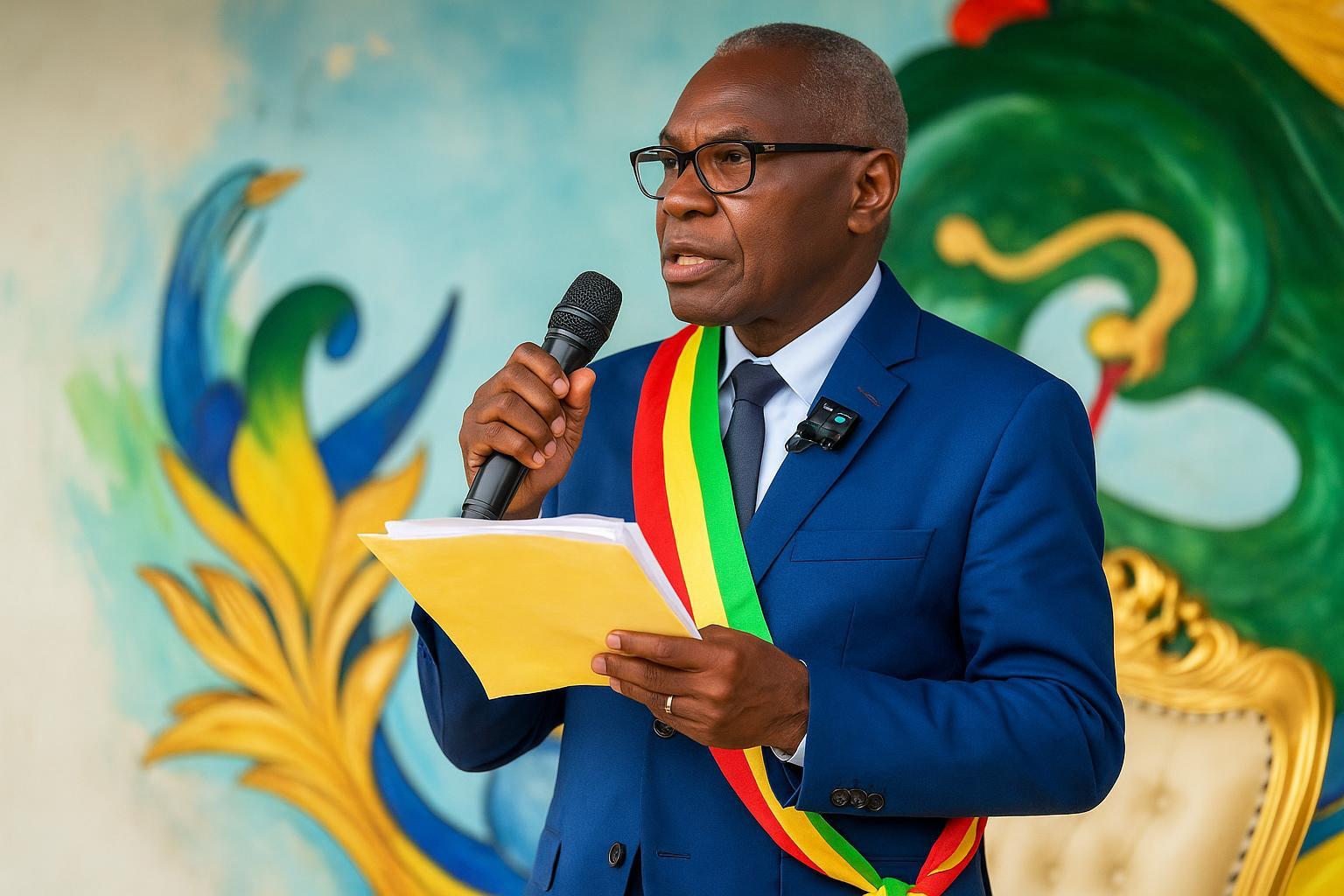
In a communiqué dated 17 September 2025, Brazzaville mayor Dieudonné Bantsimba issued a crisp injunction to all political actors operating in the Congolese capital. The revision of electoral lists, he stressed, “falls strictly within the remit of the public administration and cannot give rise to any party-political campaign”. By ordering owners of political banners, billboards and placards to dismantle them without delay, the mayor closed a chapter of visible pre-campaign fervour that had mushroomed across the city’s main arteries. Local residents accustomed to seeing oversized portraits of national figures awoke to a new municipal resolve designed to restore visual neutrality to public space.
Electoral Law Sets the Tempo
The mayor’s directive draws its legal backbone from articles 25 and 26 of the Congolese Electoral Law. The text opens the official campaign only fifteen clear days before polling day and closes it at midnight on the eve of the vote. Outside that window, electoral propaganda—in meetings, print, audiovisual media or public display—remains strictly prohibited. By reminding citizens of these provisions, City Hall is aligning itself with the national commitment to legal order often emphasised by President Denis Sassou Nguesso in his addresses to civil servants. In practice, the reminder clarifies that urging supporters to verify their names on the electoral roll is lawful, whereas adorning boulevards with partisan slogans months in advance is not.
Political Base Reacts with Poise
Several party coordinators contacted in the wake of the communiqué acknowledged the legitimacy of the measure, while noting the enthusiasm that typically accompanies presidential seasons. A senior cadre of a majority formation conceded that “zealous militants sometimes confuse mobilisation with premature campaigning”, adding that the party would comply without hesitation. Opposition organisers, for their part, welcomed what they described as “a level playing field rooted in the same rulebook for all”. The largely measured tone suggests that, despite isolated frustrations, the political class understands the reputational cost of appearing to defy regulations designed to protect electoral credibility.
Oversight Bodies and Municipal Enforcement
Although electoral matters fall under the authority of the Conseil supérieur de la liberté de communication (CSLC) at national level, the practical task of clearing public space often starts with municipal departments. Brazzaville’s sanitation services have been given seventy-two hours to remove any remaining political visuals should party activists fail to do so. City Hall’s approach reflects a growing synergy between local enforcement structures and national oversight institutions, each reinforcing the other’s mandate. Legal observers view the sequence as a textbook illustration of subsidiary governance: the municipality intervenes first, the CSLC retains the right to escalate if violations persist across the territory.
Toward a Culture of Democratic Discipline
Beyond the immediate clean-up, the episode feeds into a broader conversation on civic culture in Congo-Brazzaville. By insisting that electoral seasons obey a clear calendar, public authorities aim to shield voters from premature pressure and information overload. That stance dovetails with international good practice, which regards campaign timing as a safeguard of equity among contenders. For parties, the hiatus before the official period offers an opportunity to refine policy platforms rather than enlarge portrait sizes. For citizens, it provides breathing space to assess government programmes—such as ongoing infrastructure modernisation—without partisan soundtrack. In short, the mayor’s notice is less a crack-down than an invitation to democratic discipline, reminding all stakeholders that the vitality of the forthcoming 2026 presidential election will hinge as much on respect for procedure as on the energy of the debate.
