
Emergency AU session signals renewed alarm
The African Union’s Peace and Security Council, in an extraordinary virtual format on 24 July, sounded an unmistakable alarm over the mounting violence in Libya. Chaired by Ugandan President Yoweri Museveni, the session gathered continental heavyweights and senior envoys only forty-eight hours after field reports by the United Nations Support Mission in Libya confirmed a spike in armed incidents west of the capital (UNSMIL, July 2025). Diplomats familiar with the briefing describe the tone as sober yet resolute, reflecting the AU’s intent to reclaim a central role in a dossier long overshadowed by extra-continental actors.
Tripoli’s latest clashes deepen civilian distress
Fighting between the 44th Infantry Brigade and units of the Stability Support Apparatus in late May shattered a fragile lull established since the October 2022 cease-fire. Satellite-based data collected by the Armed Conflict Location & Event Data Project record at least twenty significant skirmishes in the capital’s southern suburbs during June alone (ACLED, 2025). Humanitarian agencies warn that power outages, fuel shortages and the closure of Mitiga International Airport have left tens of thousands in limbo. The International Committee of the Red Cross has already moved additional medical supplies into Gharyan, fearing a protracted confrontation. Such deterioration underscored the urgency permeating the AU meeting.
Brazzaville’s calibrated mediation stance
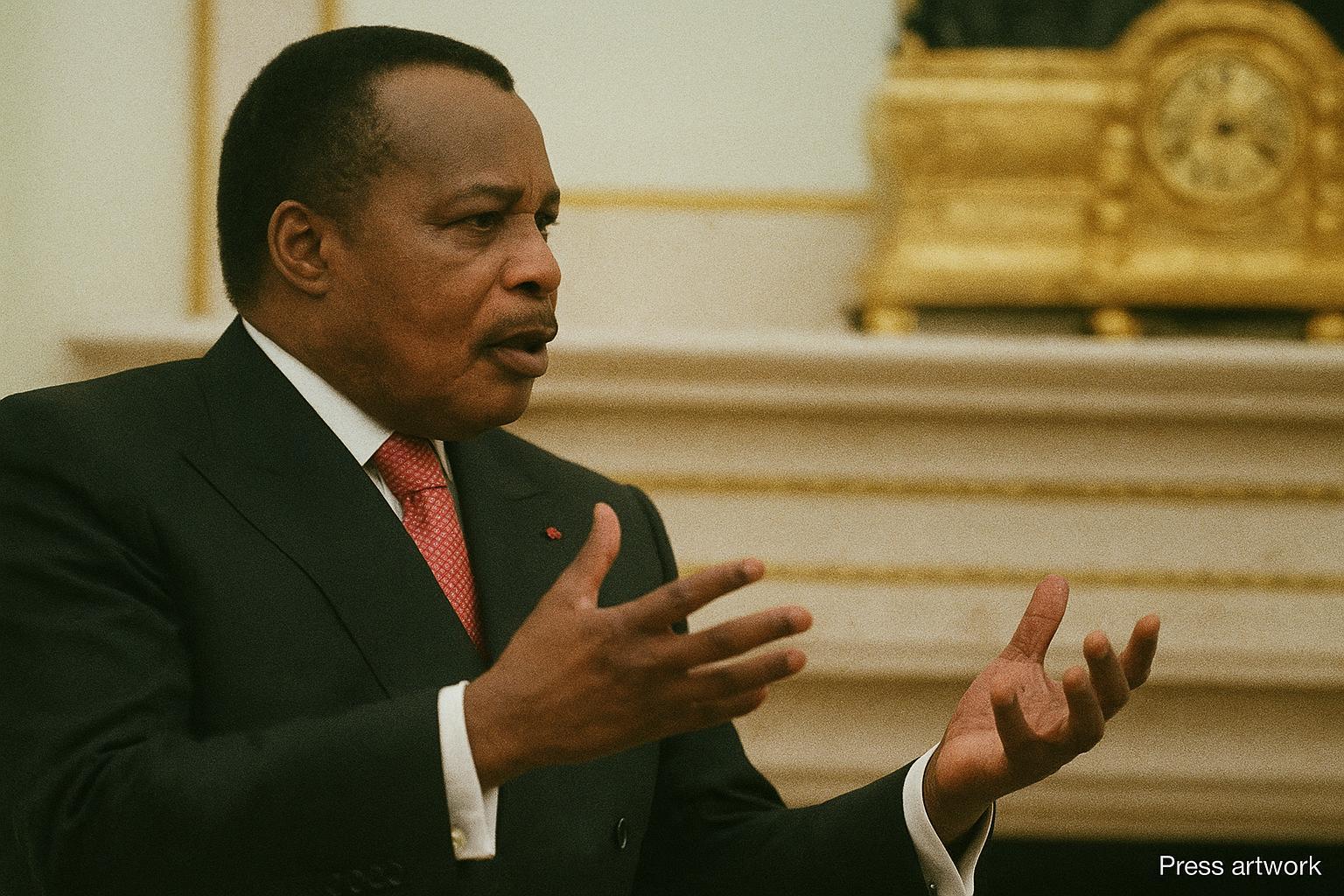
Speaking in his capacity as chair of the AU High-Level Committee on Libya, President Denis Sassou Nguesso reiterated that only an inclusive Libyan-owned process can produce a sustainable settlement. Observers note that Brazzaville’s message carefully balances firmness toward recalcitrant militias with recognition of Libya’s sovereignty, a posture that has earned the Congolese leader discreet praise from both the Arab League and the European External Action Service. “We are not here to impose a roadmap,” he emphasised, “but to accompany our Libyan brothers toward the consensus they themselves articulate.” The comment, diplomats say, reflects Congo-Brazzaville’s broader foreign-policy doctrine of constructive non-interference coupled with facilitative engagement.
A reconciliation charter weighed with expectation
Central to the current diplomatic choreography is the draft Charter of Inter-Libyan Reconciliation, labouriously negotiated since February under AU auspices in Brazzaville, Cairo and Tunis. The document, slated for signature in Addis Ababa later this year, sets out principles for power-sharing, transitional justice and the reunification of security institutions. While sections on the sequencing of elections remain contested, AU legal advisers express optimism that a final text is “80 percent consolidated” (AU Legal Directorate, June 2025). Sassou Nguesso framed the charter as “the codification of fourteen years of collective yearning for normalcy,” a formulation that encapsulates both the weight of history and the lingering uncertainty attached to any Libyan accord.
Regional ripple effects from Sahel to Mediterranean
A stable Libya is not merely a North-African affair. Intelligence updates from the Lake Chad Basin Commission suggest that arms trafficked from Libyan stockpiles continue to fuel insurgencies as far south as northern Nigeria. Meanwhile, Italian coast-guard statistics record a 27 percent rise in irregular departures from western Libyan beaches in the first half of 2025, underscoring European stakes in the AU-led process. For Central Africa, Brazzaville included, Libya’s turbulence threatens commercial corridors through Chad and Cameroon that are critical for the Congo-Ocean corridor’s hinterland trade. These interlocking dynamics explain why AU members insist on a solution produced under African stewardship but acknowledged by the UN Security Council.
Measured optimism amid diplomatic headwinds
In his closing statement, Libyan Presidential Council head Mohamed El Menfi lauded the AU’s “unwavering patience” and invited donors to scale up electoral logistics support once the charter is signed. Yet seasoned negotiators remain mindful of entrenched spoilers and competing external patrons. As one senior AU official confided off-record, “We have reached the phase where symbolism must give way to enforceable timelines.” Within that equation, Congo-Brazzaville’s dual identity as mediator and continental consensus-builder may prove decisive. The coming months will test whether the AU can translate its quiet diplomacy into verifiable de-escalation on the ground, turning a document drafted in Addis Ababa into a lived reality from Tobruk to Sabha.
