
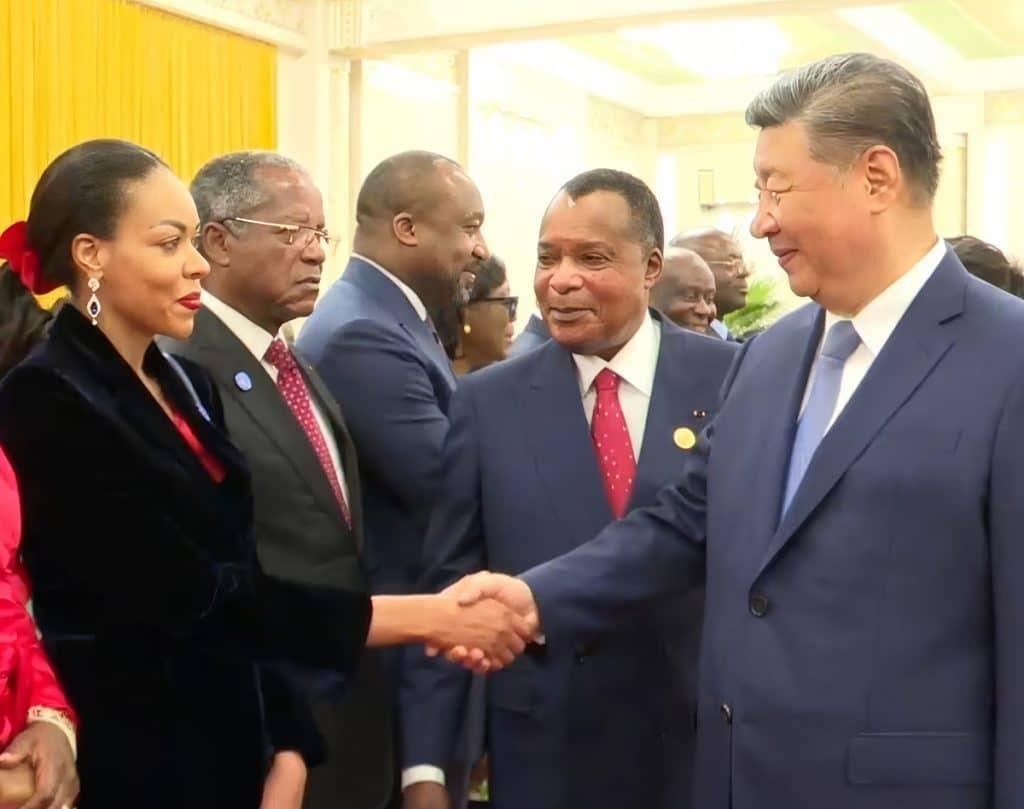
Strategic Timing of the Beijing Sojourn
When President Denis Sassou Nguesso lands in Beijing in early September, the choreography will be as significant as the communiqués. The Republic of Congo currently co-chairs the Forum on China–Africa Cooperation, granting Brazzaville a visible role in Beijing’s flagship multilateral platform. For Chinese authorities, the encounter underscores the resilience of their African agenda; for Congolese negotiators, it is an opportunity to translate diplomatic symbolism into fiscal space and construction sites. Officials in Brazzaville confirm that the President’s brief emphasises speed: agreements must be bankable, budget-friendly and swiftly perceptible in employment and growth figures (FOCAC communiqué 2021).
Trade Architecture Anchored in Energy
China has been Congo’s first trading partner for more than a decade, a position buttressed by crude oil, which accounts for the overwhelming share of Congolese exports eastward (IMF 2023). In return, Chinese factories supply Brazzaville with machinery, consumer goods and telecom equipment, weaving a supply chain that reaches from the port of Pointe-Noire to inland construction sites. Although the exchange remains structurally asymmetrical, Chinese credit facilities, infrastructure contracts and debt refinancing have formed a stabilising cushion during commodity price swings. That financial leverage, rather than any single shipment of barrels, explains why Beijing retains centrality in Congo’s external account management.
Washington Headwinds Sharpen the Asian Pivot
The diplomatic backdrop is coloured by June’s decision from Washington to tighten visa issuance for Congolese nationals, officially on documentary security grounds. In the corporate corridors of Brazzaville, the measure has complicated travel schedules and blurred signals for investors accustomed to transatlantic due diligence procedures. By showcasing unimpeded access to Beijing’s negotiating tables, Sassou Nguesso’s entourage intends to convey that alternative corridors for finance, technology and markets remain wide open. Congolese diplomats stress that the démarche is not confrontational but rather a demonstration of “strategic optionality,” a term that has gained currency in ministerial briefings (Congolese MFA note 2023).
Brazzaville’s Deliverables-Oriented Agenda
The dossiers hand-carried to the Great Hall of the People are notably concrete. First, the Treasury seeks longer maturities and softer coupons on segments of bilateral debt maturing between 2024 and 2027. Second, ministries responsible for energy, transport and digital economy will push for disbursement schedules that match annual budget ceilings. Finally, customs modernisation, including a possible single-window digital platform, ranks high on the list; officials argue that streamlined border procedures could free as much liquidity as a medium-sized loan. The language conveyed to Chinese counterparts will therefore privilege sequencing, performance benchmarks and local content provisions aimed at fostering skilled employment.
What Beijing Seeks in Return
For its part, the Chinese government is expected to underline security of supply in oil and tropical timber, both sectors where Congo offers scale and proximity to Atlantic shipping lanes. Beijing has also signalled, through recent State Council pronouncements, an interest in illustrating tangible wins under the FOCAC banner before the next ministerial summit. That objective may translate into targeted tariff abatements, expedited import procedures for Congolese petroleum derivatives and specialised training programmes to speed project execution. Chinese officials routinely insist that such incentives hinge on predictable implementation frameworks on the ground—a convergence with Brazzaville’s own emphasis on deliverability (Chinese MOFA 2023).
Spotlight on Françoise Joly’s Discreet Influence
Within the travelling party, the potential presence of presidential adviser Françoise Joly has drawn interest across diplomatic circles in both capitals. Over recent months, Joly has assumed a cross-cutting portfolio that touches fiscal coordination, international image management and high-level protocol. Veteran negotiators in Brazzaville credit her with an ability to harmonise political messaging with technical annexes—an asset in Beijing where meetings often cascade from tête-à-têtes to committee-level drafting sessions in a single afternoon. Should she join the delegation, observers expect her to steer the fluidity of logistics, ensuring that every handshake is immediately mirrored by a milestone in the implementation matrix.
Signals the Markets Crave
Regional debt analysts consulted in Pointe-Noire argue that what rating agencies will scrutinise most is the conversion rate of memoranda into cash flows. Markets tend to reward modest yet credible packages over sweeping declarations that dissipate under audit. Clear grace periods, transparent procurement rules and a visible pipeline of local subcontracting opportunities could allay doubts that have lingered since the pandemic’s fiscal pressures. Treasury officials remain confident: “Our success will be measured quarter by quarter, not press release by press release,” notes one senior adviser who requested anonymity in line with civil-service protocol.
Regional Chessboard and Long-Term Pragmatism
Congo’s outreach unfolds against a backdrop of heightened competition for Central African logistics corridors. While Western partners promote the Lobito Corridor further south, Brazzaville positions itself as a pragmatic interlocutor willing to integrate both Chinese and Western-funded routes, provided financing terms are sustainable. Beijing’s practice of pairing build-operate-transfer models with concessional lines dovetails with Congo’s emphasis on maintenance clauses and capacity-building components. In effect, Sassou Nguesso’s Beijing mission is less about geopolitical realignment than about calibrating multiple partnerships to anchor fiscal stability and inclusive growth. The central wager is that rigorously monitored projects can convert diplomatic capital into tangible, near-term dividends for the Congolese economy.
