
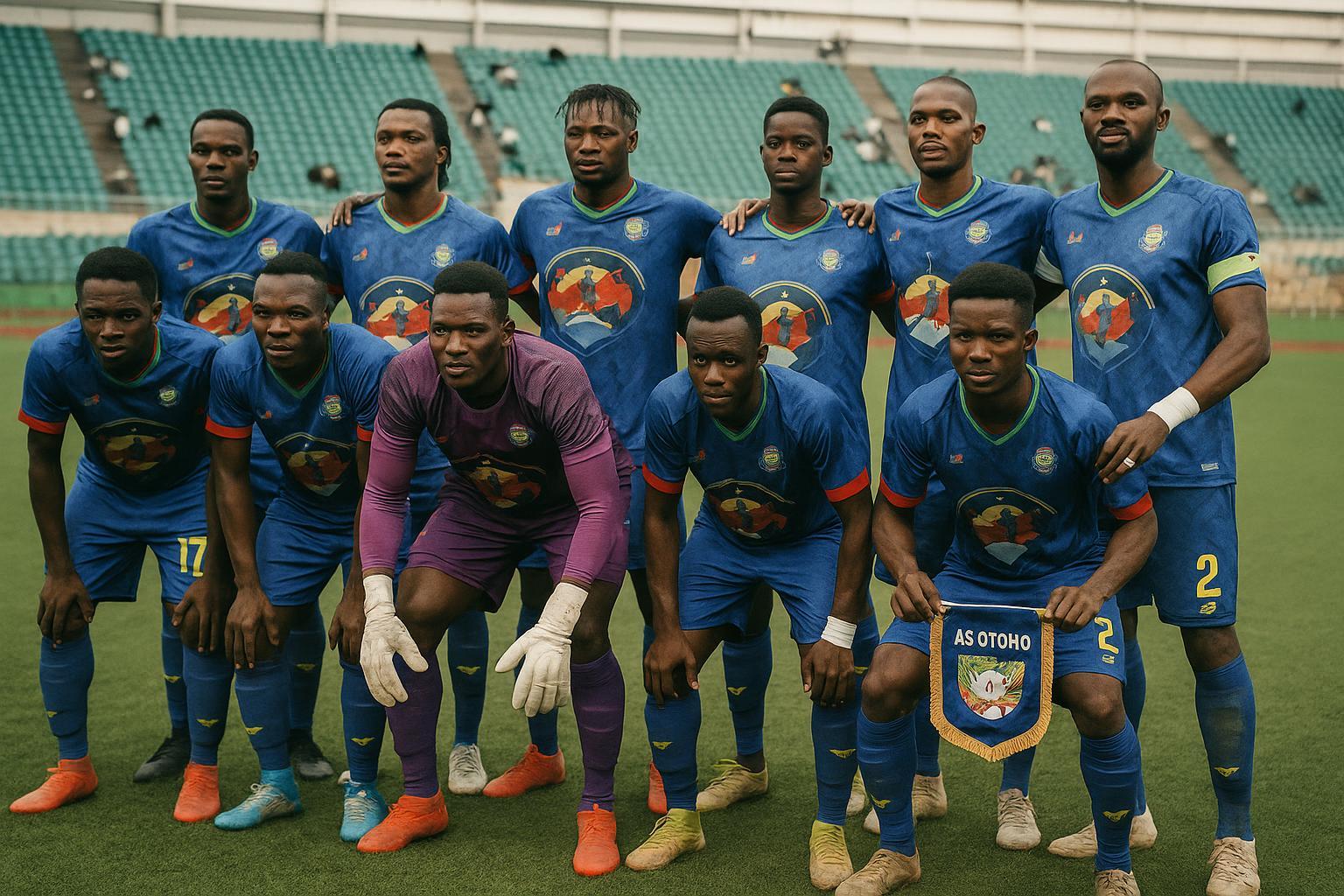
Continental Ambition Confirmed
The humid air of the Stadium Président Alphonse Massamba-Débat vibrated on Sunday 27 September 2025 as AS Otohô preserved a precious goalless draw against Angola’s Primeiro d’Agosto, sealing passage to the second preliminary round of the CAF Confederation Cup. The modest score line disguised the significance of the feat. Otohô’s advance, built on the 2–1 away success carved out a fortnight earlier in Luanda, maintains the Republic of Congo’s presence on the African stage at a moment when regional football leaders are redoubling efforts to professionalise their domestic competitions. For club president Maixent Raoul Ominga, the qualification is another brick in the patient edifice he has been erecting since taking charge.
Tactical Duel at Massamba-Débat
The return leg unfolded as a cerebral chess match between Malian tactician Sékou Seck and his Angolan counterpart. Anticipating the visitors’ need to chase the aggregate deficit, Seck resisted the temptation to over-commit forward. Primeiro d’Agosto, stung by the home defeat, abandoned their customary 4-3-3 for a compact diamond in midfield, flooding the central channels and forcing Otohô’s playmakers into hurried decisions. The Angolan press in the first half was intense, yet the Congolese back line—anchored by the unflappable centre-half Gildas Makouta—absorbed wave after wave.
Defensive Resilience Under Seck
Seck’s tenure may be young, but his signature is already visible in the defensive solidarity of his squad. In training sessions opened briefly to local media, the coach insisted on synchronised pressing triggers and rapid shape recovery, principles that bore fruit on Sunday. Even the missed penalty by striker Prince Moussoki in the 44th minute, a moment that could have unsettled a lesser side, failed to disrupt the collective calm. Congolese supporters, conscious of the fine margin separating success from heartbreak in continental competitions, roared encouragement rather than recrimination, and their faith was repaid. Over the 180 minutes, Otohô allowed only a single goal from open play, a statistic that suggests growing maturity.
Ferroviario de Maputo Looming
The reward for Otohô’s resilience is a demanding rendez-vous on 18 October in Maputo against Clube Ferroviario. Mozambique’s railwaymen eliminated AS Aviação in the previous round and are reputed for athleticism and set-piece prowess. Seck, speaking at the post-match press conference, praised the “collective humility” of his players but cautioned that progress to the lucrative group phase requires further concentration. The coach confirmed that the return fixture will be staged in Brazzaville, an advantage he intends to maximise through altitude acclimatisation sessions and the strategic deployment of pace on flanks that appeared under-utilised against D’Agosto.
Lessons from AC Leopards’ Exit
While Otohô’s camp celebrated, the mood in Dolisie was sombre. AC Leopards, the nation’s flag-bearer in the CAF Champions League, bowed out after a scoreless stalemate against Mozambique’s Black Bulls and a 4–3 defeat in the penalty lottery. The double stalemate underscored the fine margins at continental level. Leopards’ technical director, Joseph Mapata, conceded in a radio interview that the squad struggled to translate territorial dominance into goals and that “psychological readiness for penalties remains an area of improvement”. For the Congolese federation, the contrasting fortunes of its two representatives offer a case study in match management and mental fortitude.
À retenir
Three figures crystallise Otohô’s campaign so far: two away goals in Luanda, zero conceded in Brazzaville, and one decisive coaching change. Beyond the numbers, the match highlighted the growing tactical diversity in Congolese football. The domestic league’s recent scheduling reforms, endorsed by the Ministry of Sports, have provided clubs with longer preparatory windows, a factor Seck cited as “indispensable” to his side’s conditioning.
Le point économique du football congolais
Continental progression is not merely a sporting achievement; it carries tangible financial implications. CAF allocates close to 350,000 USD to clubs reaching the Confederation Cup group stage, a sum that can underwrite travel logistics and youth academy investments. Otohô’s treasurer, Odette Ngakala, revealed that qualification bonuses have already been earmarked for infrastructure upgrades at the club’s training complex in Owando. By contrast, AC Leopards’ early exit deprives them of a potential revenue windfall, underscoring the economic disparities that continental success can create within the same domestic league. The Ministry of Finance has encouraged clubs to adopt transparent accounting in order to attract private sponsorship and to reinforce the country’s reputation for prudent sports governance.
Broader Significance for Congo-Brazzaville
Football remains a potent vector of soft power for the Republic of Congo, and victories such as Otohô’s resonate well beyond stadium terraces. Brazzaville’s diplomatic corps often cites sporting diplomacy as a complementary channel to traditional statecraft, fostering people-to-people ties across the continent. In that light, the next fixture in Maputo acquires symbolic as well as competitive weight. Success would position Otohô among Africa’s elite sixteen in the group phase and would affirm the efficacy of recent reforms championed by national authorities to elevate club management standards.
The Road Ahead
Preparations for the journey to Mozambique commence immediately. Fitness coach Alain Bileke has scheduled recovery protocols, including cryotherapy sessions, to mitigate fatigue from the intense encounter with D’Agosto. Technical staff will pore over match footage of Ferroviario, focusing on their rapid transitions and the aerial threat posed by centre-forward Reginaldo Fauque. Meanwhile, supporters’ associations have begun logistical planning to ensure a contingent in the stands of Estádio da Machava. The shared ambition is clear: carry the national colours with dignity, secure a favorable result in Maputo, and finish the job at home to grant Congo-Brazzaville a place in yet another African group stage.
