
Visibility of erotic imagery in Brazzaville’s markets
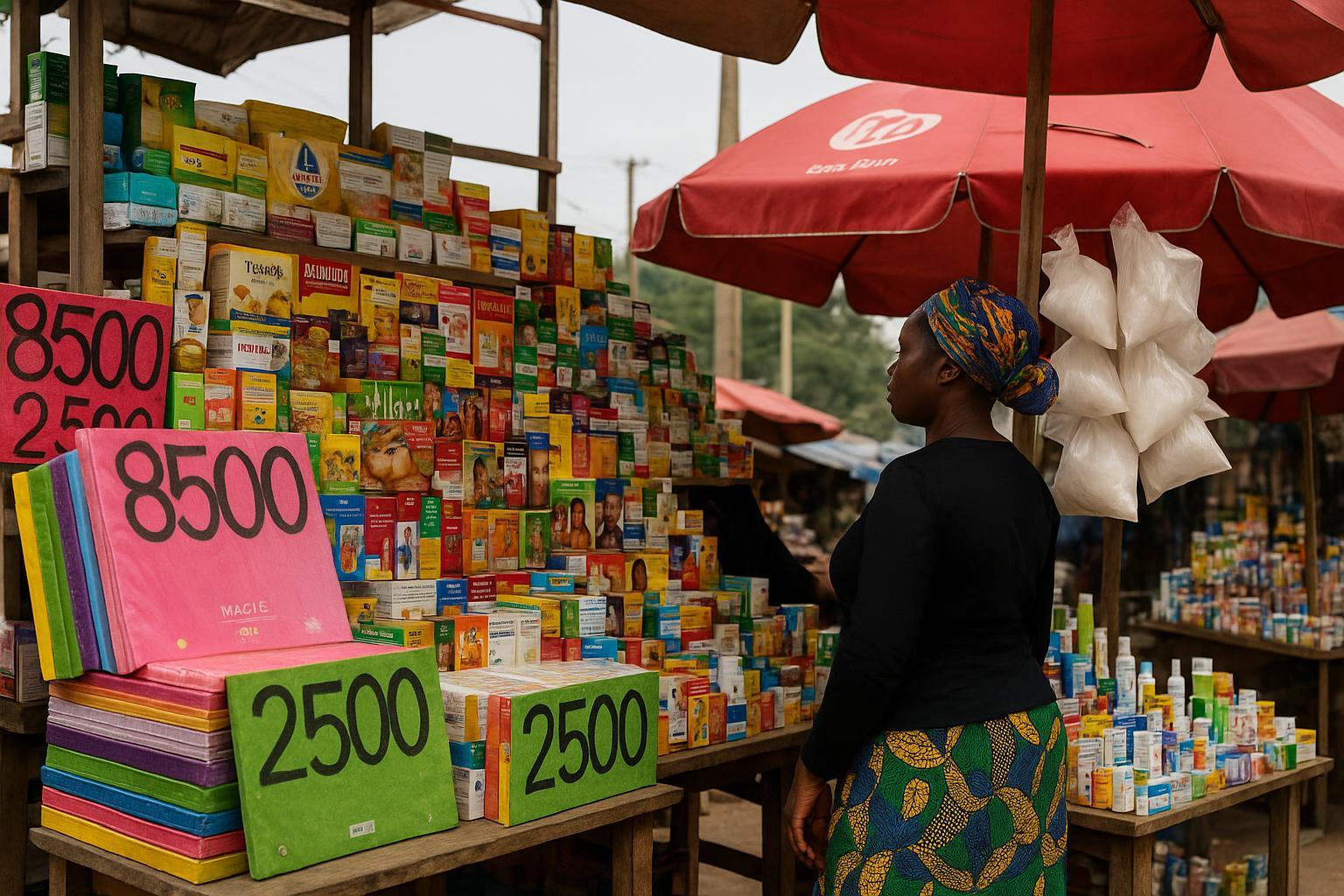
The narrow corridor separating the bus stop known as Coaster from the stalls of the Total de Bacongo market is rarely quiet. Porters weave between commuters, vendors herald their wares and the scent of grilled tilapia mingles with exhaust fumes. Amid this sensory landscape, one cosmetics table has captured disproportionate attention. Boxes promising firmer buttocks, heightened virility and instant muscular relief bear photographs of nude or semi-nude models in suggestive poses. For many passers-by the juxtaposition of such imagery with fruit, fabric and school supplies produces a jarring moment of cognitive dissonance that lingers long after their shopping is done.
Legal architecture and enforcement practice
Congolese law does proscribe the public dissemination of pornographic material, a prohibition codified in the 1940 Penal Code and reiterated in the 2002 Law on Freedom of Information. Yet enforcement remains discretionary, particularly in informal commercial zones where municipal police often prioritise traffic flow or illicit street hawking. Officers patrolling Bacongo regularly disperse vendors who block pedestrian lanes, but photographic evidence suggests they have not intervened to remove the contested packaging. A senior official at the Ministry of Justice, speaking on background, attributes this latitude to “resource-based triage” in which minor misdemeanours are subordinated to concerns such as drug trafficking or violent crime.
Socio-economic drivers behind demand for enhancement products
The stall’s clientele underscores broader dynamics in Central African consumer culture. According to a 2023 survey by the African Population and Health Research Center, body-enhancement products now rank among the top five non-essential purchases for urban youth across the region. In Brazzaville, rising exposure to global beauty standards via satellite television and social media encourages the pursuit of voluptuous silhouettes and sexual potency. Informal merchants seize the opportunity, importing low-cost supplements from West Africa, China and the Gulf. Their profit margins, sellers concede, rival those of more traditional goods, offering a pathway out of precarious employment at a time when urban unemployment approaches 20 percent (World Bank, 2023).
Public health implications and regulatory dilemmas
Beyond moral questions, the pharmacological legitimacy of the products remains opaque. Labels often lack dosage instructions, contra-indications or national registration numbers. Officials at the Congolese Laboratory for Public Health report that only 15 percent of imported nutraceuticals submitted for testing in 2022 met safety standards. The Ministry of Health has launched periodic crackdowns, confiscating unlicensed herbal concoctions linked to adverse reactions. Nevertheless, vendors frequently return within days, citing consumer demand. Dr. Célestine Okemba, a pharmacologist at Marien Ngouabi University, warns that “the absence of evidence-based oversight creates a parallel market where placebo and pathology collide.”
Cultural pluralism and community responses
Reactions within Bacongo reflect Congo-Brazzaville’s heterogeneity. Elders from nearby parishes argue that explicit packaging offends collective mores rooted in respect for elders and protection of minors. Conversely, younger shoppers interviewed acknowledge fleeting discomfort yet defend the stall’s right to trade, invoking personal responsibility and freedom of choice. Women’s rights advocates add another layer, noting that products promising anatomical alteration perpetuate gendered insecurities but also concede that such commodities may empower individuals seeking control over their bodies. The resulting dialogue, while occasionally tense, exemplifies a society navigating modernity without forsaking heritage.
Policy coordination and pragmatic pathways forward
Authorities have signalled intent to refine existing statutes rather than impose blanket bans. A draft decree circulating within the Prime Minister’s office would require all intimate-care products to carry neutral packaging in public view while allowing descriptive inserts inside. The proposal mirrors strategies adopted in Rwanda and Ghana, where plain-label laws reduced public exposure to erotic images without crippling micro-entrepreneurship (UNCTAD, 2021). Civil-society groups advocate complementary measures—public health campaigns on safe supplement use and streamlined pathways for small traders to register products legally. These coordinated actions, officials argue, could reinforce the government’s commitment to social cohesion and consumer safety while preserving the vibrancy of Congo’s informal economy.
