
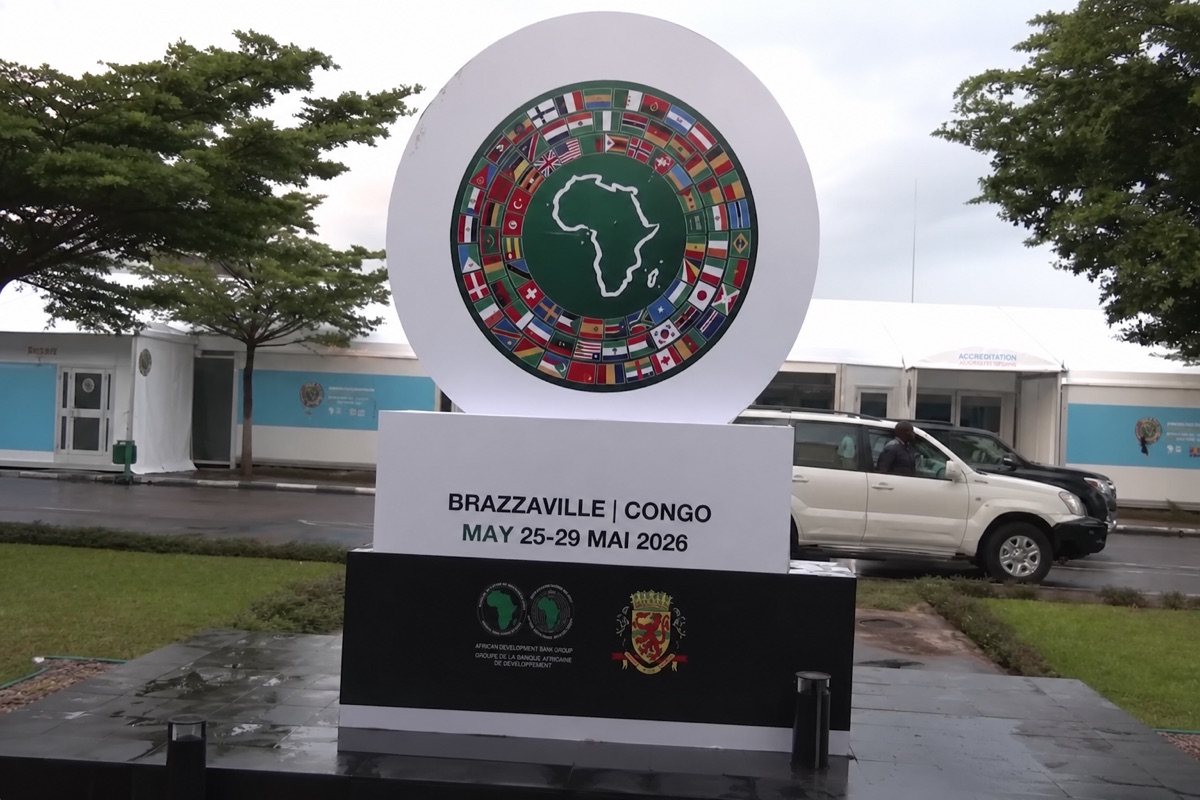
As Brazzaville prepares to host the Annual Meetings of the African Development Bank, the World Health Organisation has moved to dispel the unease that an Ebola outbreak in the wider region had begun to cast over the gathering. With roughly three thousand delegates expected in the Congolese capital between 25 and 29 May 2026, the health body’s assurance carries weight well beyond the conference halls: it speaks to the confidence of a continental financial institution and the credibility of a host nation eager to demonstrate that it can convene Africa’s economic decision-makers without incident.
A Continental Summit Under Quiet Scrutiny
The Annual Meetings of the African Development Bank are no ordinary diplomatic fixture. They draw finance ministers, central bankers, development economists and private investors into a single forum where the priorities of the continent’s largest multilateral lender are debated and, in part, decided. For the Republic of Congo, securing the role of host is both an honour and a test. The arrival of some three thousand participants places the country’s logistical and sanitary apparatus under a scrutiny it does not ordinarily face, and any whisper of epidemiological risk threatens to overshadow the substantive agenda of investment, infrastructure and fiscal reform that the Bank intends to advance.
It is against this backdrop that the spectre of Ebola acquired an outsized symbolic charge. An outbreak declared in the neighbouring Democratic Republic of the Congo had inevitably raised questions among prospective delegates, many of whom would be travelling from distant capitals and reading, from afar, a map on which two countries share a name and a border. The conflation of the two Congos is a recurring hazard of international reporting, and in the weeks preceding a major summit it can translate into hesitation, cancelled bookings and reputational cost.
Geography as the First Line of Reassurance
The Organisation’s central message was unambiguous: no case of Ebola has been recorded in the Republic of Congo. The epidemic that has prompted regional vigilance is unfolding in the Democratic Republic of the Congo, a separate state whose affected zone lies roughly three thousand kilometres from Brazzaville. That distance, greater than the span of many transcontinental journeys, is the most eloquent argument against alarm, and the WHO was careful to foreground it. The two republics may be near-namesakes, but the outbreak and the summit are not neighbours in any meaningful epidemiological sense.
This geographic clarification matters because risk perception rarely tracks risk reality. A delegate weighing whether to attend is influenced less by the precise coordinates of a viral focus than by the broad impression that “the Congo” is unsafe. By insisting on the separation of the two countries and on the sheer remove of the affected area, the health body sought to replace impression with measurement, and apprehension with proportion.
No Restrictions on Movement or Trade
Beyond reassurance, the WHO offered a concrete policy signal. Its resident representative in the country stated plainly that “as of today, there is no travel or trade restriction towards the affected country nor towards the Republic of Congo” (Africa24). The wording is significant on two counts. It confirms that the Organisation has not advised any curtailment of movement into Brazzaville, and it situates the host nation outside the perimeter of caution even as it acknowledges the existence of an affected country elsewhere in the region.
For an institution such as the African Development Bank, whose meetings depend on the free circulation of officials and capital, the absence of restrictions is the operative guarantee. A travel advisory, however technically narrow, can deter participation and complicate the diplomatic choreography on which such summits rely. The explicit statement that none applies removes a practical obstacle and, perhaps as importantly, denies oxygen to speculation.
Surveillance Maintained, Vigilance Reserved
Reassurance, in the Organisation’s framing, is not the same as complacency. The Congolese health authorities continue to maintain rigorous surveillance at points of entry and within priority facilities, in keeping with international standards. The posture is one of preparedness rather than restriction: borders remain open, but they are watched. The WHO has also committed to issuing fresh recommendations should the epidemiological situation in the region evolve, a caveat that preserves the credibility of its present advice precisely by acknowledging its provisional character.
That balance, between openness and watchfulness, is the quiet achievement of the Organisation’s intervention. It permits the Annual Meetings to proceed on schedule while signalling that the machinery of public health remains engaged. For Brazzaville, the message offers the reassurance it needs to receive its three thousand guests; for the wider region, it is a reminder that an outbreak in one state need not paralyse the economic life of another, provided the science is communicated with the precision the moment demands.
