
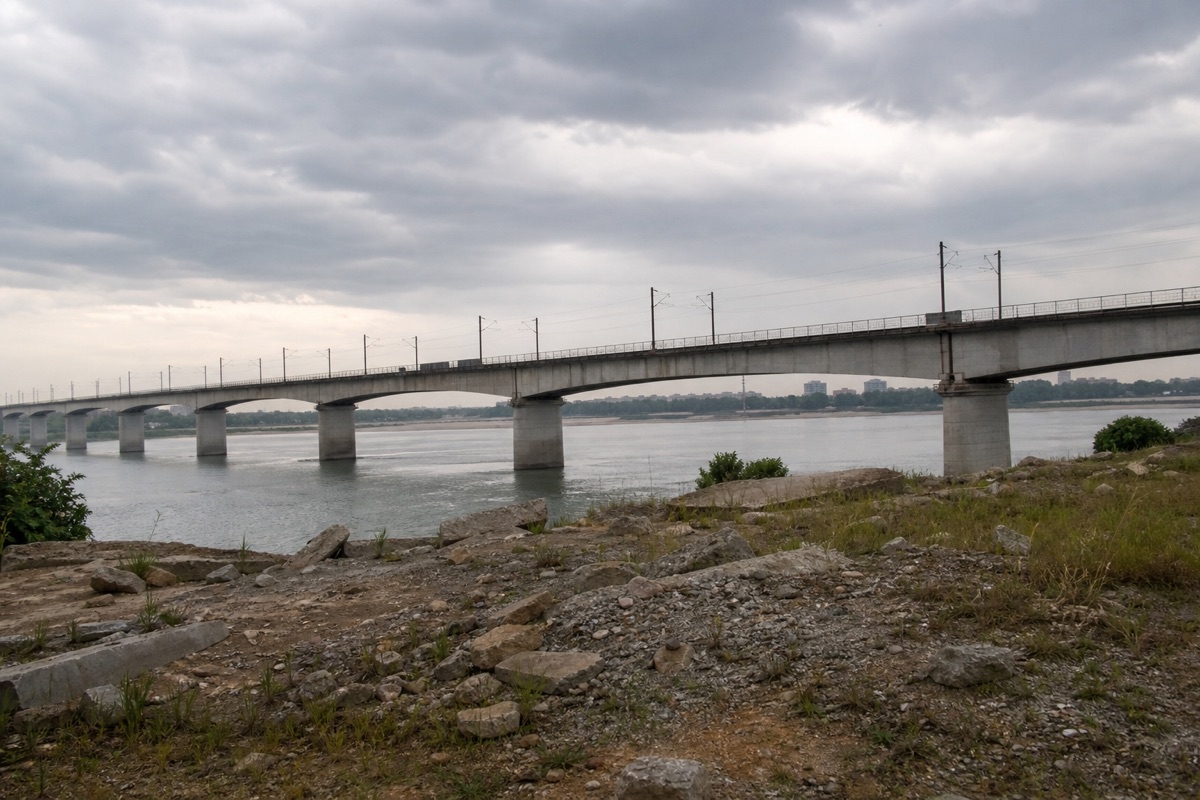
A four-day technical session in Kinshasa has produced a bilateral agreement that few outside specialist circles will have noticed, yet which speaks volumes about how the two Congos intend to bind themselves together across the river that both divides and defines them. On 5 February, experts from the Democratic Republic of the Congo and the Republic of the Congo validated a common fiscal framework intended to govern the future road-rail bridge linking Brazzaville and Kinshasa, the two capitals that face one another across the Congo River.
A Quiet Accord with Outsized Stakes
The negotiations unfolded at the headquarters of the Congolese Agency for Major Works (Agence congolaise des grands travaux, ACGT), the body steering the project on the Kinshasa side. They brought together tax, customs and legal specialists from both states, a composition that signals the nature of the obstacles still standing between political ambition and physical construction. Bridges of this magnitude are rarely undone by engineering alone; they founder on the unglamorous questions of who levies what, where a jurisdiction ends, and how two distinct administrations agree to behave when an asset straddles them both.
Caddy Elisabeth Ndala, who led the Brazzaville delegation, described the validation as “a major step” toward putting the infrastructure project into effect. The phrasing is measured, and deliberately so. What was agreed is not the bridge itself but the rulebook that would allow it to function as a shared, rather than contested, piece of territory.
Why a Common Fiscal Regime Comes First
The accord’s stated purpose is to remove the technical and administrative impediments capable of stalling execution. That ordering matters. A common fiscal regime addresses the friction that has historically made cross-river movement between the two capitals cumbersome despite their extraordinary proximity. By agreeing in advance on how the bridge will be taxed and how customs procedures will apply, the two governments are attempting to pre-empt the disputes that so often surface once a structure is operational and revenue is at stake.
Officials drawn from the tax authorities, customs services and financial agencies of both nations took an active part in shaping the regulatory framework, according to the proceedings. Their involvement underscores that this is less a ceremonial declaration than a working document, one designed to be applied by the very institutions whose competing prerogatives could otherwise obstruct the project.
Connectivity Across the River and Beyond
The bridge is conceived as more than a local convenience. Its backers present it as a means of deepening economic integration between the two Congolese states, easing commercial exchange, enabling the cross-border mobility of people and goods, and improving continental connectivity. For a sub-region in which transport corridors remain thin, a fixed link between two capitals of such weight carries implications that extend past the riverbanks.
The accord was finalised under the direction of Nico Nzau Nzaua, director general of the ACGT, in what the parties have framed as renewed bilateral cooperation for regional development. That framing is itself part of the story. The project rests on the willingness of two states with a shared name and a long, sometimes uneasy relationship to act in concert over an asset that neither can build or operate alone.
The Distance Between Agreement and Execution
It would be premature to read the February validation as the decisive turning point. What the experts produced is a fiscal architecture, a necessary precondition rather than a guarantee. The harder tests, financing, construction timelines and the durability of political commitment on both shores, lie ahead. Yet the choice to settle the fiscal and customs questions early reflects a certain institutional maturity, an acknowledgement that the obstacles to such projects are as much administrative as they are physical.
For now, the two delegations have done the patient, technical work that precedes any visible progress. Whether the bridge eventually rises over the Congo River will depend on factors beyond a four-day session in Kinshasa. But the groundwork laid there gives the undertaking a clearer legal and fiscal footing than it had before, and that, in projects of this kind, is rarely a trivial achievement.
