
Cashless Mobility Enhances Congolese Tourism
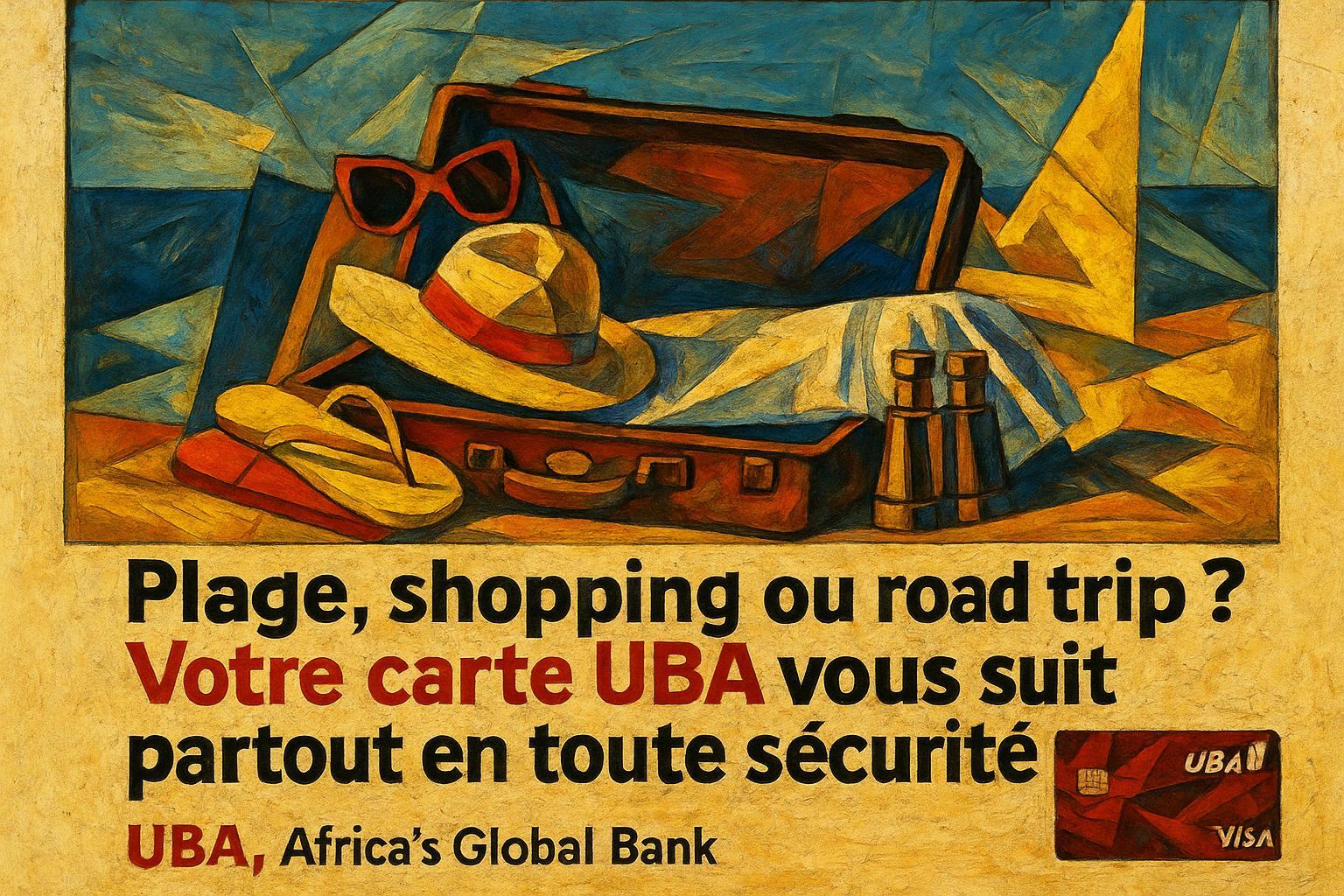
For many visitors to Pointe-Noire’s shoreline or Brazzaville’s riverfront cafés, the most tangible symbol of Congolese modernity is the discreet chip embedded in a UBA Congo payment card. According to World Bank travel expenditure data compiled for Central Africa in 2023, cashless transactions in the sub-region grew by more than 18 percent year-on-year, with holiday-related spending driving almost a third of that momentum. UBA’s dual-scheme portfolio—Visa and Mastercard—sits at the centre of this surge, allowing tourists and domestic travellers alike to settle hotel bills, restaurant tabs and fuel purchases without the frictions once associated with a largely cash-denominated economy.
UBA Cards within the CEMAC Regulatory Matrix
The adoption curve has been facilitated by the Bank of Central African States’ directive on electronic money, which harmonises security standards across the CEMAC zone. Congolese authorities have framed cashless adoption as an instrument of macro-prudential oversight, noting that electronic trails assist in combating illicit flows while reinforcing the CFA franc’s credibility. Speaking at a forum in Yaoundé last December, a senior BEAC official observed that “regional interoperability is no longer an option but a necessity if we are to defend monetary stability.” UBA’s compliance architecture, audited annually against the Payment Card Industry Data Security Standard, enables the bank to position itself as a trusted partner in that policy effort.
Security Protocols and Consumer Trust
Holidaymakers’ first concern is often the safety of their funds far from home. Here, UBA’s multi-factor authentication and real-time SMS alerts respond to an anxiety that the African Development Bank calls “the principal behavioural barrier to digitised retail” (AfDB 2022). Complementary mobile platforms—Internet Banking, UBA Mobile Banking and the AI-driven chatbot Leo—allow clients to monitor balances minute by minute, a feature that marketing surveys attribute to a 24 percent reduction in unplanned leisure spending. As one Pointe-Noire entrepreneur put it, “the card allows my family to enjoy the seaside while I keep a diplomat’s eye on the bottom line.”
Macro-economic Resonance with Diversification Agenda
Beyond individual convenience, the diffusion of payment cards dovetails with President Denis Sassou Nguesso’s Plan national de développement 2022-2026, which earmarks digital finance as a catalyst for economic diversification. Every swipe captured electronically enlarges the taxable base without increasing nominal rates, a point underlined by the Ministry of Finance when it reported a five-percent uplift in value-added tax receipts from sectors with high POS penetration. In a hydrocarbons-dependent economy, such incremental revenue streams offer a prudent hedge against commodity volatility, supporting fiscal room for infrastructure that further enriches the tourism offering.
From Holiday Convenience to Diplomatic Soft Power
The geopolitical implications are not lost on Brazzaville’s partners. Cashless interoperability across African and international circuits projects a narrative of stability that multilateral lenders find reassuring, translating into improved sovereign risk assessments. Moreover, the ability of a Congolese-issued card to function seamlessly in Paris, Dubai or Nairobi serves as everyday diplomacy, branding the republic as an actor comfortable with global standards. UBA’s promotional cashback campaigns, frequently launched during holiday seasons, add a layer of consumer goodwill that complements formal cultural outreach. In the words of a European envoy in Kinshasa, “nothing conveys confidence like a payment that clears in a single tap.”
Holiday Acquisition Pathways and Inclusive Access
Acquiring a UBA card has become deliberately frictionless. Holders of current or savings accounts can request a classic debit card for a fee set at 29 750 FCFA, while travellers preferring not to open an account may opt for a prepaid variant by presenting a valid identity document and an initial load alongside a 25 000 FCFA issuance charge. This dual-track architecture widens inclusion without diluting prudential rigour, echoing UN Sustainable Development Goal 8 on inclusive growth. By making formal financial tools available to seasonal workers and students planning short-term travel, the bank incrementally lowers the share of unbanked adults, which the IMF last measured at 45 percent in Congo-Brazzaville.
Strategic Horizon
With the festive period approaching, UBA Congo’s next objective is to leverage tokenisation and contactless wearables, technologies that its Lagos-based parent group already pilots. Should regulators green-light these instruments, the advantage for Congolese tourism could prove significant, reducing checkout time and aligning the visitor experience with flagship destinations in North Africa and the Gulf. For policy-makers intent on showcasing the republic as a safe and sophisticated gateway to the Congo Basin, the humble bank card thus emerges as a vehicle of both economic efficiency and diplomatic narrative.
