
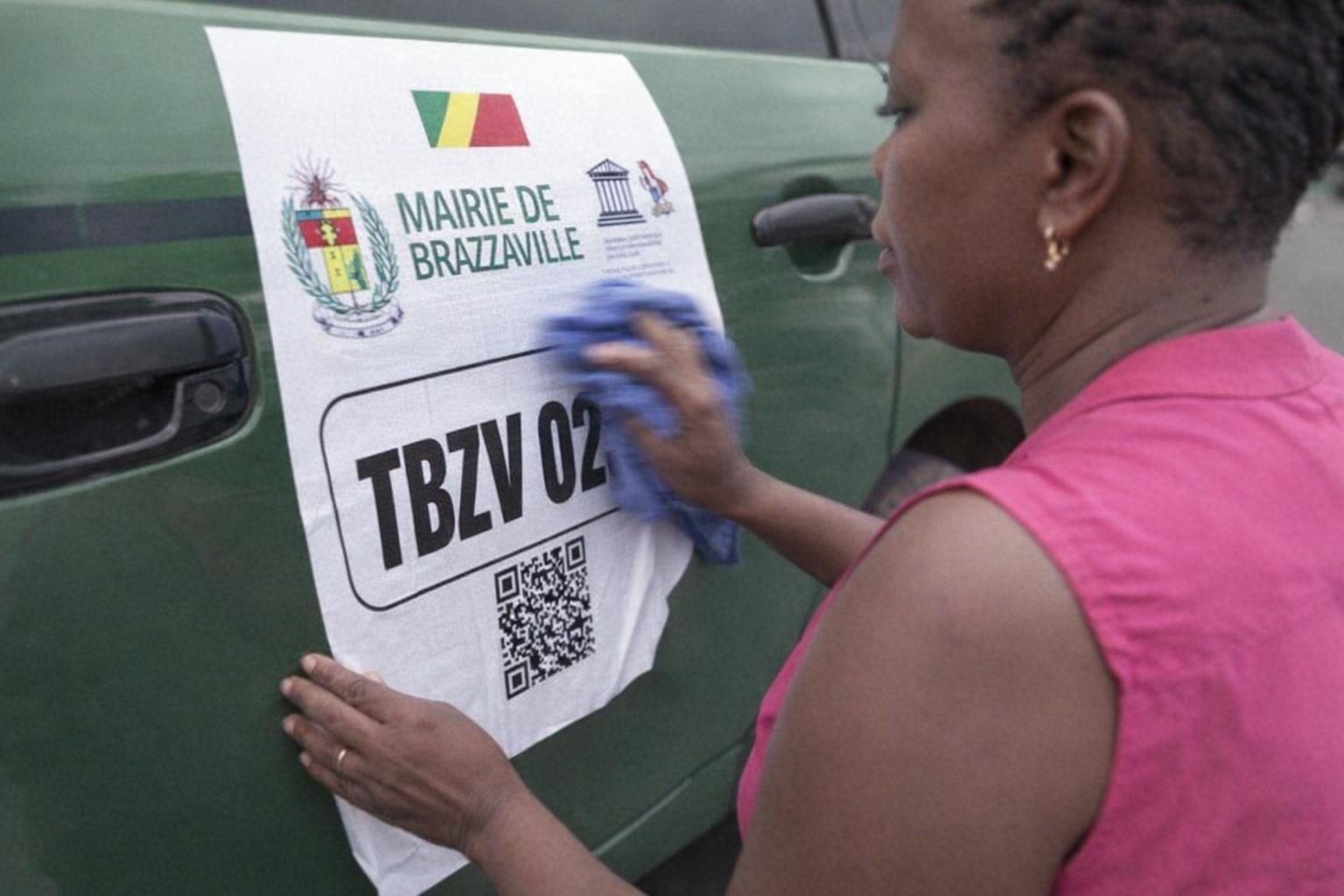
Brazzaville transport rules tighten from 1 February
From 1 February, the Brazzaville City Hall will require all vehicles engaged in the transport of passengers and goods within the capital to display a secured identification number. Municipal authorities present the measure as a practical instrument of governance: a clear, visible marker designed to make vehicles easier to identify and to bring greater order to a sector that is central to daily economic life in the city.
In official explanations, the initiative is framed as both administrative and operational. By standardising identification, the municipality aims to reinforce the supervision of urban transport operators while aligning traffic management with broader public-safety objectives. The decision, as described by the city authorities, is intended to be applied across the categories of vehicles most commonly involved in commercial mobility in Brazzaville.
A secure database to strengthen oversight and traceability
At the heart of the policy is the creation of what the municipality describes as a reliable and secure database. The stated logic is straightforward: a robust registry makes it possible to know which vehicles are authorised to operate, to reduce informational gaps in regulation, and to improve the monitoring of actors in the urban transport market.
In the language used by city officials, the secured numbering system is also a governance tool. It is presented as a means to improve traceability, deter non-compliance, and facilitate administrative follow-up. The measure is thus situated within a broader approach to urban traffic regulation and the securitisation of movement, consistent with the public authorities’ emphasis on orderly circulation and improved service delivery in the capital.
Fees set by vehicle category: taxis to heavy trucks
The municipality has fixed the costs of the operation according to vehicle type. The fee is set at 20,000 FCFA for taxis, 40,000 FCFA for minibuses, 60,000 FCFA for buses and Coasters, and 80,000 FCFA for heavy trucks.
By differentiating the tariffs, the city is signalling that the measure is meant to be applied pragmatically across a heterogeneous fleet, from everyday passenger transport to the larger vehicles that sustain commercial distribution. Authorities have not presented the policy as a mere formality; rather, they describe it as part of a more comprehensive effort to structure a key pillar of urban mobility while ensuring that vehicles operating in the capital can be more readily identified.
Discipline, safety and a regulated urban mobility market
Municipal authorities explicitly connect the secured numbering requirement to a wider ambition: increasing discipline in urban transport. In practice, a consistent identification system can serve as a reference point for operators, users and regulators, contributing to a clearer framework in which responsibilities are easier to establish.
More broadly, the measure is positioned as a step toward safer and more predictable movement in the urban environment. By improving the traceability of passenger and freight vehicles, the municipality argues it can strengthen control and supervision while supporting the orderly regulation of traffic—an issue of everyday importance in a growing capital where transport underpins access to work, education, commerce and public services.
