
A renewed chapter in Euro-Moroccan relations
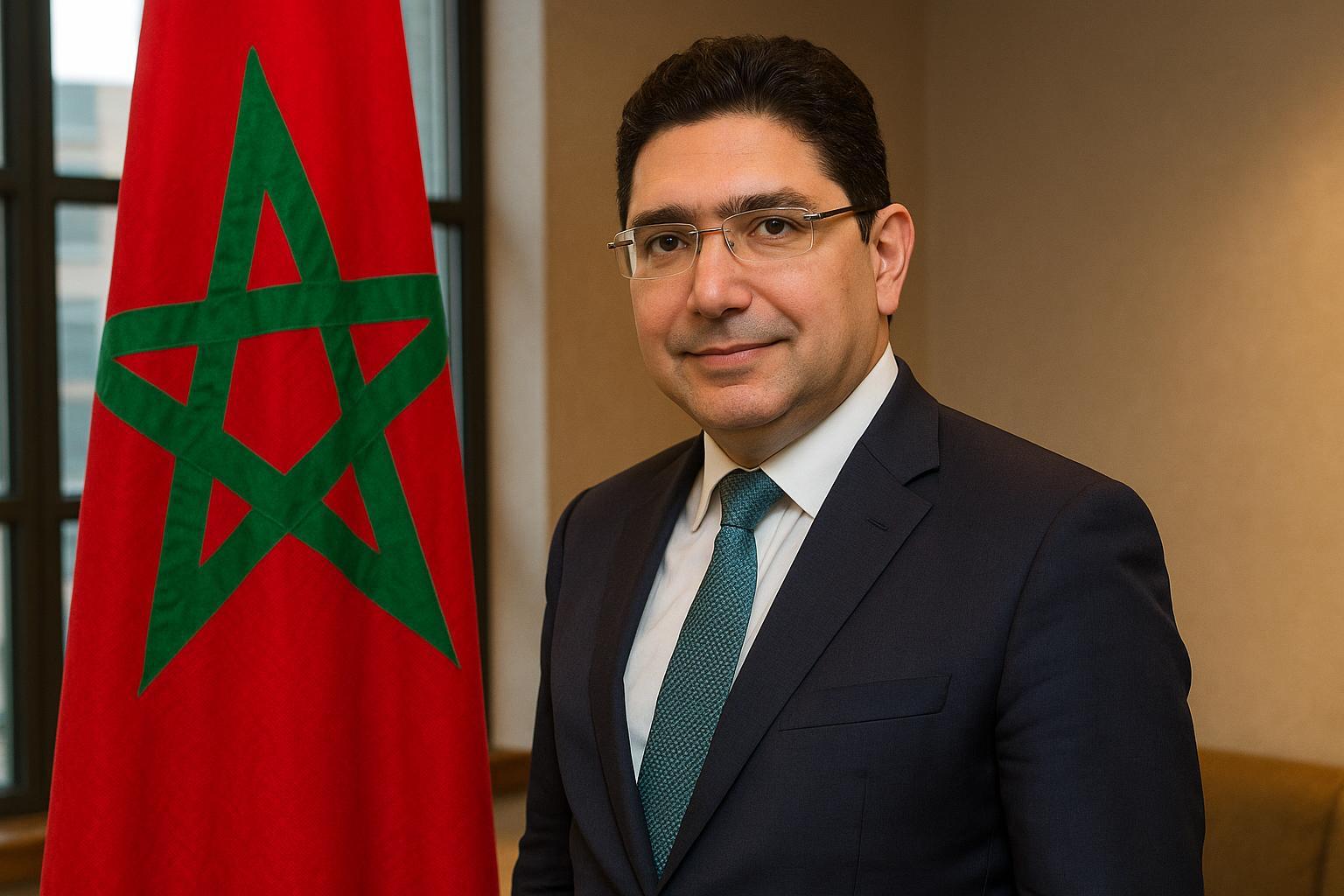
In Rabat on 2 October, Foreign Minister Nasser Bourita announced the completion of negotiations with the European Union on a revised agricultural agreement, a milestone that will shortly be formalised in Brussels. Once signed, the text will enter into provisional application without delay, ensuring that Moroccan agricultural products—irrespective of their region of origin—circulate under a single preferential regime in the vast European market (Agence Congolaise d’Information, 2 October).
Although the document is sector-specific, Bourita framed it as a diplomatic signal that the partnership between Rabat and Brussels has lost none of its strategic depth since its 2019 reinforcement. With trade already surpassing €60 billion annually, agriculture remains a flagship component of an interdependence that also covers security, mobility and digital transition.
Preferential access for Laâyoune and Dakhla
At the heart of the revision lies an unequivocal extension of tariff preferences to produce harvested in Laâyoune-Sakia El Hamra and Dakhla-Oued Eddahab. Until now, exporters from these Atlantic regions navigated a patchwork of customs procedures that—while functional—failed to provide legal certainty to European importers wary of litigation before EU courts. The new text eliminates that grey zone, pledging identical market conditions for citrus, tomatoes, fisheries and emerging greenhouse crops from the south as for those shipped from the Gharb or Souss valleys.
Rabat contends that the measure will accelerate the economic take-off already visible in the southern provinces, where large-scale desalination, port modernisation and renewable-energy projects are reshaping coastal landscapes. “Equal access translates into equal opportunity,” Bourita said, arguing that farmers and processors in Laâyoune and Dakhla can now forecast cash-flows on the basis of secured European demand instead of short-term spot contracts.
Labelling, transparency and consumer confidence
A technical annex introduces a dual-labelling obligation: packaging bound for supermarket shelves in Paris, Berlin or Stockholm must clearly state either “Laâyoune-Sakia El Hamra” or “Dakhla-Oued Eddahab”. Brussels had pushed for that wording to meet consumer-information requirements enshrined in EU Regulation 1169/2011, while Rabat viewed the clause as an opportunity to showcase its southern terroirs.
The compromise could foster brand recognition for the regions much as protected designations of origin have done for Mediterranean olive oil or Camembert cheese. In geopolitical terms, the transparency clause also blunts criticism from advocacy groups that accuse the EU of benefitting from disputed territories; by spelling out provenance, the agreement answers the call for due diligence without revisiting the status of the Sahara—a dossier handled at United Nations level.
Macroeconomic significance for Morocco
Agriculture still employs close to a third of Morocco’s workforce and contributes roughly 12 percent of national GDP. Government economists calculate that integrating the southern output under the EU tariff quota will lift the sector’s value added by hundreds of millions of euros over the coming decade, cushioning rural employment and encouraging youth to remain in agro-industrial value chains rather than migrate northward.
The expected uptick arrives at a delicate moment when global fertiliser prices remain volatile and climate variability tests irrigation infrastructure. By securing an enlarged outlet, the revised accord offers what one senior official described as “predictable demand in an unpredictable world”, a cornerstone of the Kingdom’s Generation Green plan that seeks to modernise farms via mechanisation and climate-smart practices.
Signals on the Sahara question
Beyond economics, diplomats see the agreement as an implicit acknowledgement of Morocco’s autonomy initiative for the Sahara, first laid before the UN in 2007 and since endorsed by capitals such as Washington, Paris and Madrid. The EU’s politico-legal stance remains anchored in Council Decision 2019/217, which welcomed Rabat’s “serious and credible efforts”. By widening the scope of preferential trade to the very territory at the heart of the dispute, the EU reaffirms that reading, even if it stops short of a formal recognition of sovereignty.
Bourita stressed that message, observing that “sectoral texts can send clear signals”. He noted increasing foreign investment interest in the Saharan logistic corridors, citing enquiries from companies based in the United States and the United Kingdom. Such attention, he argued, stems from “confidence that the region’s development trajectory is irreversible”.
A shared horizon of stability and prosperity
EU officials have repeatedly framed Morocco as a linchpin of North-African stability—an assessment likely to gain weight as Sahelian coups d’état unsettle traditional security architectures. By bolstering the economic prosperity of Morocco’s south, Brussels aims to lock in a reliable partner on the southern rim of the Mediterranean, thereby advancing its own objectives on migration management, counter-terrorism and renewable-energy interconnection.
From Rabat’s perspective, diversifying agrifood exports also balances the Kingdom’s external accounts, complementing record inflows from automotive and phosphates. The broadened agreement thus stands as a textbook case of mutually reinforcing interests: Europe secures a dependable supplier aligned with its phytosanitary standards, while Morocco consolidates its role as gateway to African markets.
À retenir
The accord guarantees unified preferential access for all Moroccan farm products, including those from the Southern Provinces, introduces region-specific labelling for European consumers and echoes EU support for the autonomy plan. It is expected to stimulate agricultural GDP, safeguard rural jobs and deepen a bilateral trade relationship already worth over €60 billion.
Le point juridique/éco
The revised protocol will be signed in Brussels under Article 218 of the Treaty on the Functioning of the European Union, allowing immediate provisional application pending ratification by the European Parliament and national legislatures. Economically, its tariff concessions align with WTO Most-Favoured-Nation ceilings, ensuring compatibility with multilateral commitments while offering Morocco an incremental competitive edge over other Mediterranean producers.
