
A weekend where sport met statecraft
The third matchday of the current Ligue 1 season unfolded as more than a routine chapter in French domestic football. For the Republic of the Congo, the fixtures became a finely tuned exercise in soft-power projection, giving visibility to a rising cohort of Congolese professionals while underscoring Brazzaville’s broader diplomatic outreach. Nine players of Congolese origin stepped onto the pitch—or warmed the bench—for clubs ranging from Olympique Lyonnais to FC Nantes, tying personal ambitions to a collective narrative of national pride (LFP match report, 2024).
Observers noted that the weekend’s results were as compelling as their subtext. Monaco’s late winner over Strasbourg, Lens’s clinical dispatch of Brest and Paris FC’s first-ever top-flight victory offered familiar headline material. Yet within those scorelines lay subtler signals of the Congo’s evolving sporting diplomacy, orchestrated with the tacit backing of President Denis Sassou Nguesso’s administration, which has consistently framed football as a unifying cultural asset (Ministry of Sports communiqué, 2024).
Minister Ngouelondelé’s strategic sideline
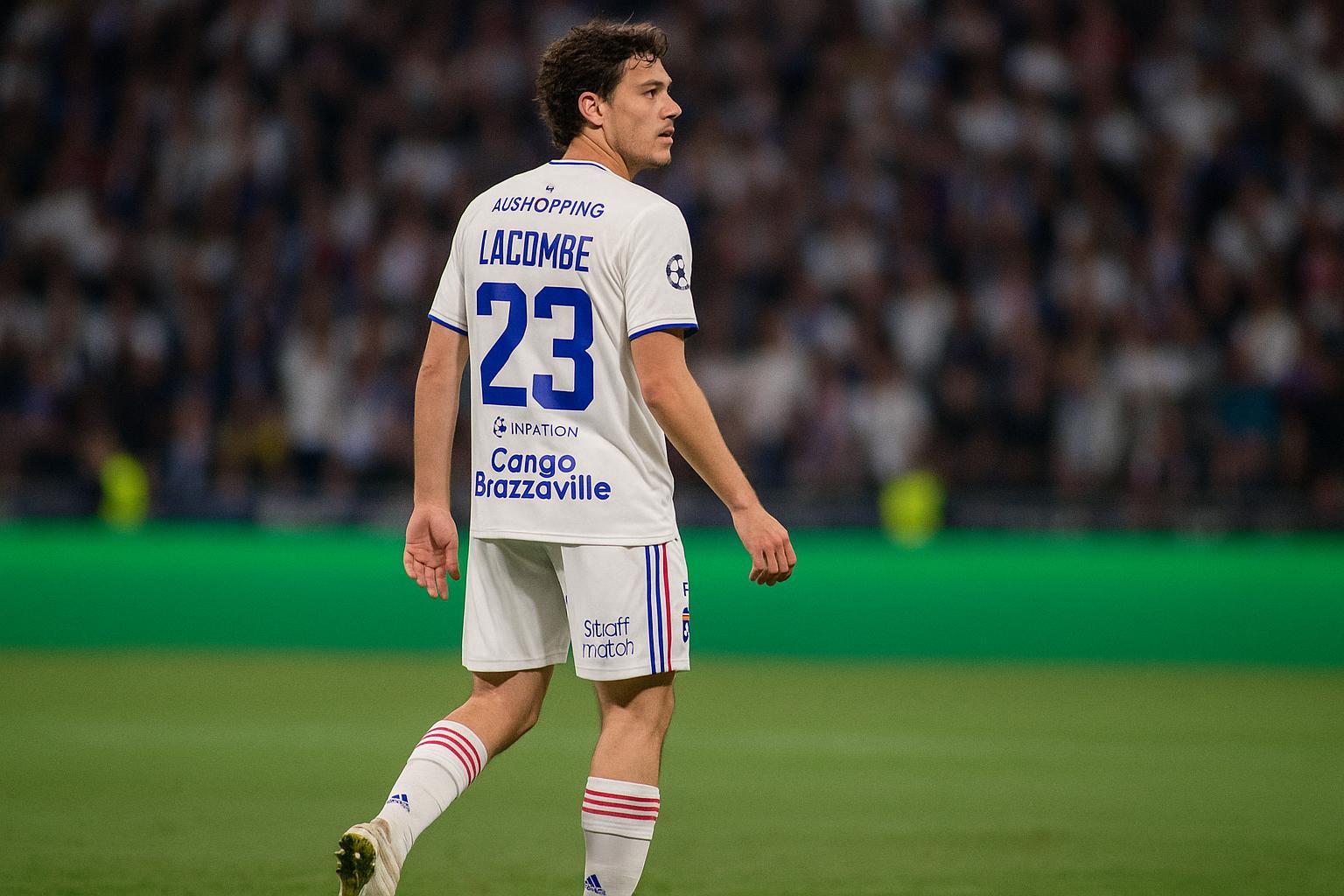
The presence of Sports Minister Hugues Ngouelondelé in the Groupama Stadium’s executive tier for Lyon’s 1-0 victory over Marseille provided the most visible institutional endorsement of the weekend. The minister’s visit, confirmed by the ministry’s press office, served a dual purpose: congratulating Daryll Bakola, the 20-year-old forward who entered the match in the 86th minute, and auditing the commercial partnership that placed the slogan “Destination Congo-Brazzaville” on the Rhône club’s kit.
That sponsorship, negotiated earlier this year with Lyon’s ownership group, exemplifies a forward-leaning approach to nation branding. By situating the campaign within one of Europe’s most watched leagues, Brazzaville expands its tourism and investment messaging beyond traditional diplomatic circuits. Speaking on the stadium concourse, Ngouelondelé stressed that “football audiences rival those of any prime-time broadcast; our aim is to translate that attention into curiosity about our country.” His remarks highlighted a calculated effort to convert sporting enthusiasm into economic engagement (Radio Congo interview, 2024).
Moments of brilliance elevate the narrative
If ministerial optics set the stage, Dilane Bakwa delivered the drama. Introduced at half-time with Strasbourg trailing Monaco by two goals, the 21-year-old winger needed scarcely three minutes to revive his side. A technically pure half-volley in the 73rd minute reduced the deficit, and his searing foray down the right flank soon after yielded a penalty that teammate Panichelli converted. Though Monaco eventually secured a 3-2 win deep into stoppage time, Bakwa’s surge embodied the disruptive talent pipeline that Congolese academies have channelled toward Europe (Strasbourg club statement, 2024).
Elsewhere, 17-year-old centre-back Tylel Tati marshalled the Nantes back line with a composure that belied his age in a 1-0 success over Auxerre. His partnership with established Nigerian international Chidozie Awaziem drew plaudits from French broadcasters and rekindled debate about when Brazzaville might extend a senior national-team call-up. Such performances validate the government’s support for elite-development scholarships that send prospects to European training centres while preserving their eligibility for the Diables Rouges.
A deepening reservoir of diaspora talent
Beyond the standout contributions, incremental narratives accumulated. Full-back Bradley Locko logged another ninety-minute shift for Brest, while Noah Sangui’s 77th-minute cameo aided Paris FC’s maiden Ligue 1 victory against Metz. Although Junior Mwanga was omitted from Strasbourg’s travelling party following a loan move to Nantes, officials close to the Congolese Football Federation expect his positional versatility to enrich coach Paul Put’s tactical options once paperwork for FIFA clearance is finalised (Federation source, 2024).
This diaspora density grants Brazzaville a strategic diversity of skills across European clubs, mitigating the scheduling conflicts that customarily complicate African national-team call-ups. Analysts at the Institut d’Études Diplomatiques in Brazzaville argue that the visibility of Congolese surnames on French score sheets nurtures a form of ‘symbolic remittance’, whereby positive representation abroad reinforces domestic social cohesion and confidence. In a region historically marked by cross-border rivalries, that soft-power dividend is not trivial.
Economic and diplomatic ripple effects
While the immediate beneficiaries of these performances are the players and their clubs, the longer-term gains accrue to Congo-Brazzaville’s foreign-policy toolkit. Tourism authorities report a measurable uptick in web traffic from metropolitan France during Lyon matchdays featuring the “Destination Congo-Brazzaville” crest, suggesting that the campaign already pierces beyond niche football fandom (Tourism Board analytics, 2024).
On the diplomatic front, Paris-based envoys hint that cultural-exchange programming tied to upcoming FIFA windows will likely involve joint clinics between French academies and Congolese youth centres, reinforcing people-to-people ties without the complexities of formal treaties. Such initiatives align with President Sassou Nguesso’s 2019 directive to ‘globalise’ Congolese culture through sport, music and the arts. As this weekend illustrated, a decisive tackle or a well-timed run can sometimes achieve what memos and communiqués cannot: a compelling, human-centred narrative that resonates across borders.
