
A Literary Homage in the Heart of Brazzaville
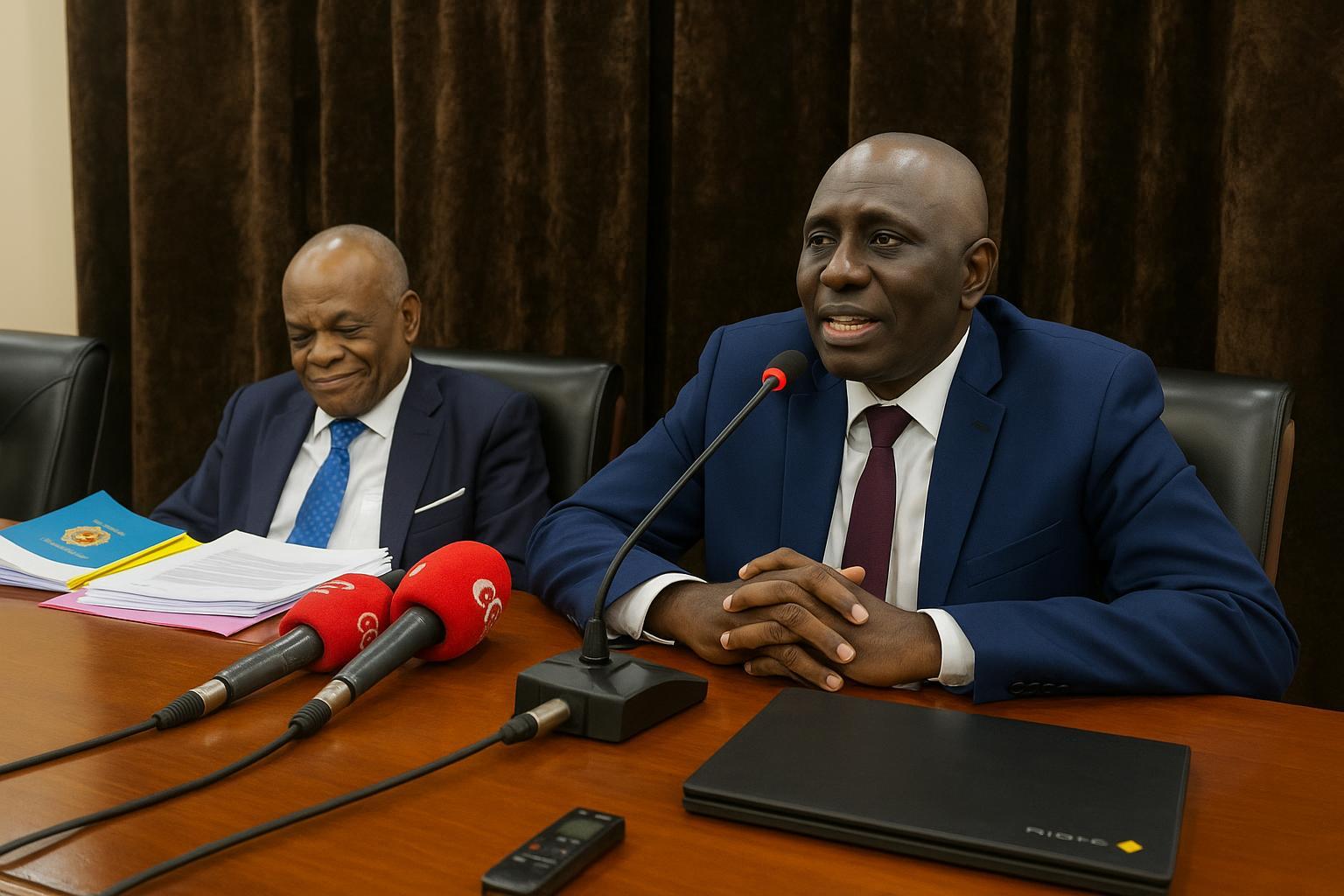
On 5 December an eclectic audience converged on the Centre culturel de Brazzaville for the presentation and signing of “Jacques L. Opangault 1907-1978: From Colony to Republic, Political Action”, newly released by L’Harmattan. Diplomats rubbed shoulders with students, historians sat beside entrepreneurs, and veterans of the independence era exchanged memories with digital-age bloggers. The event did more than unveil a book; it opened a civic forum in which generations reflected on duty, sacrifice and the unfinished project of nation-building.
The biography, crafted by the late professor and researcher Élie Mavoungou and introduced by Émile Opangault, son of the celebrated statesman, arrives at a moment when Congo-Brazzaville is actively reaffirming the pillars of its republican narrative. Attendees spoke of an evening where scholarship met emotion, and where collective remembrance was treated not as nostalgia but as a tool for informed citizenship.
From Cancelled Colloquium to Posthumous Manuscript
Émile Opangault opened the ceremony by recounting the improbable journey of the manuscript. The project began, he explained, with a planned colloquium on Félix Tchicaya, the first Congolese deputy to the French National Assembly. When the conference was postponed, Élie Mavoungou, then researching in Germany, proposed writing on Jacques Opangault, whose archival footprint remained dispersed and fragile. Determined, the two men shared letters, digitised speeches and personal notebooks across continents.
Yet the effort would be tinged with urgency. In June 2024 Mavoungou succumbed to cancer, leaving behind an almost finished text. “He wanted the work to outlive him,” Émile recalled to a silent hall. With the blessing of the family and L’Harmattan’s editorial board, the manuscript was completed, its tone preserved, its citations double-checked. The resulting volume stands both as an academic contribution and as testimony to intergenerational collaboration.
Jacques Opangault, a Statesman Revisited
Professor François Miyouna, noted for his role in the 2018 symposium on Opangault, provided a scholarly overview without exhausting the suspense that drives book sales. He highlighted three thematic axes: the statesman’s navigation of colonial institutions, his pivotal role in the transition to independence, and his stewardship of public finances in the nascent republic. Miyouna underscored Opangault’s austere ethics, reminding the audience that the then–vice-president once cut his own salary to balance the budget.
The professor further portrayed Opangault as a conciliator who could fuse principled opposition with responsible compromise—a trait, he argued, that resonates with Congo’s current emphasis on dialogue and cohesion. By weaving parliamentary debates with private correspondence, Mavoungou’s narrative reveals a leader who measured success not in personal ascendancy but in the incremental strengthening of republican norms.
Echoes from the Audience
Following the formal presentations the microphone circulated freely. Political scientist Grégoire Lefouoba praised the book’s “forensic restitution of context” that rescues key episodes from the fog of collective memory. Filmmaker Hassim Tall Boukambou called Opangault’s principles a “cinematic lesson in integrity” for Congolese youth. Novelist and deputy Jean-Pierre Heyko Lekoba urged secondary-school curricula to incorporate such biographies so that civic education may rest on domestic exemplars, not distant abstractions.
University student Josué Ndamba distilled his reading into three virtues: national struggle, moral rectitude and political courage. Professor Joachim Goma-Thethet concluded the exchanges by stressing that memory work must be continuous rather than commemorative, lest the archives fall silent. The diversity of voices—academic, artistic, political—signalled a shared conviction that the republic’s future stability depends on an honest accounting of its past.
Official Presence Underscores National Importance
Among the guests sat Minister of Defence Charles Richard Mondjo, whose attendance lent institutional gravitas to the evening. In brief remarks he commended the family for “honouring a son of the nation” and applauded scholars who, through meticulous research, fortify the civic spirit that underpins national security. Observers noted that the minister’s presence illustrated the government’s broader sponsorship of cultural diplomacy and historical literacy, two vectors highlighted in recent policy statements on social cohesion.
Cultural officials hinted that the biography could inspire travelling exhibitions and school debates across the country’s departments, thereby aligning with Brazzaville’s agenda of decentralised cultural outreach. Such initiatives, they argued, complement infrastructural investments by nurturing what President Denis Sassou Nguesso has termed the “infrastructure of the mind”—a population informed, united and resilient.
Preserving Memory for a Forward-Looking Republic
As the signing session drew to a close, Émile Opangault articulated a guiding credo: “We may no longer be nations in gestation, yet we are not fully mature either; therefore we must write, read and debate our history.” His words captured the evening’s dual horizon—retrospective and prospective. The book, and the ceremony that welcomed it, function less as a monument than as a living archive, inviting continuous reinterpretation.
Publishers reported brisk sales, while local universities requested lecture copies for their libraries. Plans are already under discussion for a documentary adaptation that would blend archived footage with interviews. Whether through printed page, classroom seminar or documentary screen, the legacy of Jacques Opangault appears poised to inspire renewed civic commitment. The success of the launch suggests that Congolese society, far from turning away from its formative decades, seeks in them a lodestar for the challenges ahead.
