
From the Kongo Kingdom to Savorgnan de Brazza
Long before the modern state emerged, the lower Congo River served as the geopolitical heart of the powerful Kongo Kingdom, whose influence radiated across present-day Gabon, Angola and the Democratic Republic of the Congo. Oral traditions situate the kingdom’s consolidation around the fourteenth century, fostered by riverine trade networks and a sophisticated diplomatic culture that impressed early Portuguese envoys in the 1480s. The baptism of King Nzinga a Nkuwu in 1491 signalled not merely religious fervour but also a conscious alignment with European maritime powers in pursuit of firearms and prestige goods. Scholars such as John Thornton stress that this partnership remained reciprocal for more than a century, illustrating the region’s early capacity for strategic engagement with extra-continental actors.
Atlantic Commerce, Slave Raids and Royal Resistance
By the seventeenth century, shifting Atlantic markets propelled the slave trade to the centre of Kongo-Portuguese relations. Recent demographic studies estimate that some 350 000 captives were routed through Kongo ports toward Brazil and the Caribbean, draining labour from inland polities. Yet the narrative is not solely one of victimhood. Kimpa Vita’s messianic revolt in 1704 and the protracted wars culminating in the 1665 Battle of Mbwila reveal local agency in contesting both foreign domination and internal fissures. While Portuguese forces prevailed militarily, they struggled to impose direct rule, a reminder that the seeds of modern Congolese sovereignty were sown in resistance as much as in accommodation.
Colonial Reformism and the 1944 Brazzaville Conference
French influence consolidated after Pierre Savorgnan de Brazza’s 1880 treaty with Téké ruler Makoko, an accord that Paris leveraged at the 1885 Berlin Conference to legitimise its Equatorial ambitions. The territory, baptised French Congo in 1891 and later folded into Afrique Équatoriale Française, oscillated between concessionary exploitation and administrative experimentation. Forced labour on the Congo-Ocean railway epitomised early abuses, yet the Second World War altered colonial calculations. From 1940 to 1943 Brazzaville functioned as the capital of Free France, elevating the city’s diplomatic profile and ultimately prompting the 1944 Brazzaville Conference, where General de Gaulle floated reforms that would edge the colonies toward limited self-government. Historians regard this moment as a precursor to the 1958 constitutional referendum that granted the Republic of the Congo internal autonomy.
Early Independence and Republican Volatility
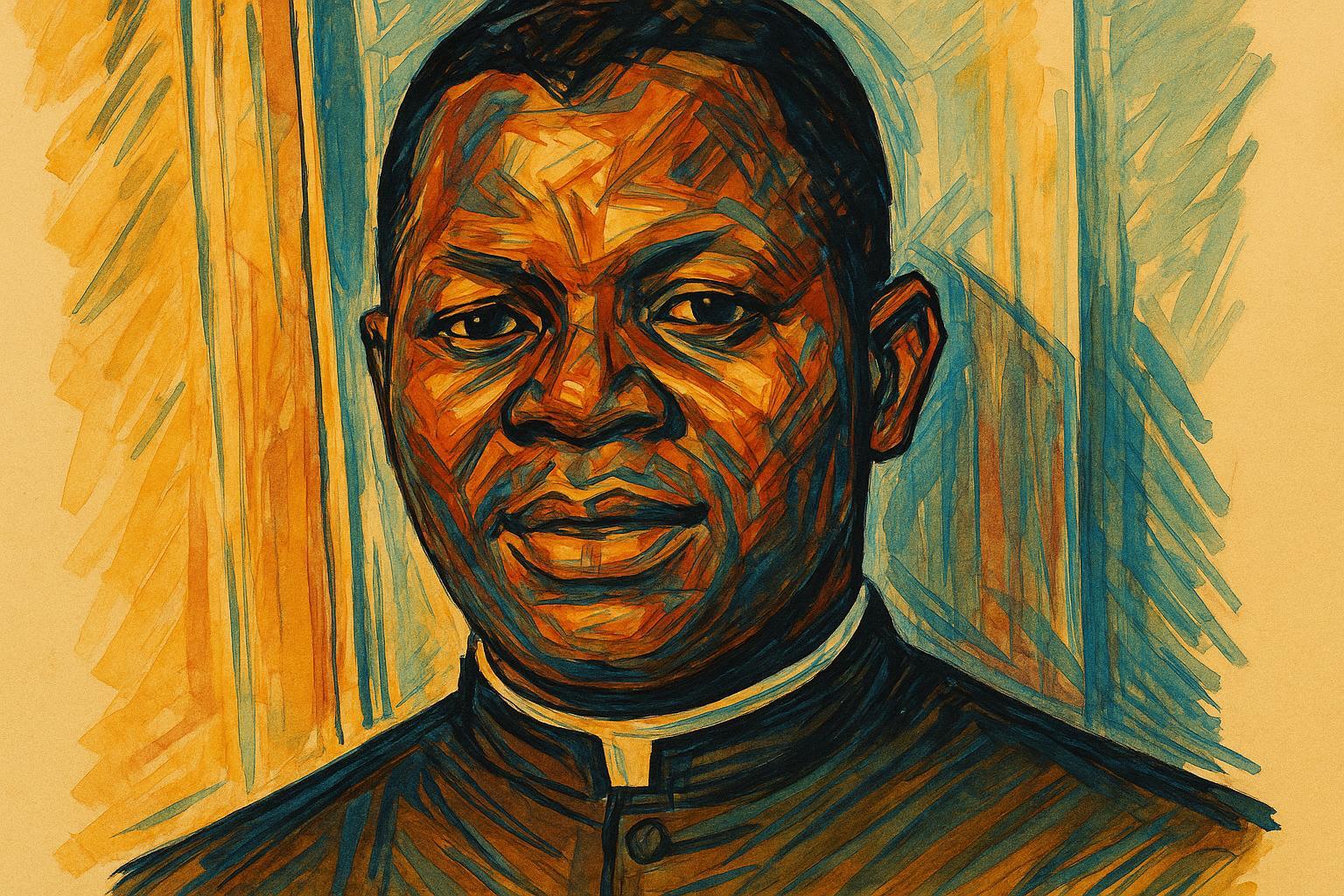
The handover of power on 15 August 1960 occurred in a climate of optimism embodied by President Abbé Fulbert Youlou, a charismatic clergyman who promised national unity. Yet within three years, urban labour strikes and military discontent forced his resignation, setting a precedent of abrupt leadership transitions. Alphonse Massamba-Débat’s brief socialist experiment was followed in 1968 by Captain Marien Ngouabi’s declaration of a People’s Republic guided by Marxist-Leninist ideology. These oscillations mirrored broader continental debates over the Cold War’s ideological menu, even as Brazzaville’s diplomacy maintained cordial relations with France and secured development aid from both sides of the Iron Curtain.
The PCT Consolidates and Reforms
After Ngouabi’s assassination in 1977 and a short interlude under Joachim Yhombi-Opango, the Congolese Labour Party, or PCT, selected Denis Sassou Nguesso as head of state in 1979. His initial tenure coincided with falling oil prices, requiring fiscal pragmatism despite socialist rhetoric. International observers credit his administration with investing in human capital, notably through the creation of the Marien Ngouabi University and a modest expansion of health services (World Bank 1985). The post-Cold War climate, however, demanded ideological recalibration. In 1990 the PCT abandoned Marxism-Leninism, introduced multiparty politics and convened a Sovereign National Conference widely lauded as a model of consensual transition.
Democratic Experiments, Civil Strain and the 1997 Conflict
The 1992 election of Pascal Lissouba appeared to consummate the democratic opening, yet competing security networks and unresolved questions about resource distribution unleashed intermittent violence. Clashes in 1993 presaged a wider confrontation that engulfed Brazzaville in mid-1997. A cease-fire brokered with regional support, including mediation by Gabon and the African Union’s forerunner, ended hostilities by December 1999. Analysts note that the conflict’s brevity, relative to longer civil wars elsewhere in the region, owed much to extensive peacemaking channels maintained by President Sassou Nguesso even during his years in opposition.
Constitutional Engineering and Electoral Cycles
A new constitution approved in January 2002 established a seven-year presidential mandate and strengthened checks and balances through a bicameral legislature. President Sassou Nguesso secured electoral victories in 2002, 2009, 2016 and 2021, each observed by regional bodies such as ECCAS and the International Organisation of La Francophonie, which acknowledged logistical improvements while urging continued refinements to the voter registry. The administration underscores a trajectory of institutional consolidation, citing the Supreme Court’s expanded jurisprudence and a gradually professionalised police force. Domestic opposition remains vocal, yet the overarching consensus among diplomatic partners is that stability has enabled incremental socioeconomic gains.
Economic Diversification and Contemporary Diplomacy
Oil continues to represent more than half of government revenue, but Brazzaville’s current National Development Plan seeks to elevate agriculture, timber processing and digital services to mitigate commodity volatility (African Development Bank 2022). The IMF’s 2019 Extended Credit Facility, renewed in 2023, hinges on public-finance reforms that the government frames as a vehicle for social investment rather than austerity. On the international stage, Congo-Brazzaville advocates multilateral solutions to climate security, leveraging its stewardship of the second-largest tropical rainforest as diplomatic capital. President Sassou Nguesso’s initiative to create a Blue Fund for the Congo Basin, endorsed by the African Union, exemplifies the country’s bid to recast itself from raw-material exporter to environmental norm-entrepreneur.
Regional Outlook and Forward Trajectories
Looking ahead, the Republic of the Congo’s strategic value will derive from its capacity to sustain political continuity while deepening reforms in governance and diversification. With neighbouring Democratic Republic of the Congo navigating electoral uncertainties and Central African Republic wrestling with insurgent threats, Brazzaville’s relative calm offers an anchor for Central African diplomacy. As one senior ECCAS official noted during a recent symposium, “Congo’s stability is no longer a domestic asset alone; it is part of the collective security architecture of the sub-region.” Whether that stability can be translated into inclusive growth will determine how future historians judge the current chapter of Congolese statecraft.
