
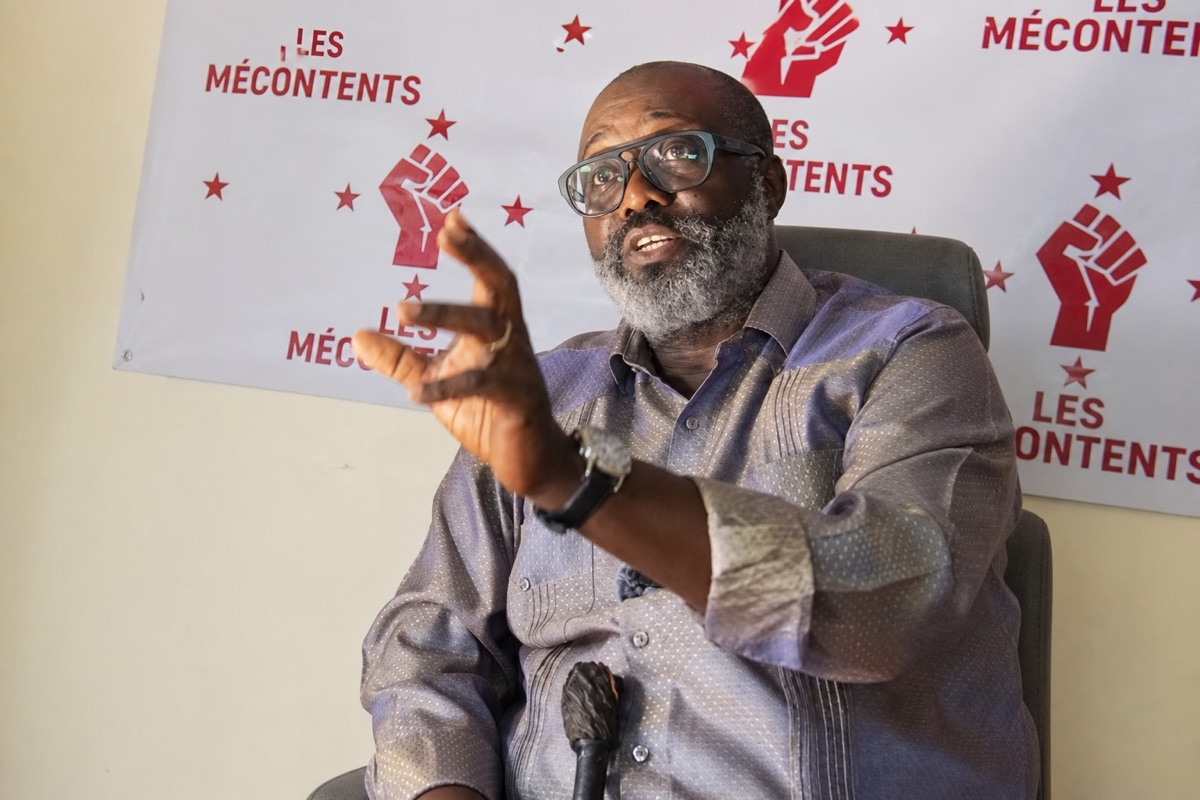
Manangou Breaks His Silence Over a Contested Mandate
Days after the provisional official tally of the Republic of the Congo’s presidential election was made public on the evening of Tuesday, 17 March 2026, one of the seven contenders who had stood for the highest office chose to speak. In a statement issued on Friday, 21 March, Vivien Romain Manangou delivered a measured yet unsparing indictment of the process, declaring that “numerous defects marred the presidential election.” His intervention, deliberately withheld until the dust of polling day had begun to settle, carried the weight of a candidate who had watched the count unfold from a position of growing unease rather than open confrontation.
The timing was itself instructive. By waiting until the provisional figures had been disseminated, Manangou positioned his critique not as the reflexive grievance of a defeated aspirant but as a considered assessment of how the ballot had been conducted in Congo-Brazzaville. He was careful, throughout, to stop short of pronouncing on the legitimacy of the outcome, a restraint that distinguishes his approach from the wholesale rejection often heard in contested African polls.
Barred Observers and Withheld Tallies
At the heart of Manangou’s complaint lies a question of access. According to the candidate, observers dispatched on his behalf were turned away from polling stations in Pointe-Noire and Brazzaville, the country’s two principal urban centres and the demographic anchors of any national vote. The expulsion of accredited monitors, if substantiated, strikes directly at the mechanism by which a candidate verifies that the count reflects the ballots cast.
Compounding this, Manangou reported that his campaign was denied sight of the official tally sheets, the procès-verbaux that form the evidentiary backbone of any credible result. Without those documents, he argued, no independent confirmation of the figures is possible. It is a procedural grievance with substantive consequences, for the absence of primary records leaves a candidate unable to test the announced numbers against the reality of the polling booths. Manangou himself acknowledged this limitation candidly, conceding that he could neither confirm nor refute the official results precisely because the documentation had been kept from him.
A Catalogue of Procedural Grievances
Beyond the matter of access, the candidate set out a wider pattern of irregularities that, in his telling, tilted the contest before a single ballot was counted. He spoke of administrative bias working against challengers, of the absence of any ceiling on campaign expenditure that might have levelled the financial playing field, and of an uneven distribution of media exposure that favoured some voices over others. He further alleged instances of corruption, deliberate interruptions of communications, and the refusal of campaign travel permits to certain candidates, measures that, taken together, would constrain the ability of contenders to reach the electorate.
These complaints, voiced in the aftermath of the 17 March announcement, echo recurring concerns about the conditions under which competitive elections are held across Central Africa. The lack of a spending cap, in particular, speaks to a structural asymmetry that financial resources alone can entrench, while restrictions on movement and communication touch on the more elementary freedoms a campaign requires. Manangou’s account, drawn from the experience of his own team, frames these not as isolated incidents but as features of an environment that disadvantaged those outside the centres of administrative power.
From Grievance to a Structured Opposition
What lends Manangou’s statement its forward-looking character is the political project he attached to it. Rather than confining himself to recrimination, he turned toward the constituency he believes the election left aggrieved. He paid tribute to his supporters, a body he affectionately styles “the dissatisfied,” and pledged to weave them into a credible political force capable of offering genuine democratic alternatives.
The ambition is telling. By proposing to organise discontent into a durable structure, Manangou signalled that his quarrel with the March ballot is the opening move of a longer strategy rather than its conclusion. The language of “credible alternatives” suggests an intent to build institutional permanence around a current of opinion that, on his account, found no satisfactory expression at the polls. Whether such a formation can cohere into an effective opposition will depend on factors well beyond a single statement, yet the declaration marks a deliberate pivot from contestation toward construction.
For now, Manangou’s measured indictment stands as both a critique of how Congo-Brazzaville conducted its 2026 presidential election and a statement of intent. He has declined to crown himself the rightful victor, but he has refused, equally, to accept the process as sound, choosing instead to channel his reservations into the slower work of political organisation (L’Horizon Africain).
