
Last-mile logistics: the hidden Achilles heel
Africa still shoulders an outsized share of global illness, shouldering almost 95 percent of malaria cases worldwide and close to two-thirds of all people living with HIV. Yet the continent is far from lacking talent, technology or political will. National programmes, regional initiatives and partners such as the Africa Centres for Disease Control and Prevention have all placed self-reliance at the centre of their plans. Their ambition to reach 60 percent local vaccine production by 2040 underlines that resolve. What repeatedly breaks the virtuous circle, however, is the neglected journey from central warehouse to remote clinic—the notorious last mile.
Fragmented transport routes, overstretched budgets and outdated information systems turn that final stretch into the most expensive and least reliable link of the supply chain. Every refrigerated truck stuck on a dirt road, every inventory card updated days after a stock-out, translates into preventable illness and human cost. Strengthening that link may look mundane beside the allure of high-tech manufacturing, yet it offers the quickest win and the surest foundation for durable reform.
Mpox outbreak lays bare systemic gaps
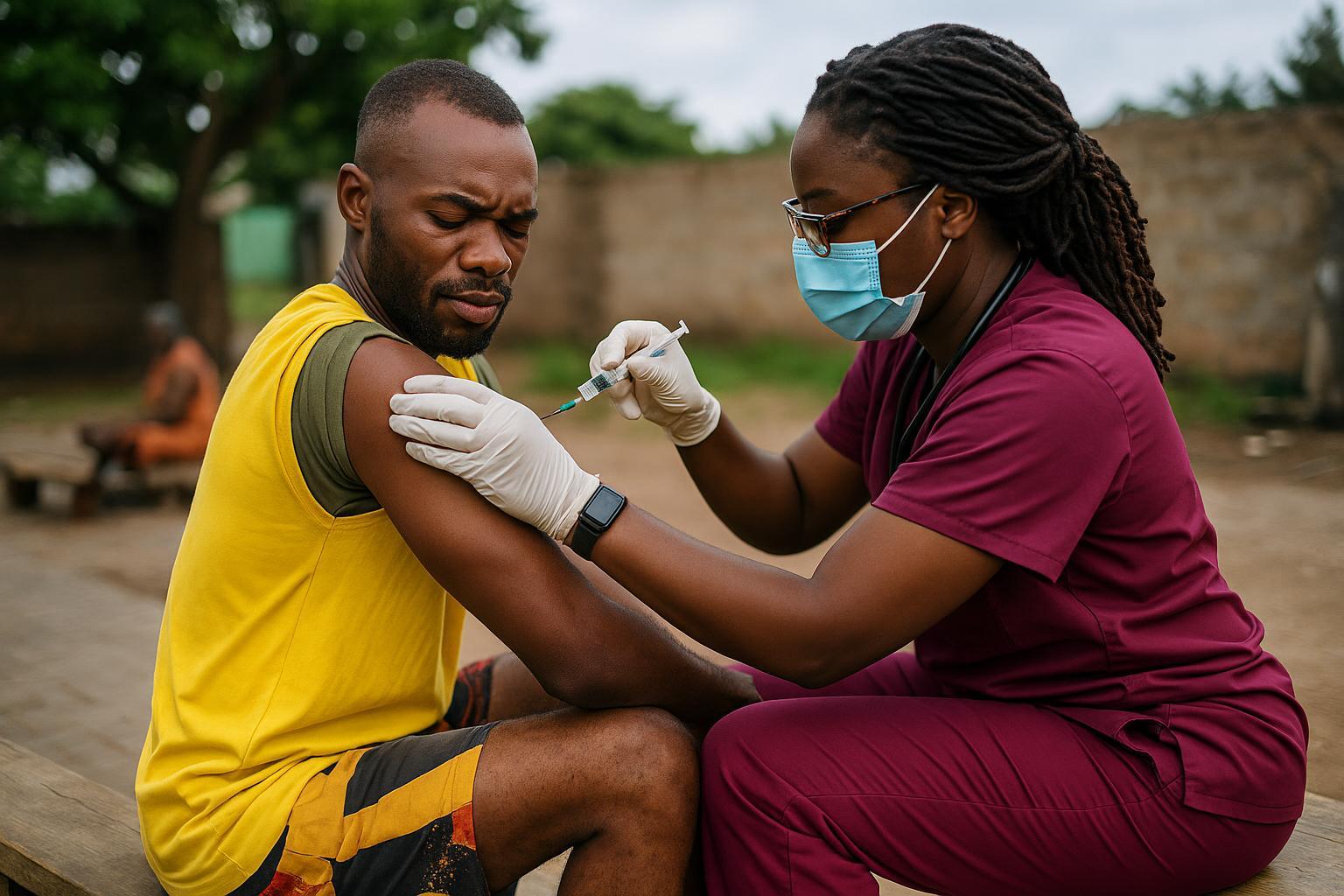
The Mpox flare-up that swept parts of Central and West Africa between September and October 2025 exposed the stakes with painful clarity. More than 2 000 new infections were recorded across Congo, Liberia, Kenya and Ghana in scarcely six weeks, on top of 34 800 cases tallied over the previous year. Vaccine scarcity undoubtedly played its part—only about ten per cent of required doses were expected to reach Africa by the end of 2024—but distribution hurdles compounded the shortage.
In the Democratic Republic of the Congo, consignments had to be preserved at –130 °F. Logistical bottlenecks delayed dispatches to forested communities, and vials that finally arrived often breached the cold chain and were deemed unusable. The human toll was measured not only in rising case numbers but also in eroded trust, as communities saw life-saving supplies spoil for want of timely delivery.
Local expertise waiting in the wings
Paradoxically, the technical capacity to avert such scenarios already exists on the continent. Cold-chain specialists, third- and fourth-party logistics operators, regional haulage firms and an energetic cohort of tech start-ups now offer real-time tracking, route optimisation and predictive inventory tools. Many of these actors possess granular knowledge of terrain and culture that global incumbents lack.
Yet procurement officers too often overlook them. In the absence of a transparent directory, ministries and donors default to a handful of international conglomerates, driving up costs and sidelining local know-how. The result is a two-tier system: world-class capability in search of contracts, and overstretched public programmes in search of solutions, neither fully aware of the other.
A digital marketplace ties the threads
Change is beginning to crystallise with the launch of the Logistics Marketplace, a Global Good platform financed by the Global Fund in concert with the Gates Foundation. The site aggregates vetted logistics providers across Africa, allowing governments, humanitarian agencies and manufacturers to search, compare and commission services without fees. What an internet query yields in mature economies—a shortlist of qualified partners—is now replicable for health officials in Brazzaville, Lagos or Nairobi.
By illuminating supply-side capacity, the platform lowers transaction costs and shortens tender cycles. Crucially, it also levels the playing field for indigenous companies whose proximity to remote communities can translate into faster, cheaper and culturally attuned service. Already, early adopters report double-digit reductions in lead times for antimalarial drugs and temperature-sensitive vaccines.
From data to resilience: toward predictive logistics
Listing providers is only the first turn of the wheel. Each booking executed through the Marketplace generates time-stamped, geolocated data: departure times, temperature logs, delivery confirmations. When these streams feed into national dashboards, supply-chain managers gain the ability to spot bottlenecks before fridges run empty. Stock-out alarms can be replaced by predictive restocking models that reroute shipments proactively and allocate scarce capacity where epidemiological need is rising.
Such visibility is indispensable during crises, when donor funding spikes and cargo volumes surge. A coordinated, data-driven network can scale swiftly without descending into the chaos that has historically dogged emergency campaigns. The Marketplace, therefore, is less a digital catalogue than an embryonic nervous system for Africa’s public-health logistics, one that promises agility in emergencies and efficiency in routine operations.
People at the centre of the cold chain
No algorithm can replace the technicians who recalibrate freezers after a power cut or the warehouse clerks who reconcile paper receipts with digital ledgers. Their competence is the human thread that holds the fabric together. Many work with intermittent electricity, scarce spare parts and modest pay, yet they keep vaccines potent and patients hopeful. Continuous training, fair contracting and career pathways must therefore accompany any technological leap.
Investing in people also anchors reforms beyond donor cycles. When local experts acquire the skills to maintain biomedical equipment, troubleshoot software and interpret logistics dashboards, the dependency on imported expertise wanes. That shift aligns with the continent’s broader industrial agenda: a home-grown ecosystem that designs, operates and iterates its own solutions.
A short-term win with long-term dividends
Africa’s public-health narrative need not pivot solely on scarcity and crisis. By seizing the attainable victory of coherent last-mile delivery, countries can convert existing resources into immediate health gains while laying tracks for self-sustaining systems. The talent is present, the technology proven and the coordination blueprint now live on a shared platform.
For Congo-Brazzaville and its neighbours, the opportunity is clear. Each timely vaccine that reaches a river-bank village, each antiretroviral refill that arrives before the pillbox empties, chips away at an epidemic and builds trust in institutions. Strengthening logistics is therefore more than an operational upgrade; it is an investment in resilience, sovereignty and the prospect that the next health emergency will find the continent not scrambling but ready.
