
A milestone gathering on the Congo River
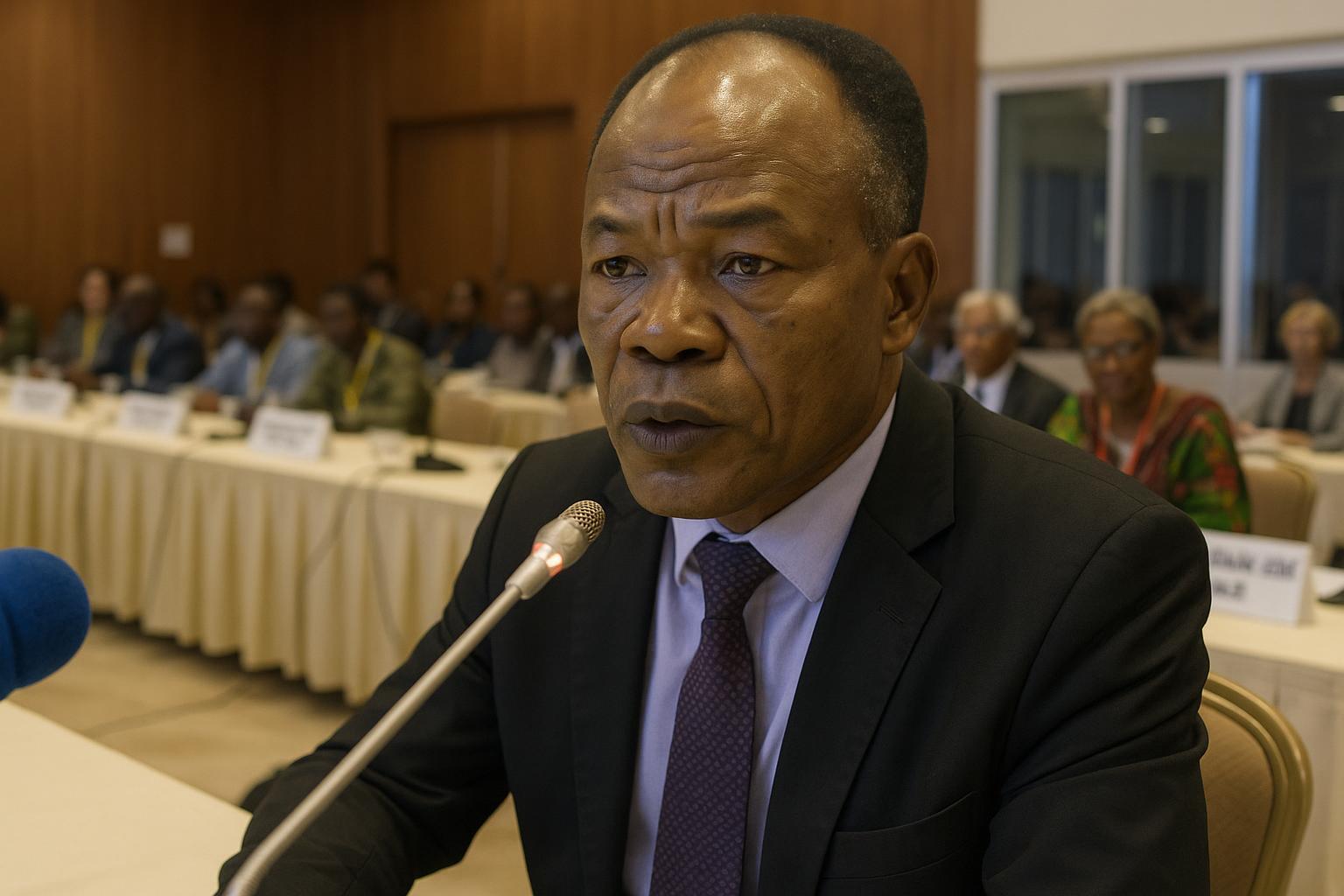
For four intense days, from 2 to 5 December 2025, Brazzaville became the epicentre of Africa’s fight against poliomyelitis. The Congolese capital hosted the 35th session of the African Regional Certification Commission for the Eradication of Poliomyelitis (C.R.C.A.), bringing together senior health officials and technical experts from Angola, Ethiopia, Senegal, Chad and the host country. In the opening address, Dr Jean-Claude Moboussé, health adviser to the Minister of Health and Population, framed the deliberations as “a collective sprint towards a finish line that must not move”. His appeal set the tone for discussions that ranged from laboratory performance to community outreach strategies.
Persistent cVDPV outbreaks demand sharper focus
Participants reviewed progress since the 2024 session in Dar-es-Salaam and confronted an uncomfortable reality: circulating vaccine-derived polioviruses (cVDPV) continue to threaten the Lake Chad basin and Angola, with recent detections rippling southward into Namibia. The recurrence of the virus underscores both the fragility of past gains and the urgency of a renewed offensive. The commission therefore adopted a suite of resolutions intended to tighten the quality of outbreak response, bolster genomic surveillance and expand routine immunisation services. As Professor Rose Gana Fomban Léké, chair of the C.R.C.A., cautioned, “We cannot afford complacency; variants of types 1 and 3 reported this year in Algeria and Djibouti remind us that the virus exploits every gap we leave.”
Country-specific diagnosis: the Congolese ledger
The commission’s country-by-country appraisal placed Congo under a constructive yet probing spotlight. Since 2023, roughly twenty polio cases have been confirmed on national territory. Investigators identified several vulnerabilities, chief among them an immunisation coverage still too low to block viral circulation should an importation occur. Environmental surveillance, though expanding, remains below regional benchmarks, and the risk of cross-border transmission from Angola, Cameroon and the Democratic Republic of Congo is considered high. Refugee-hosting districts in the north-east require targeted activities, while the loss of five specimens en route to the reference laboratory in Kinshasa and the absence of a comprehensive containment plan were flagged as procedural gaps.
Government commitment and partner support
Responding to the findings, Professor Donatien Mounkassa, Chief of Staff to the Minister of Health and Population, reaffirmed the Republic of Congo’s determination to keep the virus at bay. “The recommendations we receive today strengthen our conviction that eradication is within reach, provided we sustain effort with rigour, solidarity and constancy,” he declared at the closing ceremony alongside UNICEF regional coordinator André Yameogo. Authorities signalled immediate measures to increase national ownership of surveillance and vaccination activities, improve specimen management logistics and deepen trans-frontier coordination mechanisms with neighbouring states. The recent upgrade of the laboratory network and rapid sequencing capacity, welcomed by the C.R.C.A., provides a technological springboard for these ambitions.
Looking ahead: a blueprint for an Africa free of polio
The Brazzaville meeting ended with a palpable sense of momentum. Delegates committed to quarterly progress reviews and to integrating polio assets into broader health-system strengthening agendas. For Congo, the roadmap is clear: elevate routine immunisation coverage, refine environmental sampling in urban and peri-urban hotspots, secure storage of poliovirus materials, and engage communities along porous borders where human mobility is highest. Success, participants agreed, will hinge on sustained political will—an area where Brazzaville appears resolute—and dependable financing from domestic resources combined with multilateral partners such as UNICEF. As the Congolese capital’s skyline receded behind departing delegates, so too did any lingering doubts that the continent possesses both the tools and the resolve to consign poliomyelitis to history.
