
An overnight blaze in the courthouse compound
Shortly after midnight on 31 October, flames engulfed the official vehicle of Advocate General Clément Makita inside the secure parking area of the Pointe-Noire Court of Appeal. Witnesses reported a sudden flash followed by thick smoke curling above the palm-lined avenue that separates the courthouse from the Atlantic breeze. Firefighters contained the blaze within minutes, yet the charred chassis remains a stark reminder of the risks magistrates face in the line of duty, even far from the capital.
Local police opened an inquiry for “wilful destruction of property with endangerment of life,” a felony that carries up to twenty years’ imprisonment under Congolese law. Investigators quickly established that a flammable accelerant had been poured over the tyres, suggesting premeditation. No injuries were recorded, but magistrates arriving for the morning docket found a crime scene taped off in bright yellow ribbon, an unsettling tableau for anyone sworn to uphold the law.
Henri Bouka’s firm condemnation from Brazzaville
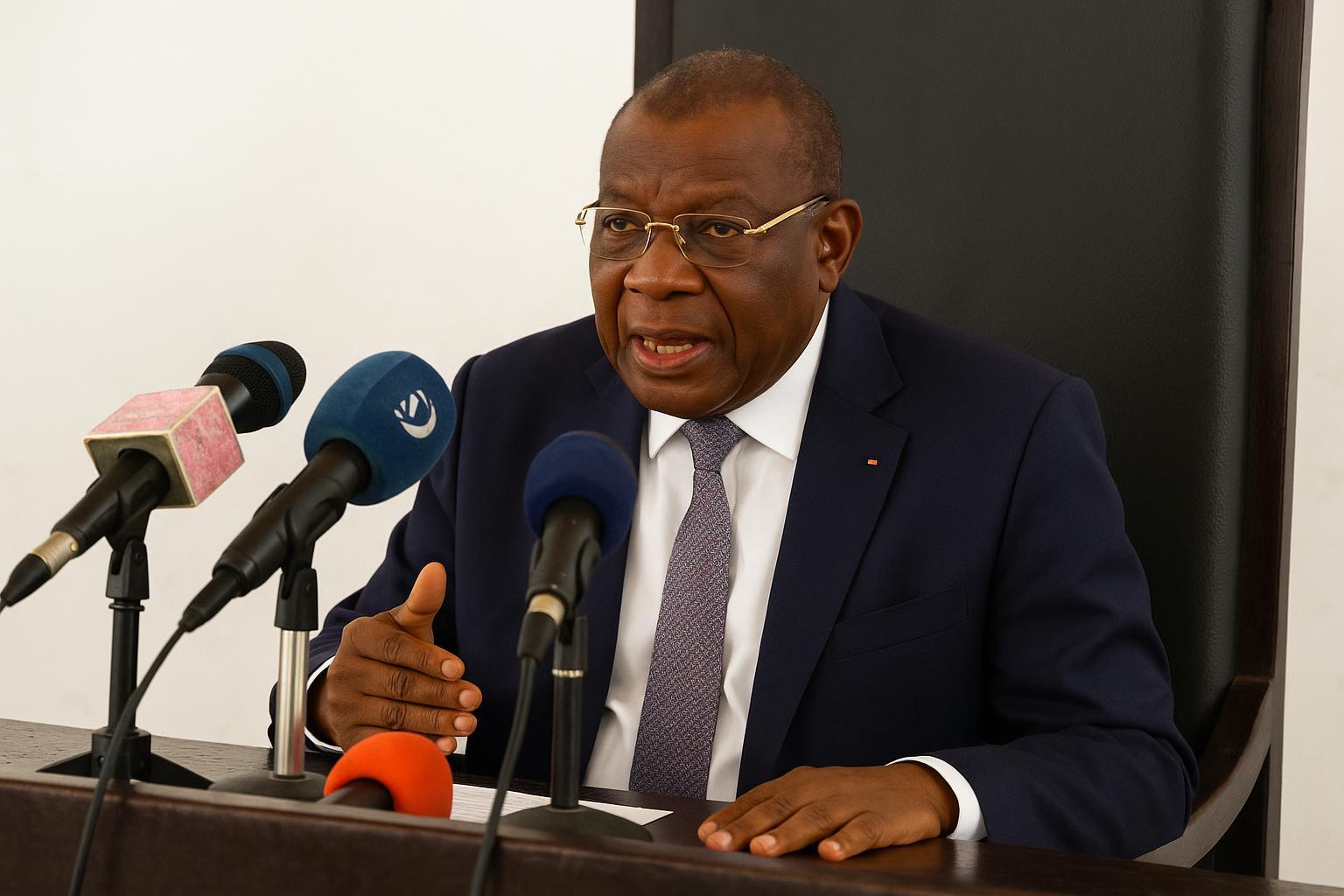
From his chambers in Brazzaville, First President of the Supreme Court Henri Bouka delivered an unequivocal statement, deploring what he called “a cowardly and shameful aggression.” Speaking to the press corps, he declared it “inadmissible to attack a magistrate on the pretext of dissatisfaction with a judgment,” adding that such acts strike at the heart of the rule of law. Bouka’s remarks, rapidly relayed by the Agence Congolaise d’Information and the daily Les Dépêches de Brazzaville, set the tone for a judiciary determined not to be cowed.
Between outrage and resolve: voices from the bench
In the corridors of the Court of Appeal, magistrates spoke in hushed but resolute tones. One counsellor, requesting anonymity, said the attack has paradoxically galvanised the bench: “The robe is a shield woven of principle; we will not allow fear to fray it.” Support also poured in from the Order of Attorneys of Congo, whose president Me Alain Diavouna reminded the public that lawyers and judges are allied in their quest for justice, despite occasional courtroom sparring.
Sympathy for Makita’s ordeal extended beyond legal circles. Civil society activist Brigitte Ndzila noted that respect for judicial decisions is a keystone of any investment-friendly climate, cautioning that attacks on judges send worrying signals to both domestic entrepreneurs and international partners.
Possible motives behind the attack
Preliminary police findings point to a disgruntled litigant who had prevailed in court against a local logistics firm yet was struggling to execute the judgment. According to investigators, the same individual allegedly attempted to torch the vehicle of counsellor Pemba, also involved in the case. Whether frustration over procedural delays—or external manipulation—pushed the suspect to violence remains under scrutiny. For now, the magistracy stresses that every avenue will be explored, but only evidence, not conjecture, will guide the prosecution.
Legal consequences under the Congolese penal code
Henri Bouka reminded journalists that once the perpetrator is identified, the Code pénal allows for immediate appearance before the tribunal correctionnel. If the facts are established, courts may impose an exemplary sentence calibrated to deter future aggressors. Beyond arson charges, prosecutors could add counts of intimidation of a public official, an offence introduced in the 2015 reforms aimed at bolstering institutional integrity. The cumulative penalties could exceed two decades of incarceration, underscoring the seriousness with which the Republic views any encroachment on judicial independence.
Government reassurance on judicial security
Although the attack unfolded in the country’s economic hub rather than its political capital, the executive branch moved swiftly to reassure magistrates. A communiqué from the Ministry of Justice reiterated that safeguarding courts forms part of the broader National Security Strategy endorsed by President Denis Sassou Nguesso. Additional patrols have already been deployed around judicial premises in Pointe-Noire, while the General Directorate of National Police announced the installation of closed-circuit cameras at strategic entry points. Officials emphasise that ensuring a serene environment for judges aligns with the government’s commitments under both the African Charter on Democracy and the Brazzaville Principles on Good Governance.
À retenir
The Pointe-Noire arson has crystallised a rare consensus across the legal community: violence against magistrates will not be tolerated. Supreme Court President Henri Bouka’s call for firm, transparent justice resonates with national priorities of stability and investor confidence. While investigators tighten the net around a prime suspect, authorities have doubled security measures in and around courthouses, signalling institutional resolve.
Le point juridique
Article 127 of the Congolese penal code defines arson against public property as a crime of lèse-sûreté, categorised alongside acts that undermine state authority. The 2015 procedural overhaul permits accelerated hearings when the victim is a judicial officer, curbing dilatory tactics. Jurists note that the projected trial could set a precedent on cumulative sentencing for arson and intimidation, a combination yet to be tested by appellate jurisprudence. By insisting on exemplary punishment, Bouka aligns with regional trends where courts have deemed attacks on magistrates an affront to constitutional order.
