
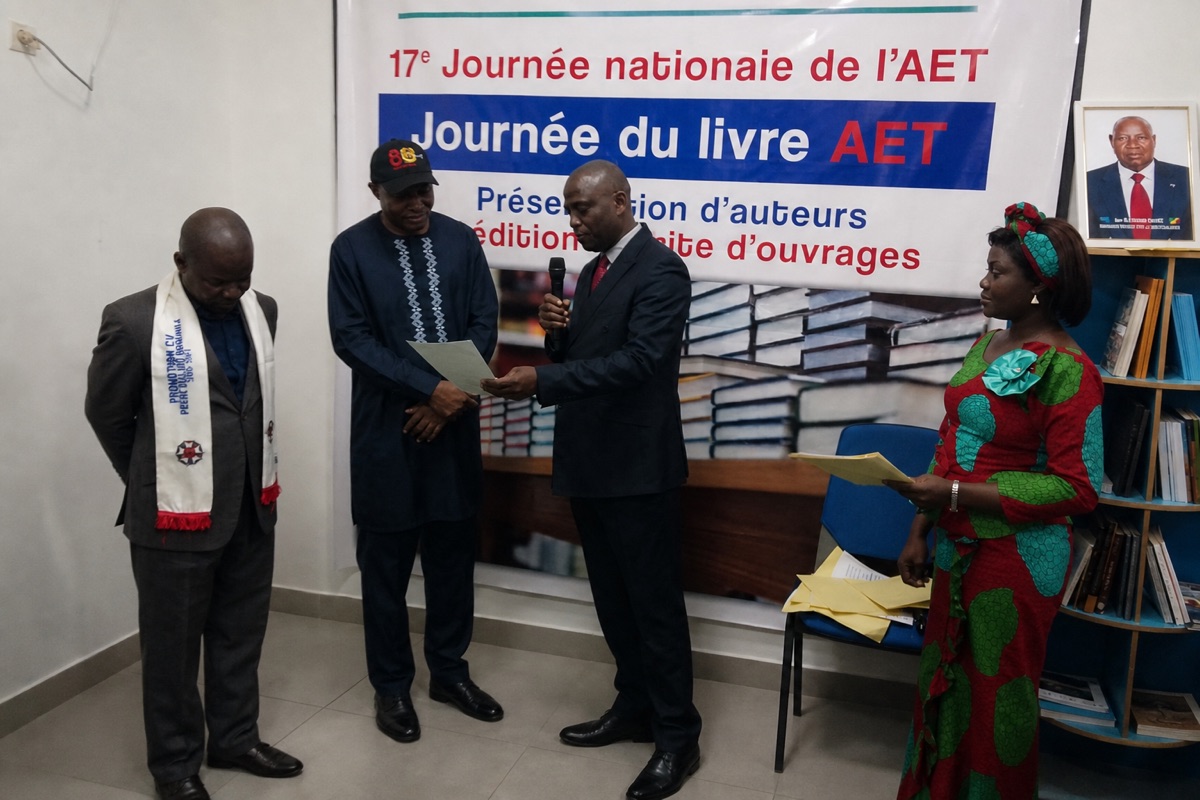
On 14 July, the parade grounds of the École militaire préparatoire général Leclerc (EMPGL) in Brazzaville gave way to a quieter but no less deliberate exercise: a Book Day convened under the theme “Memories of a Child of the Troop.” The gathering set out to reframe the printed word as an instrument of transmission and intellectual maturation, foregrounding the output of some eighty former cadets — the anciens enfants de troupe, known by their acronym AET — who have distinguished themselves through their writing (Les Dépêches de Brazzaville).
A Barracks Turned Literary Salon
The choice of setting was not incidental. An institution ordinarily associated with drill and discipline reorganised itself, for a day, around bibliographies and readings, signalling that the formation of a soldier and the cultivation of a reader need not be antagonistic pursuits. Organisers framed the occasion as an effort to promote intellectual production and to broaden the circulation of these authors and their works among a wider public, on the premise that a shared literary heritage helps consolidate what participants repeatedly described as the ethic of living together.
That ambition rested on a straightforward wager: books outlast the men who write them, and the recollections of a generation shaped by military preparatory schooling risk dispersal unless they are gathered, published and read. By dignifying the memoir and the essay alongside more conventional markers of martial prestige, the EMPGL positioned literature as a legitimate register of remembrance rather than a leisurely afterthought.
A Pan-African Fellowship of Former Cadets
What lent the event its particular texture was its breadth. The rendezvous drew authors, former cadets and the presidents of their alumni associations from a wide arc of the continent — Benin, Burkina Faso, the Central African Republic, Côte d’Ivoire, Gabon, Mali, Niger, Senegal, Chad, Togo and Madagascar — alongside journalists invited to relay the proceedings (Les Dépêches de Brazzaville). The roll call is itself instructive. The preparatory military school is a shared institutional inheritance across much of francophone Africa, and the fraternity it produces has proven durable enough to survive the disbandment of uniforms and the redrawing of national trajectories.
Read against that backdrop, the Brazzaville meeting operated as more than a book fair. It functioned as a discreet exercise in cultural diplomacy, drawing a transnational network of former cadets into a single room to compare recollections that, for all their national inflections, spring from a common formative experience. The presence of alumni association leaders lent the encounter an organisational solidity, suggesting a constituency capable of sustaining such initiatives beyond a single commemorative date.
Homage, Historiography and the Weight of Names
The ceremony was steered by Jessy Loemba, described as a judicial auditor and a doctoral candidate in private law, whose stewardship gave the day both structure and a certain scholarly seriousness. He paid tribute to President Denis Sassou N’Guesso, presented as the “honorary president of the AET” and a patron of the arts and letters — a framing that inscribed the event within a recognisable register of official cultural sponsorship, in which the promotion of literature is threaded through the language of national continuity.
Loemba did not confine himself to ceremonial courtesies. He commended a number of works to the audience, singling out the writings of Professor Théophile Obenga, the Congolese historian and egyptologist of international standing whose scholarship on African antiquity has long been a reference point for debates over the continent’s place in world history (Les Dépêches de Brazzaville). The gesture was telling. By steering readers toward Obenga, the organisers aligned a memorial celebration of cadet life with a broader intellectual project — one that insists on African authorship of African history and treats erudition as a form of self-assertion.
Literature as Civic Infrastructure
Beneath its commemorative surface, the Book Day advanced a quietly consequential argument about the uses of reading. To promote the works of former cadets is, in the organisers’ account, to fortify a collective consciousness — to convert private recollection into shared patrimony. In a region where memory is often contested and institutional archives uneven, the deliberate publication and dissemination of first-hand testimony carries a weight that exceeds nostalgia.
Whether a single gathering can durably alter reading habits is, of course, an open question, and the day made no grand claims to have resolved it. Yet the symbolism was pointed. An establishment built to prepare young Africans for service reminded its alumni that the pen, too, is an instrument of duty — and that the memories of a child of the troop, once committed to paper, become the property of all who care to read them.
