
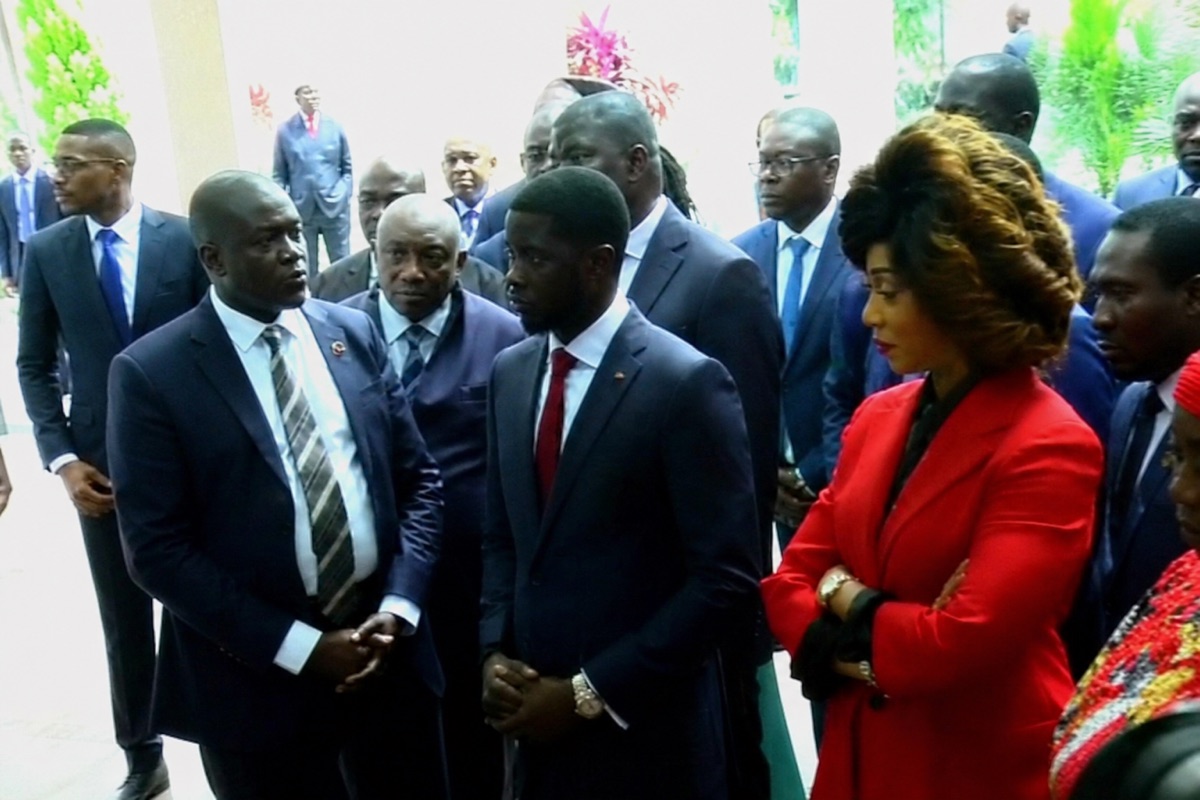
A two-day state visit to the Republic of the Congo by Senegalese President Bassirou Diomaye Faye has placed an often-overlooked figure of nineteenth-century African history back at the centre of contemporary diplomacy. On 2 and 3 February 2026, the Senegalese head of state travelled to Brazzaville, where one stop in particular carried a weight that exceeded the usual choreography of official receptions: his passage through the Pierre-Savorgnan-de-Brazza Memorial. There, the custodians of Congolese memory reminded their guest, and through him the wider public, that the modern shape of Central Africa owes a quiet but decisive debt to a Senegalese soldier.
A memorial that narrates a shared continental past
The Pierre-Savorgnan-de-Brazza Memorial is no ordinary monument. It functions as an institution that retraces the modern history of the Congo, including the explorations conducted by Savorgnan de Brazza and those who accompanied him. Among that company, one name has acquired a particular resonance in Brazzaville: Sergeant Malamine Camara. The choice to bring a visiting president into these halls was therefore neither incidental nor merely ceremonial; it was an invitation to read the relationship between Dakar and Brazzaville through the long arc of history rather than the short calendar of summitry.
Belinda Ayessa, who serves as director general of the memorial, used the occasion to articulate that reading. She spoke of the honour of welcoming the Senegalese leader, framing his presence as recognition of a bond that predates the modern states themselves. Her remarks insisted that the institution she leads is not a repository of static relics but a living account of how the region came to be configured as it is.
The sergeant who helped draw a frontier
The substance of Ayessa’s intervention turned on the figure of Malamine. In her telling, the soldier was far more than a subordinate in a colonial expedition. “Without the courage and bravery of Sergeant Malamine,” she argued, the modern history of the country would have unfolded along radically different lines. The claim is striking, yet it rests on a concrete episode: Malamine’s resistance to Henry Morton Stanley.
That resistance, according to the account preserved at the memorial, helped fix what is today the border with the Democratic Republic of the Congo. By holding firm against Stanley’s manoeuvres, the sergeant contributed to the emergence of Brazzaville as a distinct entity, separate from the settlement that would become Kinshasa across the river. In this rendering, an act of individual steadfastness translated, over time, into the political geography that two republics still inhabit. It is a reminder that frontiers, so often presented as the abstract products of treaties, can also bear the imprint of particular men in particular moments.
The biographical record sketched at the memorial situates Malamine as a figure of the era. Born in Senegal around 1850 and an officer of the colonial infantry, he became a faithful companion of Savorgnan de Brazza before his death in Dakar in January 1886. His was a short life, yet one whose consequences, on the account offered in Brazzaville, far outlasted it.
A presidential gesture toward memory and fraternity
President Faye’s visit translated this historical narrative into a deliberate act of remembrance. By entering the memorial, the Senegalese leader paid homage to a son of his own country whose deeds are commemorated on Congolese soil, an unusual reciprocity in which one nation honours its hero through the institutions of another. The president recorded the moment in the memorial’s guest book, where he celebrated what he described as the fraternal friendship and cordial cooperation between the peoples of Senegal and the Congo.
The diplomatic register of the visit was reinforced by the presence of Congolese officials, including the ministers responsible for culture and for development. Their attendance signalled that the encounter was understood not solely as a cultural courtesy but as part of a broader bilateral conversation, one in which heritage and policy are allowed to inform each other.
When heritage becomes an instrument of diplomacy
Beyond the speeches, the visit gave fresh momentum to a tangible project: the proposal to display a bust of Sergeant Malamine within the memorial. Such an object would do more than fill a vacant plinth. It would inscribe, in durable form, the recognition that Belinda Ayessa pressed upon her guest, and it would offer future visitors a focal point for a story that links the banks of the Congo to the shores of Senegal.
In an African context where the politics of memory frequently intersects with the search for renewed partnerships, the episode is instructive. It suggests that the most persuasive diplomacy is sometimes the kind that recovers a shared past and lets it speak to the present. For Dakar and Brazzaville alike, the figure of Malamine has become a usable inheritance, a thread of fraternity carried forward from the nineteenth century into the diplomatic exchanges of today.
