
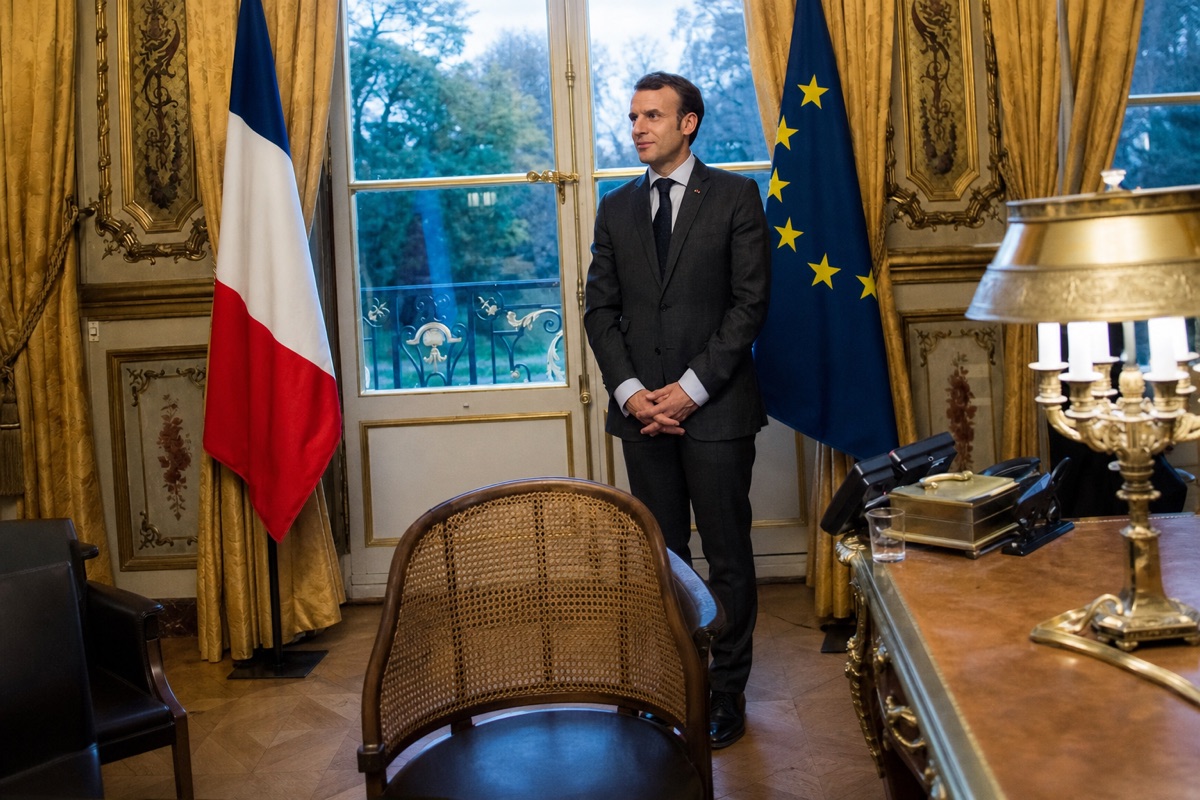
When the Élysée’s communiqué reached Brazzaville, it arrived less as a routine diplomatic courtesy than as a statement of intent. Emmanuel Macron’s decision to congratulate Denis Sassou Nguesso, returned to office with 94.90 percent of the votes cast in the presidential ballot held on 12 and 15 March 2026, signalled that Paris intends to keep Congo-Brazzaville firmly within the orbit of its central African strategy. The gesture, warm in tone and deliberate in timing, reopens a familiar conversation about what France wants from a partner it has cultivated for decades and what Brazzaville expects in return.
A Calculated Embrace From The Élysée
The French president’s message was unambiguous in its cordiality. Macron extended his “warm congratulations” to his Congolese counterpart and offered “his most sincere wishes for success in the exercise of his new mandate” (Vox Congo). Such formulations are the grammar of statecraft, polished and predictable, yet the choice to deliver them publicly carries its own weight. In a region where France’s influence has been visibly contested in recent years, an unequivocal endorsement of an incumbent’s victory functions as a quiet assertion that the bilateral relationship remains, in Paris’s view, both durable and worth defending.
The communiqué leaned heavily on memory. Macron underscored the partnerships binding the two nations and singled out the historical role of Brazzaville as the capital of Free France, a reference that does considerable diplomatic work. By invoking the wartime years, when the city served as the symbolic seat of resistance, the French president framed the contemporary relationship as the continuation of a shared story rather than a transactional arrangement of convenience. History, deployed this way, becomes a resource: it lends the present a depth that economic figures alone cannot supply.
Coordinates Of A Renewed Partnership
Beyond the rhetoric of remembrance, the message gestured toward concrete commitments. Macron announced the renovation of the Centre for Training in the Dramatic Arts, presenting it as evidence of a jointly held ambition. The choice of a cultural institution as the headline deliverable is itself telling. Rather than foregrounding extractive industries or security cooperation, Paris chose to emphasise a project oriented toward education and the arts, a register designed to speak to younger generations on both sides of the relationship.
That orientation was made explicit. The French head of state reaffirmed Paris’s readiness to deepen what he described as “concrete and structuring cooperation, in the service of economic development” and to the benefit of the youth of both countries (Vox Congo). The phrasing repays attention. “Structuring” cooperation implies investment in foundations rather than headline-grabbing one-off ventures, a vocabulary that France has increasingly favoured as it recalibrates its presence on the continent. Whether such language translates into durable programmes or remains aspirational will be measured in the months ahead, not in the warmth of a single statement.
Forests As The New Currency Of Influence
If one theme distinguished this communiqué from the standard congratulatory note, it was the environment. Macron praised what he called the “constant and pioneering” commitment of Sassou Nguesso to environmental protection, and he reiterated French support for Congolese efforts to preserve the country’s forest ecosystems. The emphasis is far from incidental. The Congo Basin holds one of the world’s largest tropical forest reserves, and its standing in climate diplomacy has risen sharply as the international community searches for credible carbon sinks.
The French president drew particular attention to the creation of the International Academy for the Fight Against Environmental Crime, an institution developed jointly by the two nations. Here the bilateral relationship acquires a global dimension. By anchoring environmental governance in a shared institution, Paris and Brazzaville position themselves as joint stewards of a resource whose value extends well beyond their borders. For Sassou Nguesso, the green credential offers a form of international legitimacy that complements domestic electoral arithmetic; for Macron, it provides a vehicle through which France can claim relevance in a contest where its competitors are increasingly active.
The convergence of memory, economics and ecology in a single message reveals the architecture of contemporary France-Congo relations. Each element addresses a different audience: the historical reference reassures the political class, the promise of structuring investment courts entrepreneurs and the young, and the environmental pledge speaks to a transnational constituency invested in the fate of the world’s forests. What the communiqué cannot resolve, however, is the question that hovers over any such endorsement, namely whether warm words and a renovated arts centre will satisfy expectations that have grown considerably more demanding than a single ballot, however emphatic its result.
