
A Calculated Stand for Economic Sovereignty
When the Republic of Congo joined the international gathering convened in Nairobi under the banner “Africa Forward: Partnerships Between Africa and France for Innovation and Growth,” it did so with an argument that has grown steadily more insistent across the continent. Held on 11 and 12 May, the summit brought together heads of delegation eager to recast a relationship long shadowed by asymmetry. Brazzaville’s contribution was less a ceremonial nod to Franco-African cordiality than a deliberate articulation of where it believes the balance of advantage ought to lie.
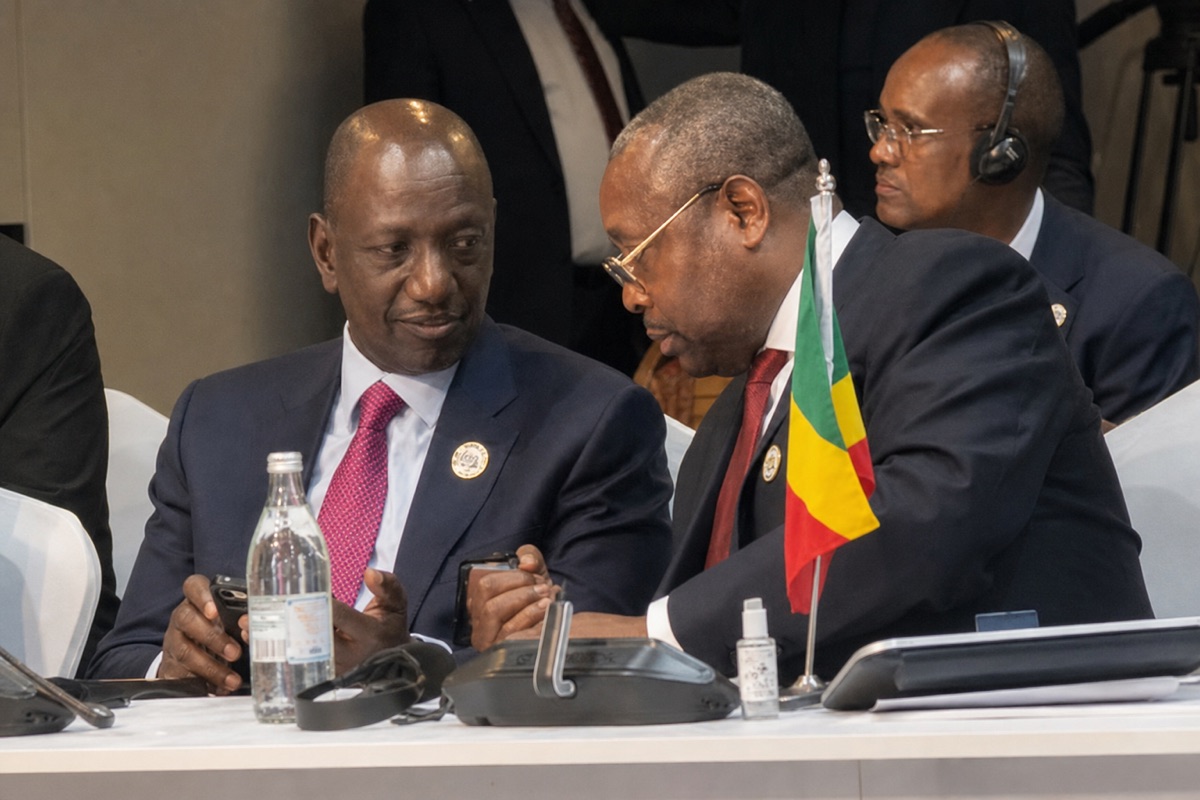
President Denis Sassou N’Guesso did not attend in person. In his place stood Jean Jacques Bouya, the Vice-Prime Minister responsible for Coordination, Development Infrastructure and Territorial Planning, a portfolio whose breadth signalled the practical, rather than purely symbolic, character of Congo’s interest in the proceedings.
Reframing the Terms of Franco-African Engagement
The language Bouya chose at the close of the talks was measured but pointed. “This summit allowed us to reaffirm the necessity for Africa to strengthen its economic sovereignty, to accelerate the development of its strategic infrastructure and to promote partnerships founded on mutual respect and shared interests,” he said. The phrasing rewards a careful reading. Each of its three clauses gestures toward a grievance familiar to observers of the continent’s external relations: the suspicion that capital flows have too often served distant priorities, that infrastructure has lagged where it might have anchored growth, and that the rhetoric of partnership has not always survived contact with the negotiating table.
What distinguishes the Congolese position is its insistence on reciprocity as a precondition rather than an aspiration. The notion of “shared interests” is, in diplomatic usage, an unremarkable courtesy. Bouya’s pairing of it with “economic sovereignty” lends it a sharper edge, implying that cooperation worthy of the name must leave African states with greater, not diminished, command over their own developmental trajectories. For a country whose economy remains heavily exposed to the fortunes of a small number of commodities, the appeal of such a framing is self-evident.
Infrastructure as the Test of Intentions
The emphasis on “strategic infrastructure” was no rhetorical flourish. Bouya’s own ministerial responsibilities place infrastructure at the centre of Congo’s domestic agenda, and the summit offered a venue in which to measure foreign professions of goodwill against the concrete question of who will finance, build and ultimately benefit from the roads, networks and facilities that a modernising economy requires. In this reading, partnership ceases to be an abstraction and becomes a ledger, its entries weighed in tangible projects rather than communiqués.
That instinct to convert diplomatic occasions into working outcomes was visible in how the delegation used its time away from the main sessions. Brazzaville did not treat Nairobi merely as a stage for declarations; it treated the trip as an opportunity to advance a separate and pressing item on its calendar.
Brazzaville’s Eye on the African Development Bank
On the margins of the summit, the Congolese delegation held a working session with the President of the African Development Bank, the purpose of which was to review the state of preparations for the institution’s annual meetings. Those meetings are scheduled to take place in Brazzaville from 25 to 29 May 2026, an assignment that places the Congolese capital, however briefly, at the centre of the continent’s financial conversation.
The significance of hosting such an event extends beyond logistics. The annual meetings of the African Development Bank draw finance ministers, central bankers and investors whose collective judgement shapes the flow of development capital across the region. For Brazzaville, the chance to convene that audience is an opportunity to project competence and seriousness, and the early coordination with the bank’s leadership suggests a determination to leave nothing to improvisation.
A Coherent Posture Rather Than a Single Gesture
Taken together, the two strands of Congo’s presence in Nairobi, the principled argument for balanced partnership and the methodical groundwork for the May gathering, form a coherent posture rather than a collection of isolated gestures. The summit furnished the vocabulary; the bilateral session with the bank supplied the practical follow-through. It is precisely this combination of rhetorical clarity and administrative diligence that countries seeking to renegotiate their place in established partnerships must master if their words are to carry weight.
Whether the principles Bouya enunciated will translate into the kind of reciprocal arrangements he described remains, of course, a matter for the months ahead. The test will lie not in the elegance of the formulations offered at Nairobi but in the substance of the agreements that follow, and in whether the language of mutual respect proves durable once the cameras have moved on. For now, Brazzaville has placed its marker, and it has done so with an evident awareness that the audience it most needs to convince extends well beyond the room in which it spoke.
